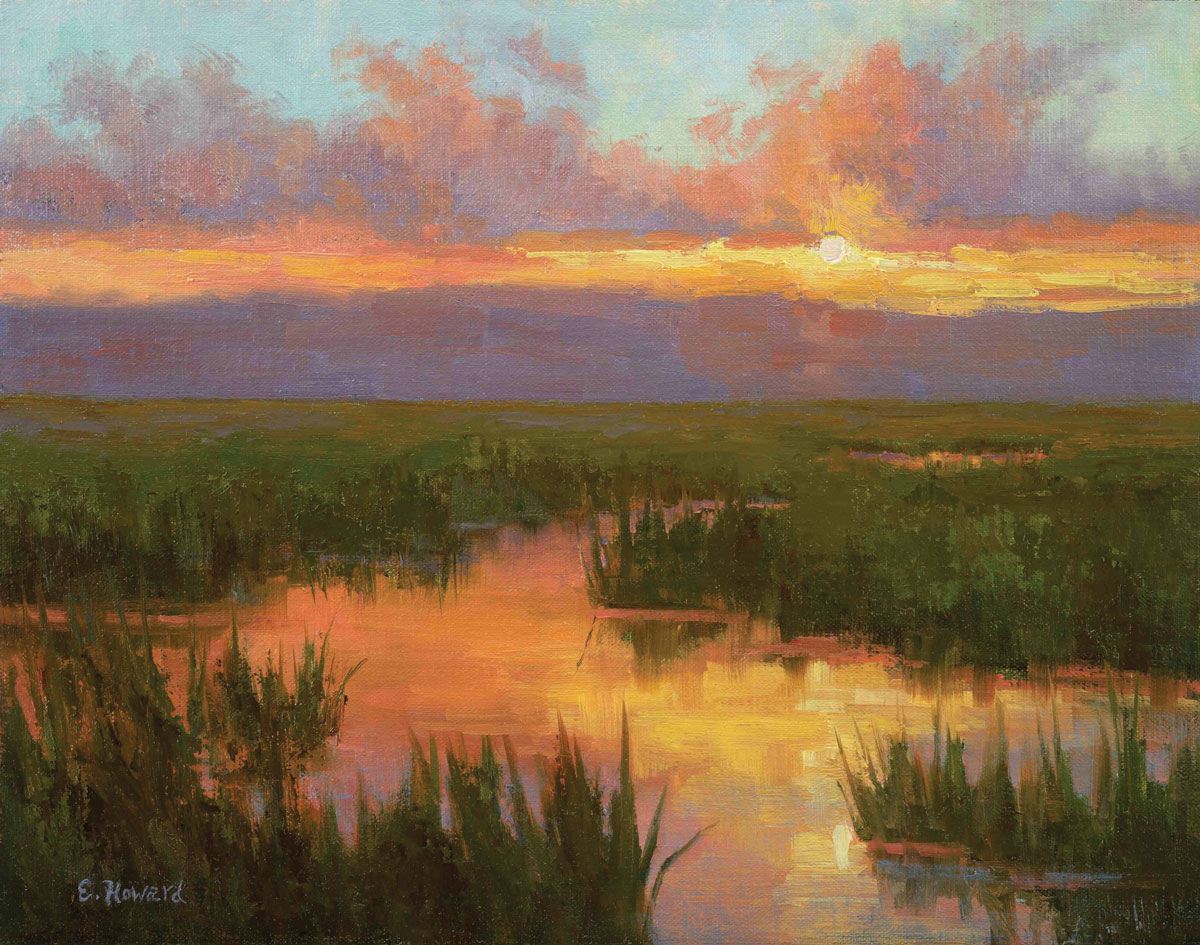
How to Paint Skies > “As a landscape painter, I strive to create atmospheres that evoke a deep sense of calm, serenity, and quiet reflection,” says Ellen Howard. “To that end, the sky shapes the overall composition and mood of my work. In particular, the muted, cool magenta and purple cloud formations set against the warm, vibrant hues of the sky at sunset allow me the freedom to explore bold contrasts and delicate transitions, enriching the emotional storytelling within my work.
“Working with oils offers distinct advantages when capturing the dynamic and fleeting effects of the sky, especially during a sunset. Oils allow me to lay down thin washes of color quickly, enabling me to immediately capture the right values and tones I observe in real time. The flexibility of oil paint lets me return to areas later, adding bold highlights or subtly adjusting cloud colors if they start to compete with the focal point. This adaptability is essential for managing the ever-changing light conditions outdoors. Oils also provide the versatility to either build rich texture or create soft, translucent layers, depending on the mood I want to convey.”
Positioning the Sun in a Painting
By Ellen Howard
When I begin painting a sunset, I start by laying down a transparent wash of red oxide to establish the overall warmth of the scene. Next, I carefully decide on the placement of the horizon line, which dictates the composition and mood.
Positioning the sun is critical; it guides my color choices and determines how I blend hues around it. If the sun is closer to the horizon, I emphasize warmer tones like reds and oranges near the base, transitioning into cooler hues higher up. Cloud placement is equally important; lower clouds often reflect warmer sunlight, while higher clouds take on cooler, muted tones.
Because sunsets last only for a short time, I premix colors in anticipation of how the sky’s colors evolve. This allows me to quickly layer colors in response to changing light. Typically, my sky transitions from violet and blue at the top to soft greens, then vibrant yellows, oranges, and deep reds closer to the horizon. This structured yet intuitive approach helps me create skies that feel both vivid and natural.
Evening Light
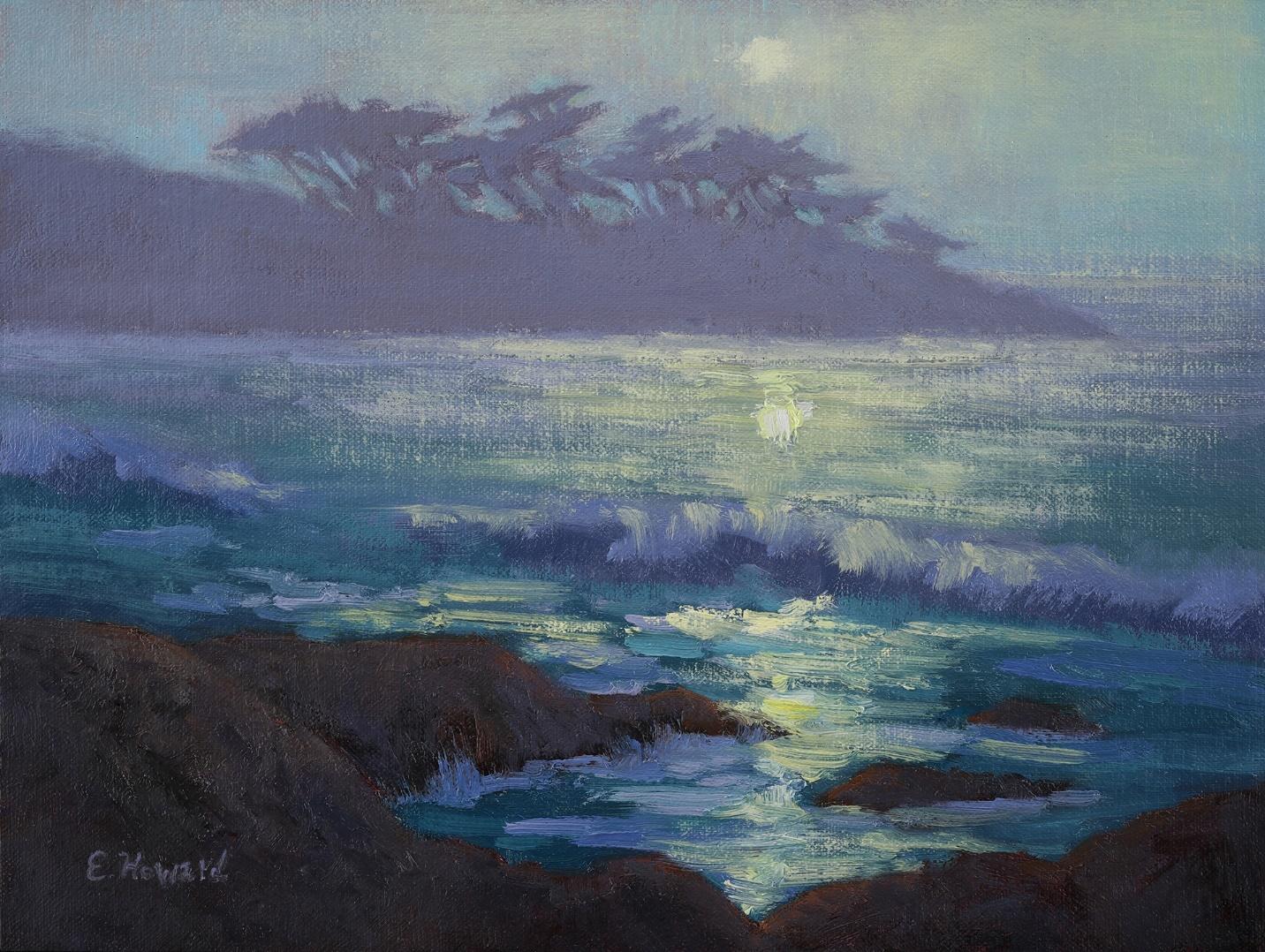
In “Evening Light,” I show the sky at late dusk, called the “blue hour” (the period of time just after sunset when the sun casts a diffuse light from below the horizon and the sky takes on a vivid blue tone), or “nautical twilight,” when the sun sits between 6 and 12 degrees below the horizon, allowing sailors to navigate by the stars.
Claude Monet’s work often captured the subtle transition of day into night, as can be seen in his Houses of Parliament series, where he captures the effects of dusk and the blue hour over the Thames River in London.
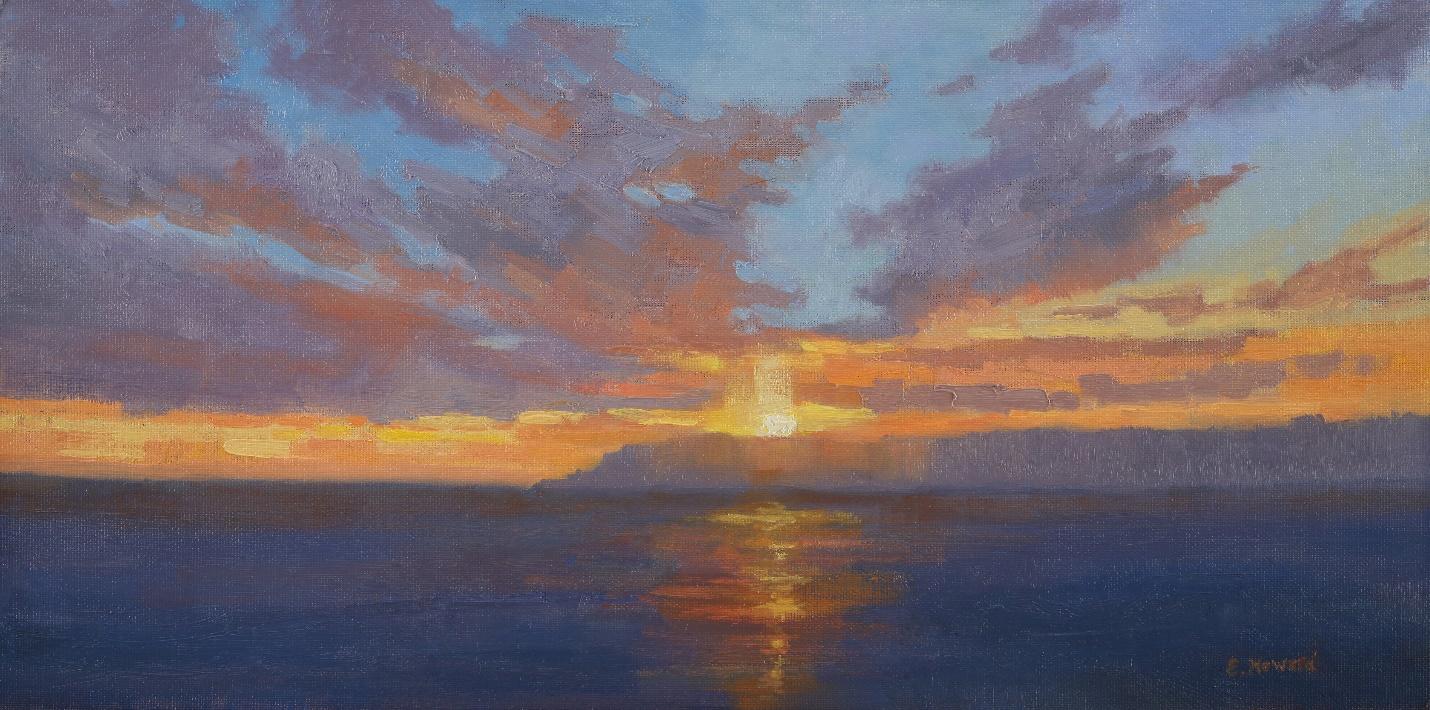
Clouds guide the viewer’s eye and enhance the mood of a painting. Thoughtful cloud placement can naturally lead the viewer toward the focal point. Positioning clouds horizontally near the horizon can create a sense of calm and stability, subtly framing the focal point. Alternatively, angling clouds diagonally can generate movement and energy, actively directing the viewer’s gaze toward the central element of the scene.
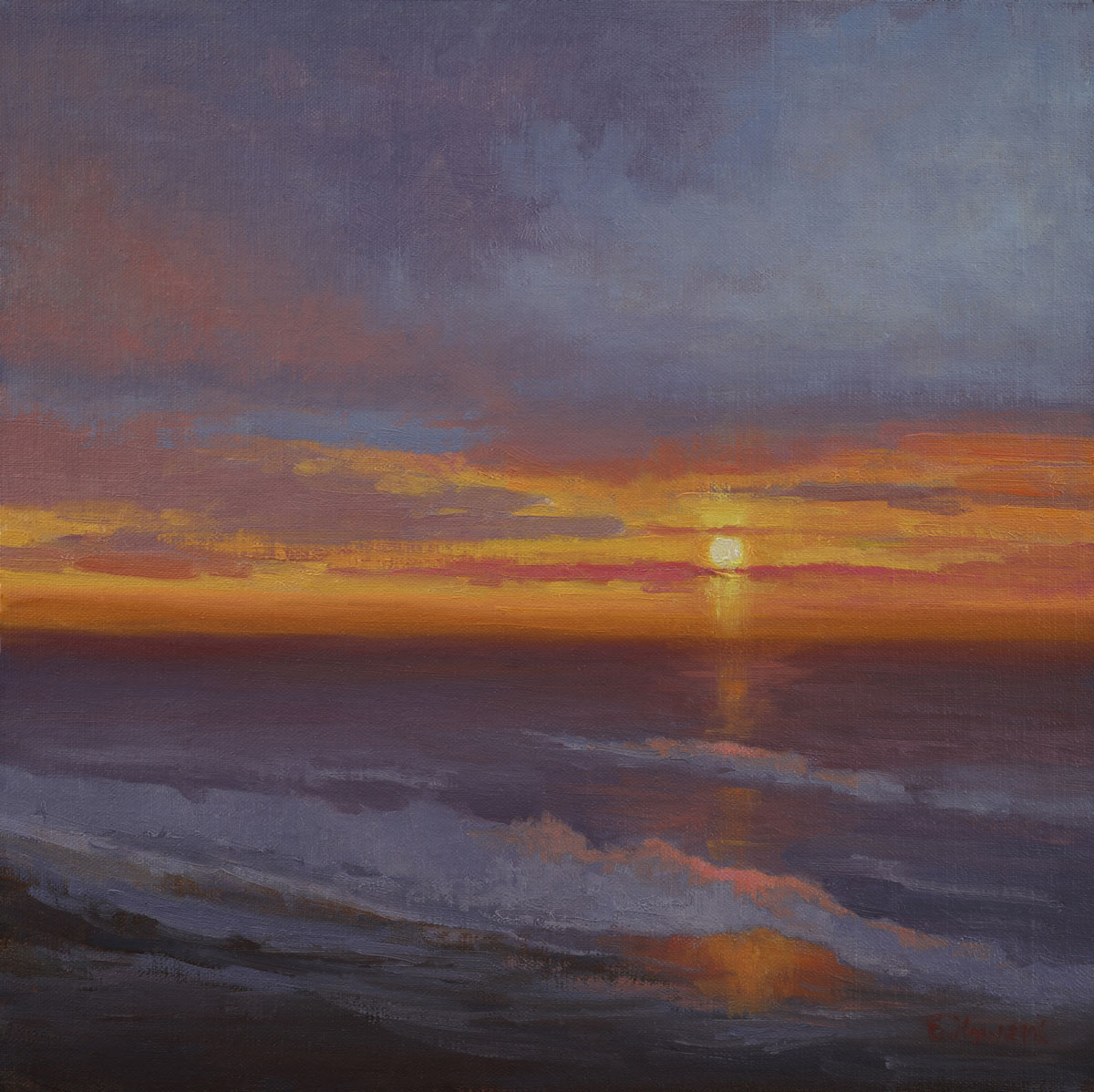
Connect with the artist at www.ellenhowardart.com.
The editorial above is part of a series that spotlights the work of an accomplished plein air artist featured in PleinAir magazine.
Published bi-monthly, PleinAir magazine is focused on landscape paintings by historical and contemporary artists, art collections, events, and the process of creating plein air paintings. Beautifully designed with rich reproductions on high-quality paper, PleinAir features the top artists and artworks from around the world. Start your subscription here.
Story prepared for the web by Cherie Dawn Haas, Editor of Plein Air Today