A guide to early morning plein air painting > Discover essential gear prep, composition techniques, and expert tips for capturing the perfect light and shadows at sunrise.
By Jack McGowan
“The finest hour I have seen, is the one that comes between the edge of dark And the break of day, that’s when the darkness rolls away” Across the great Divide, Nancy Griffith
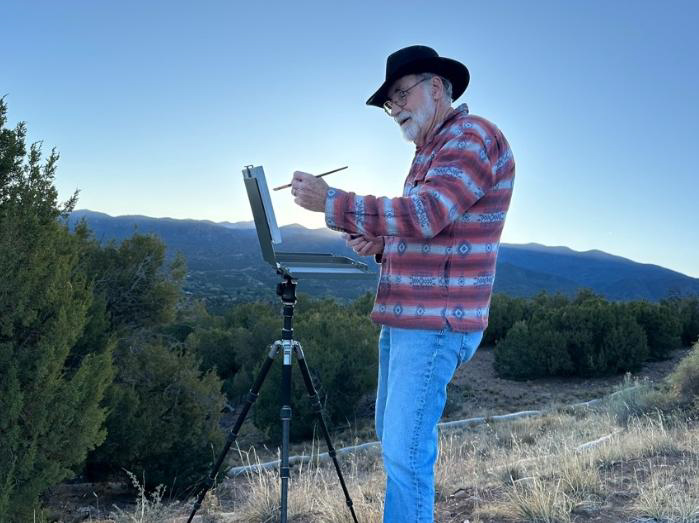
Yes, you can get out that early to paint, even in the winter, it was 24 degrees when the picture above was taken. Temperature aside, morning is a wonderful time of day, in any season, and it is ideal for exploring the balance between light and shadow, and how it drives your application of color and value, or what I call “painting into the shadows.”
My mentor, Master Painter Bill Gallen emphasizes that “you can see as well into shadow as you can into light.” We use value and color temperature shifts to hint at the contours and shapes that exist within any area of shadow. These subtle shifts help viewers recognize the variety in your subject, hold the eye and create interest. The challenge of course, is to capture these moments as the morning light changes quickly, so we must focus as dynamics change in rapid order.
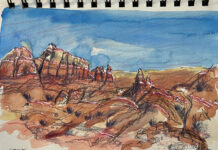
My goal in the “Ghost Ranch Shadows” painting below was to preserve the warm color temperature of the cliff face in shadow. I wanted it to feel like we could just walk into that cool, shady spot and take a rest. Finding warmer values of those colors for areas in direct sun really brings home how color temperature can make a two-dimensional image look like a realistic cliff face. Trying to manage all these dynamics is what makes morning an exciting time to plein en plein air.
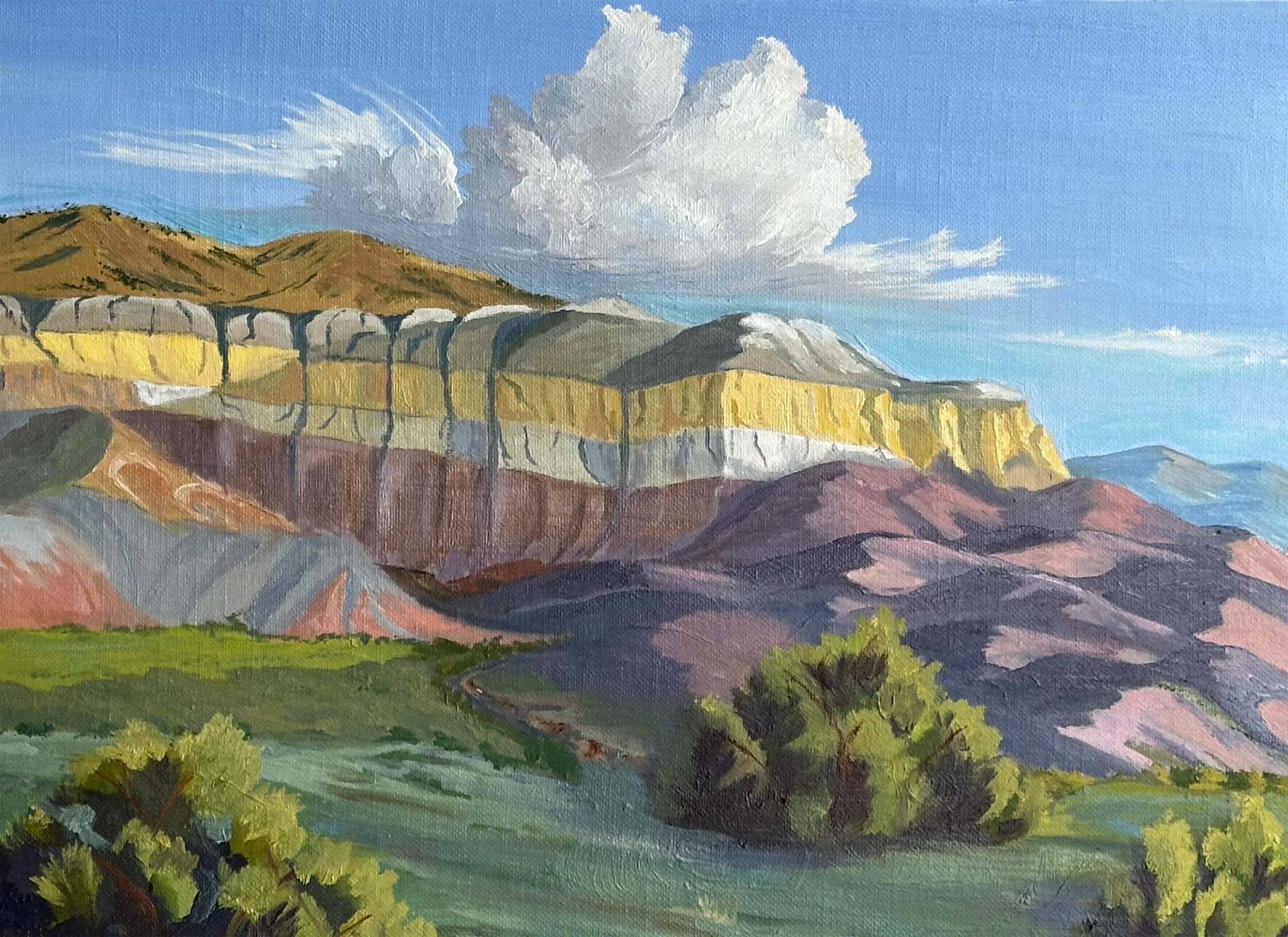
Here are a few added ideas on preparations and how to frame your composition, to help you do your best work in the morning.
Preparation includes Paint Kit Prep and Gear Prep.
Paint Kit Prep: In other articles I talk about “optimal weight” for a plein air kit. Everything fits into my day pack, weighing around 15 pounds. With this kit, I can paint in the bed of my pickup, hike a few miles down the trail or even paint from a ski lift. Many will say it’s better to have less weight. For me though, “optimal weight” means a few extra pounds so I can accommodate tools that allow me to be the most productive.
My goal is not to travel light weight while backpacking across Europe, but rather to optimize time and painting output. Selecting the right tools is how to do this, so I chose the Strada Mini, a bit larger, because it offers me more space for color mixing. The tripod is carbon fiber, which is durable, but also has multiple settings. The legs can be set for wider spread to keep your kit in place if it is windy, out on the beach or on a mountain cliff face. The Osprey pack I chose has lots of pockets to stow towels, wipes, paints, etc. and to distribute weight, plus it has a hip belt to get that weight off of my shoulders. Those pockets also make it easy to find things without digging around in the bottom of a pack.
Gear Prep means what you wear. The need varies based on when and where you plan to paint, as well as under what climate conditions. The focus here is painting at the break of day, so clothing is key: plan on layers. If you live at high elevation like me, it gets cool at night, even in the summer. Add a jacket since it’s easy to shed layers quickly and stay comfortable while you work. Good shoes or hiking boots are also important. In low light conditions, you also want to pay attention to good footing. You might add a flashlight, and not just the one on your phone. Though you are going out early, take sun screen and bug spray because it will warm up if you are out for a while. Coffee or tea, water, and snacks are morning essentials as well.
Finding a Composition
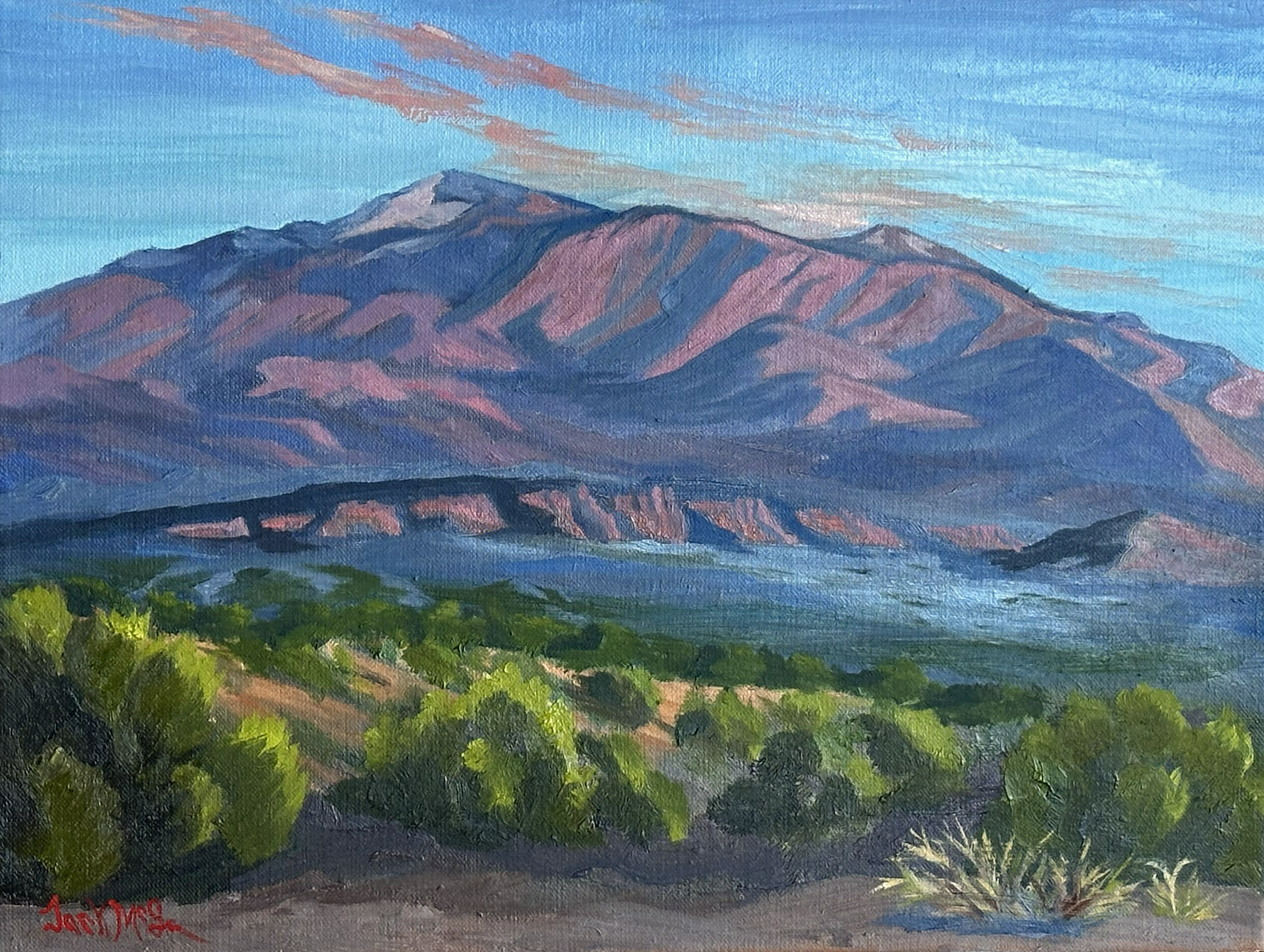
We all have an approach for deciding what to paint. Early morning adds a wrinkle because painting toward the sun creates too much glare. In the Jemez painting above and the photo below, you can see that the sun coming up in the east was bright. However, as I turned west, the mountains were glowing, and that light and shadow across the plain made for a truly inspiring composition.
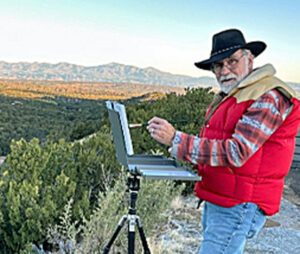
Before you go out, think about painting spots that will offer the right vantage points. In the morning, we often stay closer to the vehicle and it is too dark to paint under the trees. As we search for a composition that resonates though, we will find that our eyes adjust to those low light conditions, so it is possible to take a short hike to find scenes to paint.
Safety is key on such short hikes, so again, watch your footing and take a flashlight. I usually take hikes on trails that I know well enough to walk safely. The goal is to find spots where trees part, the trail opens up, and breathtaking vistas may be revealed. Even though I may know the trail, these vistas can be really surprising.
A composition will often take shape as you sketch and edit that scene, selecting a center of interest that you can create an image around. From our earliest days as artists, we have heard about squinting our eyes to identify the shapes, but we also want to think about that area of the canvas you want to hold the viewer’s eye. Michael Chesley Johnson had a great article here recently referring to this as the rule of thirds to lay out an image. Placing the center of interest according to this technique, or what is also called the Golden Mean, makes your composition more appealing to the eye.
Our finished product will improve if we take a moment at this step in our process to think about where we want the viewer’s eyes to end up as they view the finished painting. Sketching and taking reference photos along the way can be really helpful for when you are trying to put on those finishing touches back in the studio.
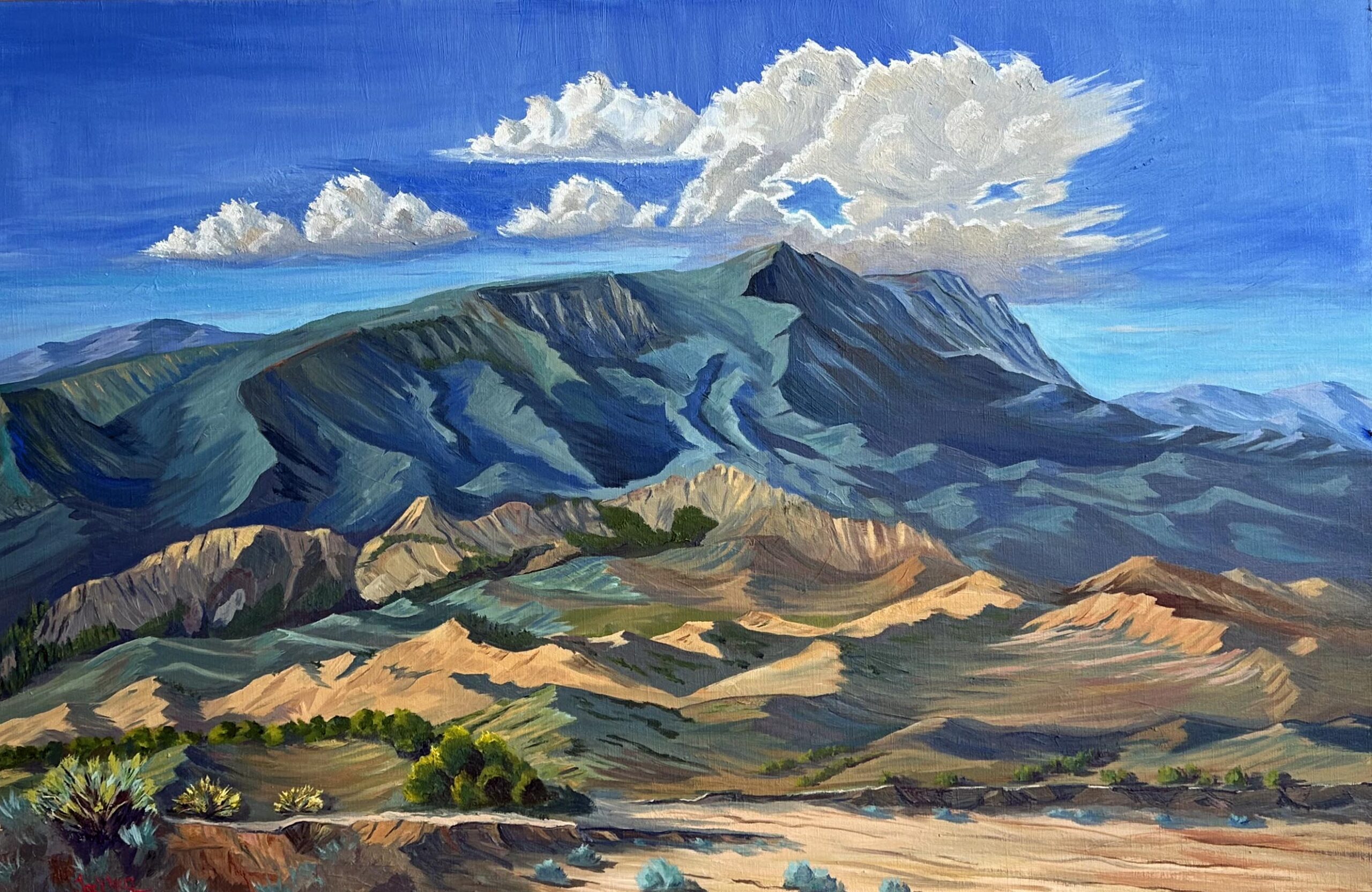
Last thoughts: If you plan to hike, take time to research the trail. Another point of interest is my blog, Hike To A Painting™ or Roadmap To A Painting™. My post on Ghost Ranch Shadows from Northern New Mexico has info on distance, degree of difficulty, etc.
I wish the best of adventures and a new take on Plein Air Painting.
~ Jack
About the Artist: Jack McGowan is a Santa Fe painter, creating Plein Air landscape paintings throughout Northern New Mexico and Colorado. He is Past President of the Plein Air Painters of New Mexico. He is represented by Legends of the West Fine Art in Santa Fe, is a member of the Bettina Steinke Group led by Master Painter Bill Gallen, and has been juried into shows throughout the Western United States. www.jackmcgowan-artist.com
Looking for MORE ways to improve your painting skills?
Don’t miss your opportunity to create lifetime memories at the Plein Air Convention & Expo! All training sessions are indoors on giant, high-def screens, with incredible paint-outs in the afternoons. Beginners and pros feel right at home, so register at PleinAirConvention.com to join us.
Browse more free articles here at OutdoorPainter.com
Blog post prepared for the web by Cherie Dawn Haas, Editor of Plein Air Today