For 15 years, PleinAir Magazine has chronicled the approaches, challenges, and breakthroughs that define the plein air movement. Across dozens of issues, artists have shared insights that go far beyond technique — lessons about seeing, persistence, and intention. To celebrate this milestone anniversary, we’ve gathered 15 of our favorite pointers and strategies — one from each year — that can help you stay inspired and elevate your work. Whether you’re seeking to sharpen your skills or refresh your approach, these ideas offer a treasure trove of advice from some of the finest painters working today.
1. LEARN DIRECTLY FROM NATURE
“When I first started painting, I did five or more studies every day. I didn’t use a camera for five years because I wanted to learn directly from nature and to sharpen my ability to remember what I see. I used to start all my paintings outdoors, even the large canvases, but now I can work from field studies, photographs, and my memory because I have a better sense of what I need to do.”
— Scott L. Christensen, Spring 2011
2. FEEL THE RHYTHM, DON’T OVERTHINK IT
“I’ve been swing dancing for many years, and when I have a partner who is inexperienced, she usually stumbles around, trying to remember all the steps she learned. I show her the basic rock step and encourage her to feel the beat of the music and trust that she will know how to move her feet. In many ways, painting is a similar experience. It’s important to know the basics, but if you think about all the techniques you learned and don’t let yourself respond emotionally and physically to the subject, you’ll stumble around the picture.”
— Albert Handell, February-March 2012
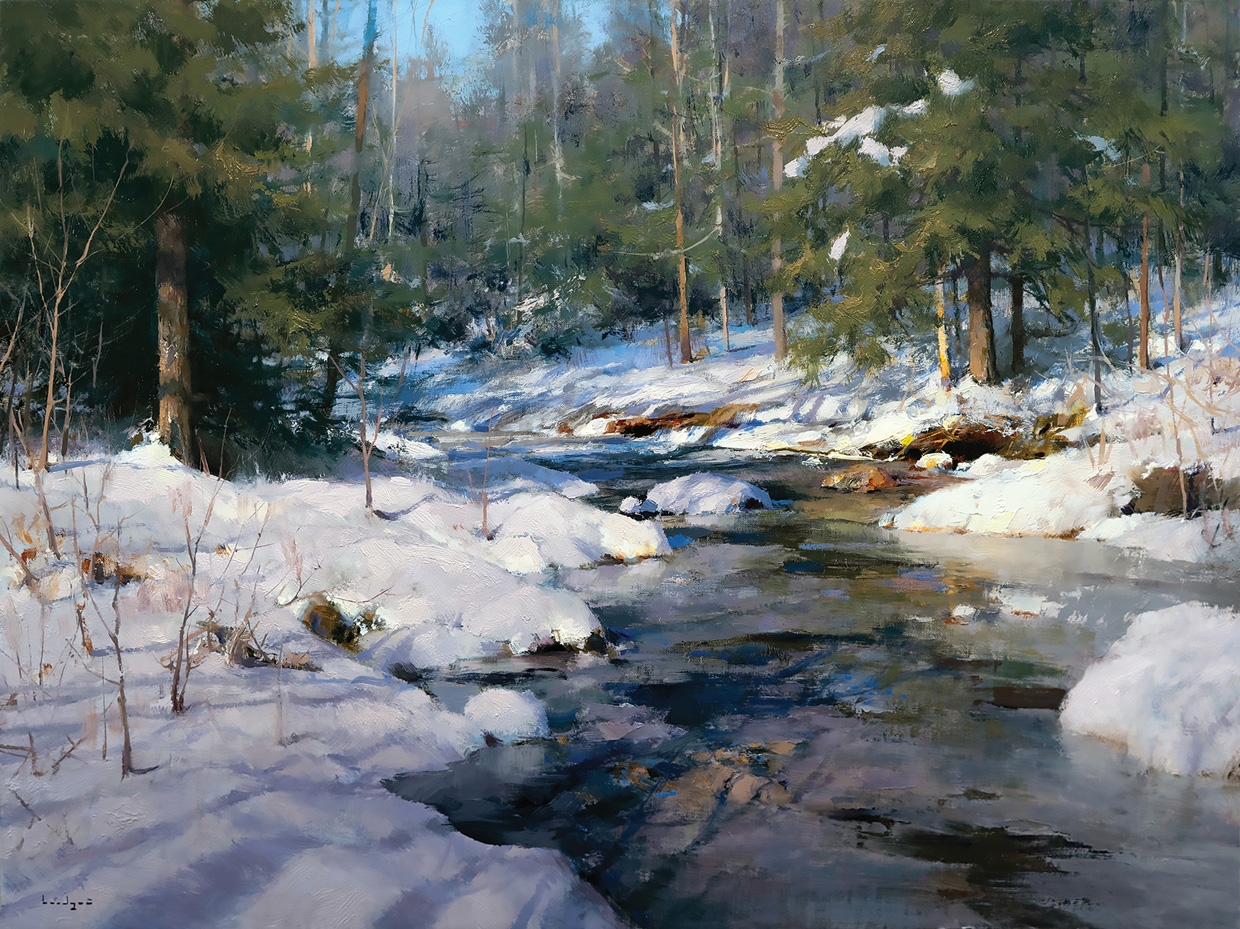
3. KEEP IT FRESH BY TRYING SOMETHING NEW
“I look at a lot of paintings online and in magazines; they give me ideas about materials and techniques. I’m motivated by the prospect of trying other ways of working, other styles of expression, and other types of subjects. That makes it exciting to go out painting every time I have the opportunity.”
— Mark Boedges, October-November 2013
4. SIMPLIFY THE SCENE INTO STRONG SHAPES
“I break the landscape down so there are no more than three to five shapes, each one of which is unique. I often use the ValueViewer app on my phone to convert a photograph of a scene into value shapes, and I try out several different compositions in sketches. Once I find the design that does the best job of conveying my thoughts and feelings about a subject, I indicate the values by shading each shape with a pencil, limiting myself to just three values so the painting will be more cohesive. The process of making those thumbnails helps me to think clearly about what I intend to do before I pick up a brush.”
— Mary Garrish, February-March 2014
5. STUDY AS MUCH AS YOU PAINT
“To get better at painting, I have to paint a lot, and I also have to study a lot. I think it’s important to do both. That is the balance that I am trying to strike. I don’t know if I study more than most artists, but I know this: most artists that we think are naturally gifted probably studied harder and painted more than the rest of us.”
— Carl Bretzke, June-July 2015
6. SLOW DOWN TO SEE MORE CLEARLY
“The biggest thing I’ve done to improve my outdoor work is to slow down and take more time to think about a painting in progress. When I get back to the studio, I put the piece aside for a while, so when I bring it back out I can see the strengths and weaknesses more quickly. If I haven’t overloaded the canvas with too much paint, I can get back into the work and bring it to a higher level of resolution.”
— Matt Smith, April-May 2016
7. EMBRACE THE STRUGGLE AS GROWTH
“There’s a limit to how much someone else can teach you about painting. Eventually you have to paint what inspires you, to make your own art. The only way to do that is to do a lot of paintings. Something has to take over, and then you get into this zone. Paint 20 pieces a day, make mistakes, and it will all culminate, hopefully, at one point. I know that I’m growing when I see a drop-off in the quality of my work. I know that sounds weird, but that means I’m challenging myself.”
— Mike Hernandez, February-March 2017
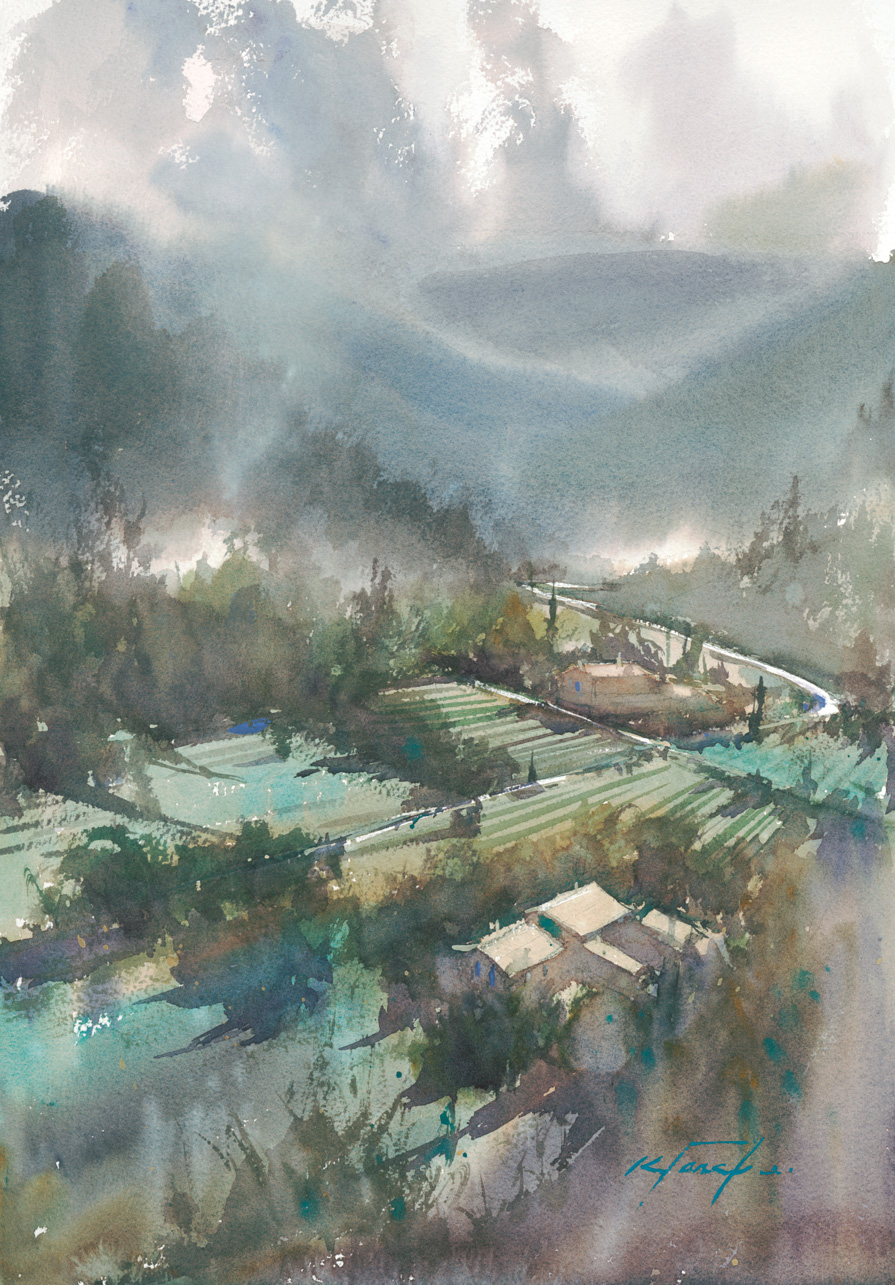
8. PAINT EVERYWHERE, IN EVERY LIGHT
“Every place you paint, the colors and light are all a little different. As a plein air painter, it’s great training to be able to work in different conditions. I get stronger as a painter that way.”
— Keiko Tanabe, June-July 2018
9. LEAVE ROOM FOR THE VIEWER’S IMAGINATION
“By leaving things half-finished, I get that fleeting-moment look. If I define everything, it becomes boring. Think about it: there’s nothing less interesting than a perfect circle, but if you make some dots in a broken circle, your eye will be drawn to complete it. It’s an optical illusion. Viewers are more engaged if things are suggested rather than completed by the painter.”
— Joseph Zbukvic, April-May 2019
10. USE PERSPECTIVE AS A STORYTELLING TOOL
“I’ve been enthralled by drawing in perspective since I was about 6 years old, so I guess it’s second nature to me. But I don’t think that absolutely accurately drawn perspective in a painting is either necessary or even desirable. In fact, works that are too precise can look forced, stiff, and mechanical.
“Perspective is just a tool that the painter can use if it helps tell the story at hand. All you really need to remember is that since you are drawing on a flat sheet of two-dimensional paper, perspective is just an illusion of the third dimension — depth. From there, it’s common sense. If you consider two things of equal size, the one farther away will tend to look smaller than the one more near. And things that are at a distance tend to look less distinct than those that are closer to us. It can all become far more complex, of course, but it really doesn’t need to.
“In my classes I teach that there are two primary ways of establishing perspective in a painting — the mathematical way of setting lines and vanishing points, and the more expressive and communicative way of layering three basic values. If areas of light, dark, and mid-tone are composed effectively, the illusion of depth and dimensionality appears almost as if by magic.”
— Thomas W. Schaller, April-May 2020
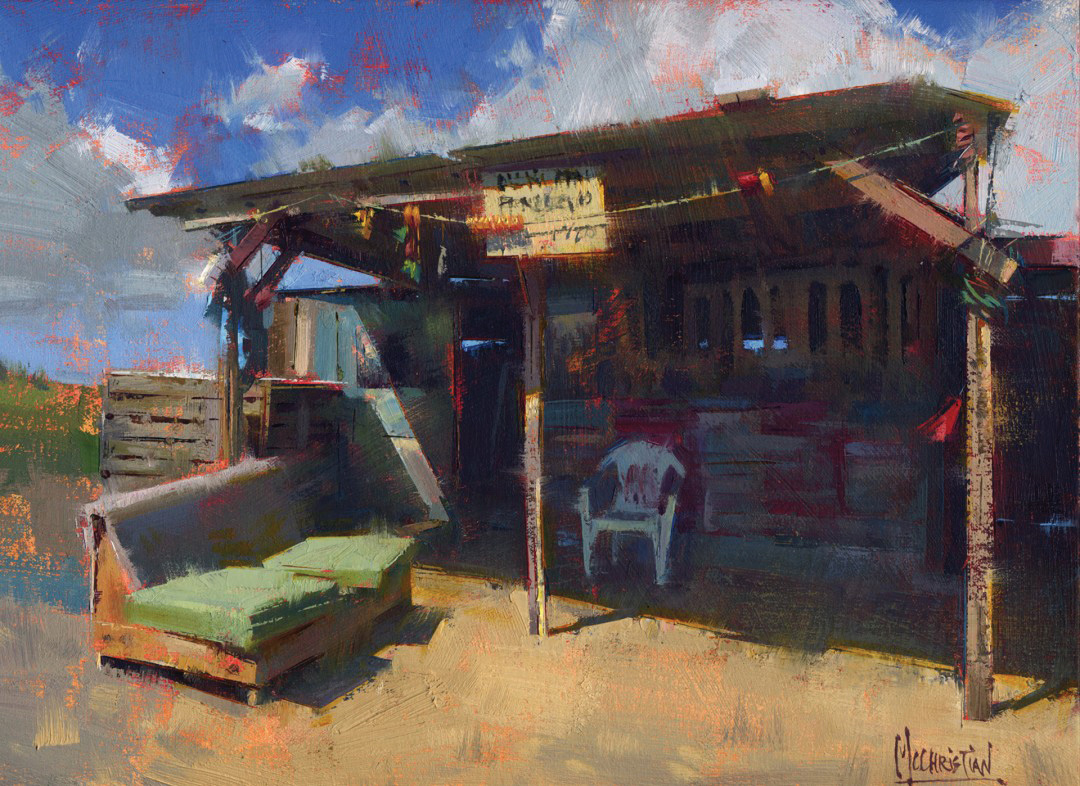
11. TRAIN YOUR EYE WITH COLOR EXERCISES
“To draw the viewer in, I rely on vibrant color. My approach is grounded in a personal color theory shaped by the limited palette described in Kevin Macpherson’s book Fill Your Oil Paintings with Light and Color, Lois Griffel’s Painting the Impressionist Landscape — particularly her exercise of painting colored blocks in sunlight — and Richard Schmid’s color chart exercise in Alla Prima: Everything I Know About Painting.
“These exercises greatly heightened my perception and sensitivity to color. I learned the important role color temperature plays in harmonizing the overall color scheme of a painting, and that comparing adjacent colors is the best way to identify the temperature of the hue. I also discovered the rewards of juxtaposing complementary colors in my paintings.”
— Jennifer McChristian, April-May 2021
12. MAKE EVERY INCH INTERESTING
“Someone once told me that every square inch of your painting should have a bit of magic in it, maybe thicker paint, or another element. Take a square inch of any Rembrandt painting and enlarge just that part into a 3 x 4-foot image, and it would still make a really interesting painting, an intriguing abstract.”
—Herman Pekel, April-May 2022
13. BUILD SKILLS THROUGH REPETITION
“As much as we’d like our experience of a landscape to fall spontaneously from our brush, desire is not enough, joy in the process is not enough. Our skills have to catch up with our vision.
“For all of us, the study of painting is ongoing. One way I continue to build skills is by painting the same subject, sometimes even the same composition, in both watercolor and oil. Oil, with its more forgiving opaque covering power, and watercolor, a translucent medium, require very different materials, procedures, techniques, and thought processes. Thinking ‘dark to light’ in one painting, then reversing to ‘light to dark’ in the next, stretches and challenges my approach. I learn so much about the mediums, the subject matter, and the process of painting in general.”
— Julie Gilbert-Pollard, February-March 2023
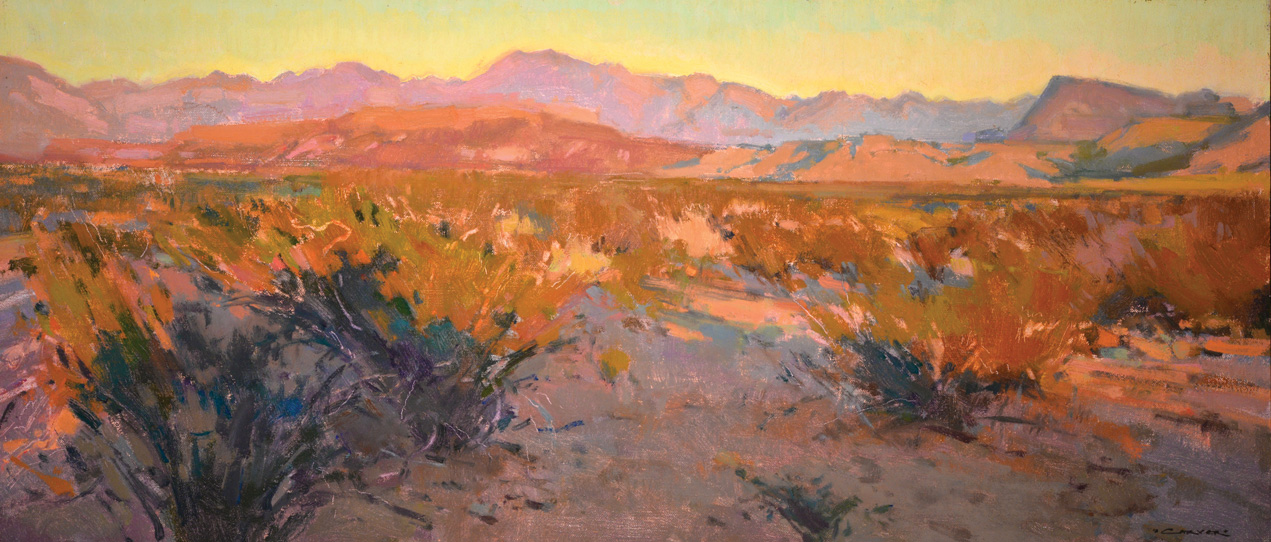
14. STEP BACK AND TAKE TEA BREAKS
“If I have any advice, it’s this: 1. Show up every day. Don’t just think you’re going to do it when your muse feels like coming around. 2. Take lots of breaks when you’re working. I’m English, so I constantly put the kettle on to make tea. I think that’s probably my superpower. If I take a break, say on the hour every hour, make a cup of tea, then sit in my La-Z-Boy chair and just look at what’s on the easel, it’s incredibly helpful. By the time I finish my tea, I’ll have a list of things to do and adjustments I want to make. Stepping back, getting distance between me and the painting, putting the kettle on — that’s my secret sauce.”
— Jill Carver, October-November 2024
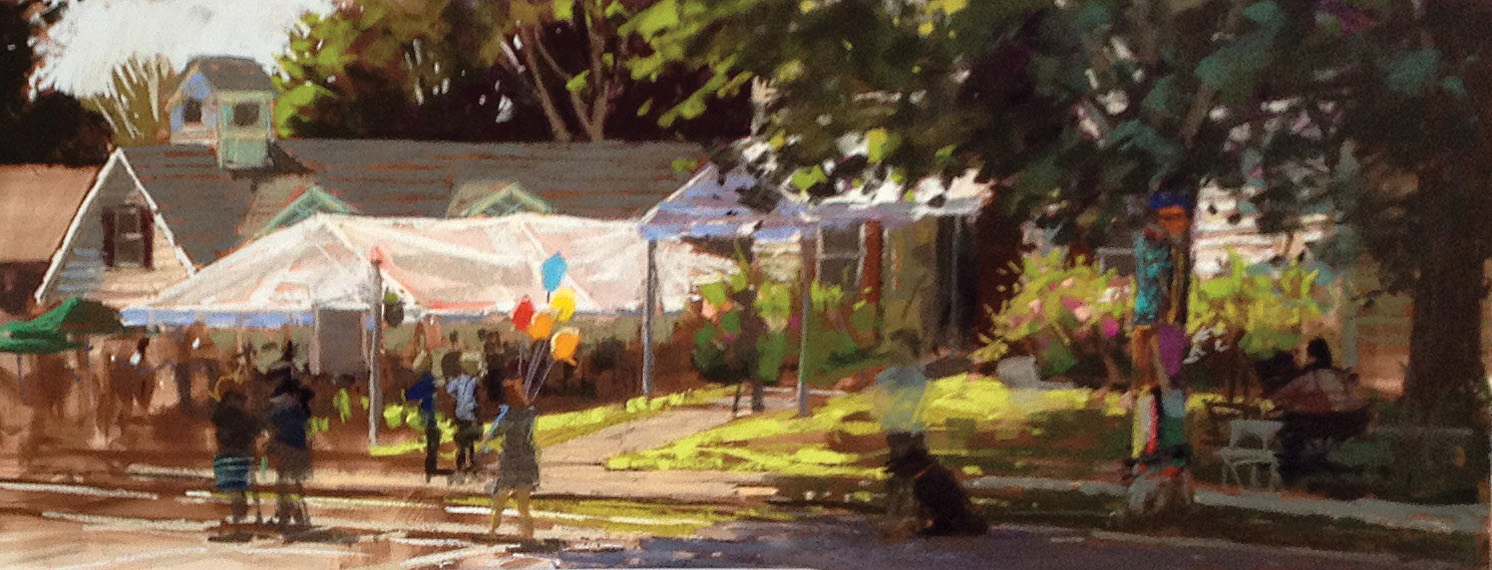
15. BUILD GOOD BONES BEFORE YOU BEGIN
“I’m a strong believer that if I slow down, take in the essence of a place, and do a sketch, that memory stays with me. Later, in the studio, it gives the work a quality that’s more authentic.
“Too often, artists skip the prep work: they set up their easels, throw up a panel or sheet of paper, and dive right in. And unfortunately, they’re doomed from the start.
“Instead, I aim to build ‘good bones.’ I begin with a sketch of 10 to 12 simple shapes, followed by a value study. I ask myself: What is it about this image that caught my eye? Why am I investing time here? If I’m not excited, I can pivot before I commit.
“With the composition and values mapped out, my confidence grows. By the time I start painting, it’s the third time I’ve drawn the image. I know where I’m going. That preparation takes away the guesswork, and then I can disappear into the process.”
— Liz Haywood-Sullivan, October-November 2025
Published bi-monthly, PleinAir magazine is focused on landscape paintings by historical and contemporary artists, art collections, events, and the process of creating plein air paintings. Beautifully designed with rich reproductions on high-quality paper, PleinAir features the top artists and artworks from around the world. Start your subscription here.
Story prepared for the web by Cherie Dawn Haas, Editor of Plein Air Today