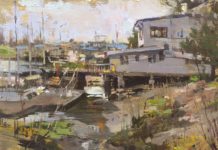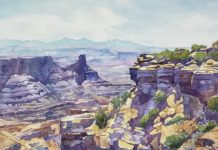
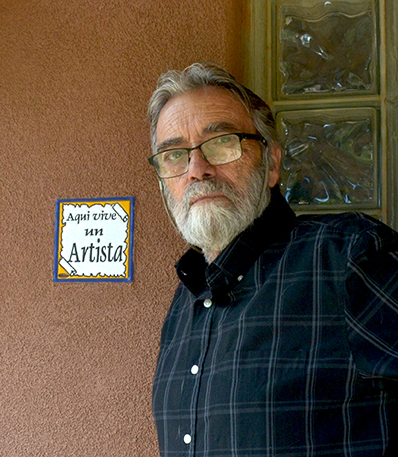
Editor’s Note: John Hughes interviews Spike Ress on how being an artist is a philosophy, Spike’s mobile art studio for plein air painting, and the artist saying he doesn’t agree with – all in this installment of “6 Questions for 6 Artists.”
Spike Ress and I have been friends in recent years, and when we get together to paint or go to a museum show, we always have great discussions about art and the means of producing it. He is keenly interested in art history and often he’ll post biographies of important painters on social media for all to enjoy. He’s had a long career in art, which began in the commercial art world and then morphed into fine art and doing what he really loves: painting and following his muse. And besides painting the land, we have other things in common: we’re both from New York and now reside in Utah.
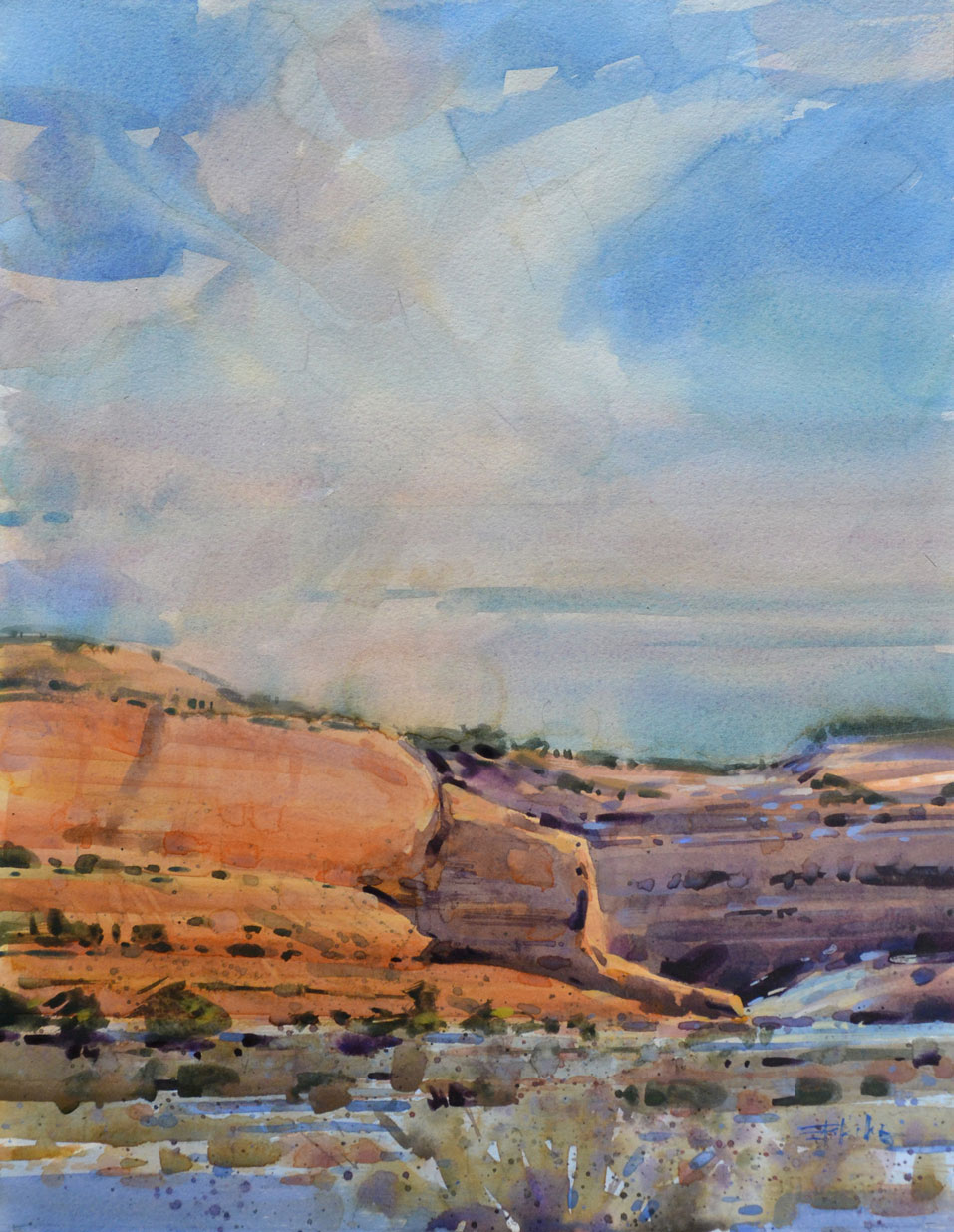
It’s my privilege to interview this interesting artist and get his take on “6 Questions for 6 Artists.” (Click here to read my previous interviews.)
1. John Hughes: What early experiences as a child eventually led you to become a landscape painter?
Spike Ress: Childhood experiences didn’t lead me to become a landscape painter; they led me to become an artist.
My maternal grandfather was a successful commercial artist in Manhattan. He sometimes let me visit his studio in the Grand Central Station Building. It was there I realized that being an artist was something you could do with your life. I began my art career as a commercial artist. It wasn’t until I moved out west and spent time outdoors in the western landscape that I was drawn to painting landscape scenes.
2. What is the key difference between just turning out pictures and creating art?
The difference for me is that creating art means living as an artist, which is a philosophy and a spirit. If you paint to please galleries or interior decorators, you are producing a product for the market rather than expressing yourself and your own experiences. There was a time when we would all talk about the “art world,” now people talk about the art business. I want to live and work in an art world.
3. How does your mobile studio benefit you as you paint on location?
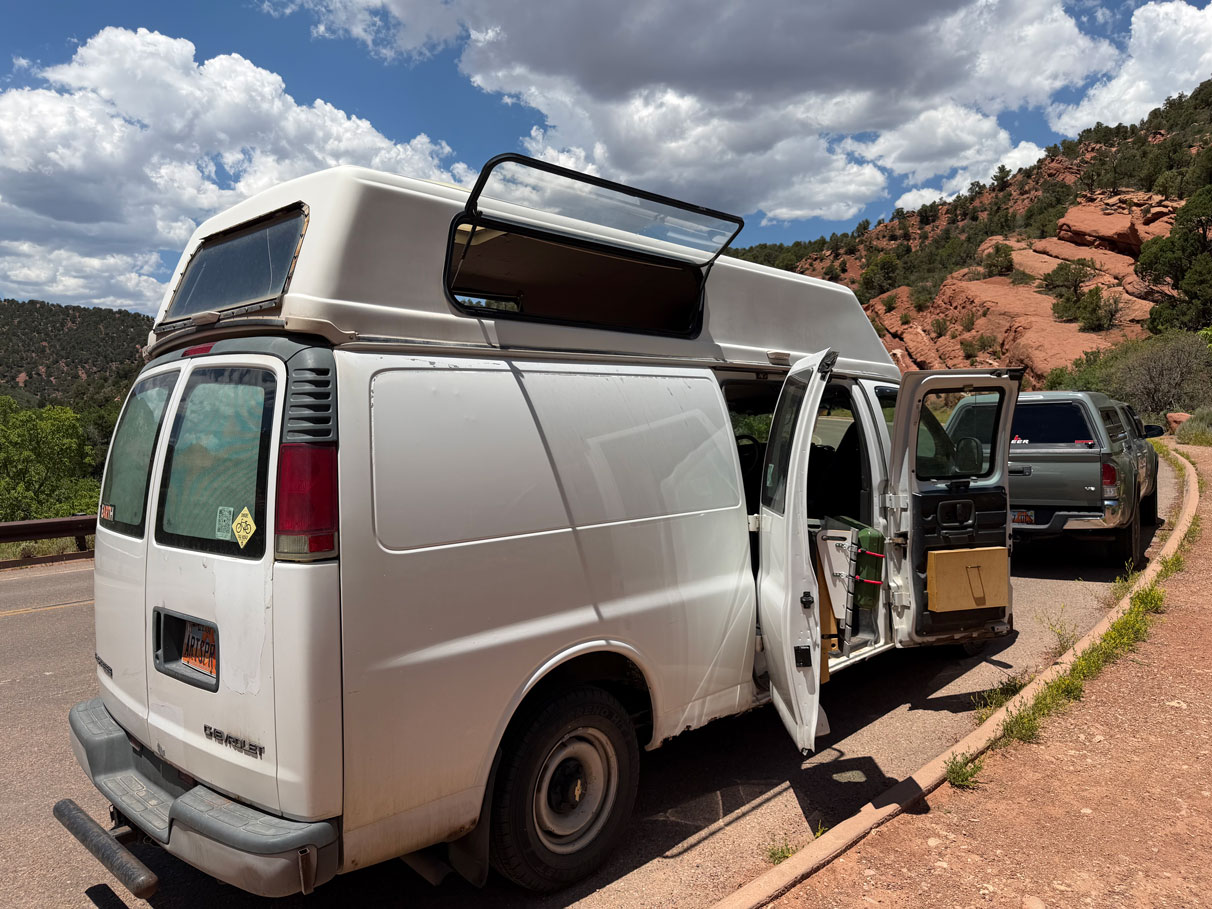
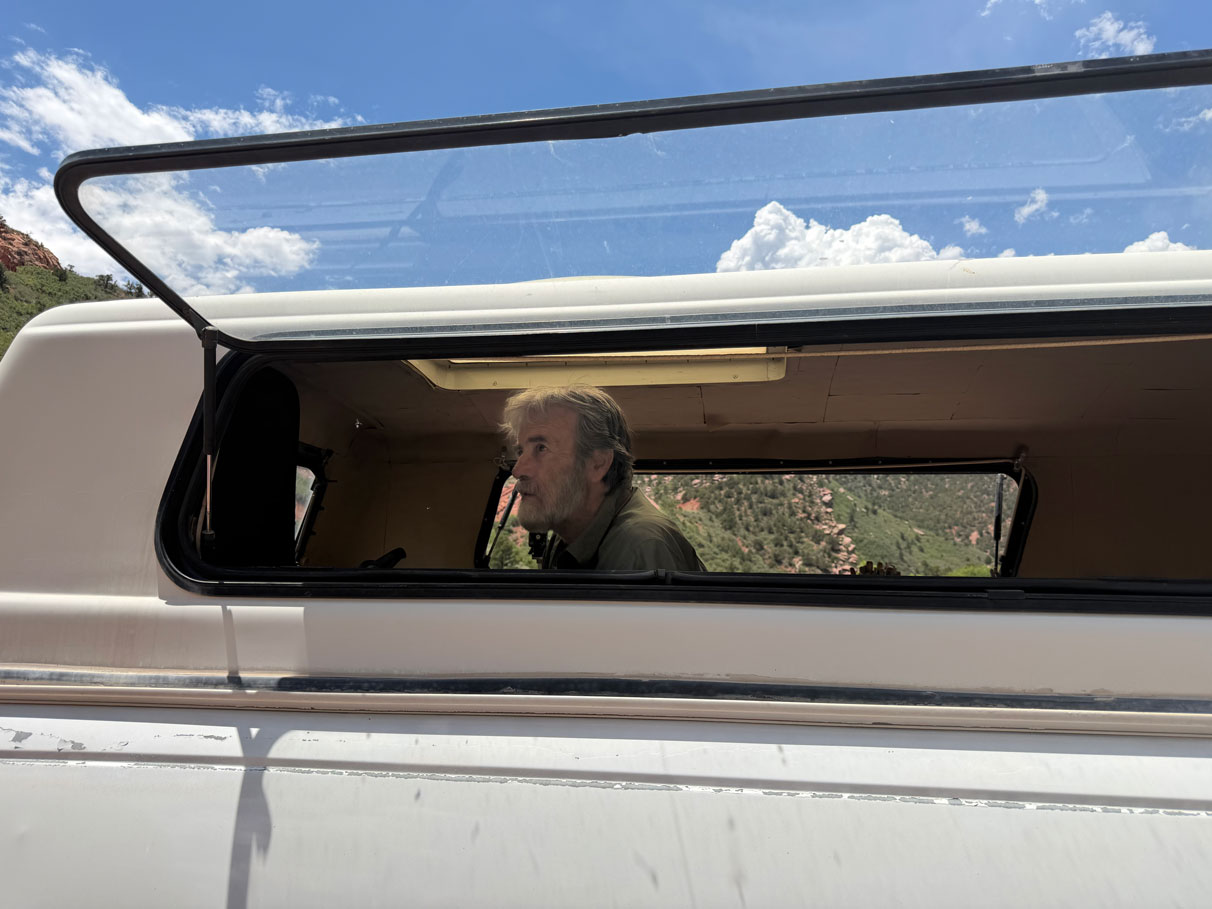
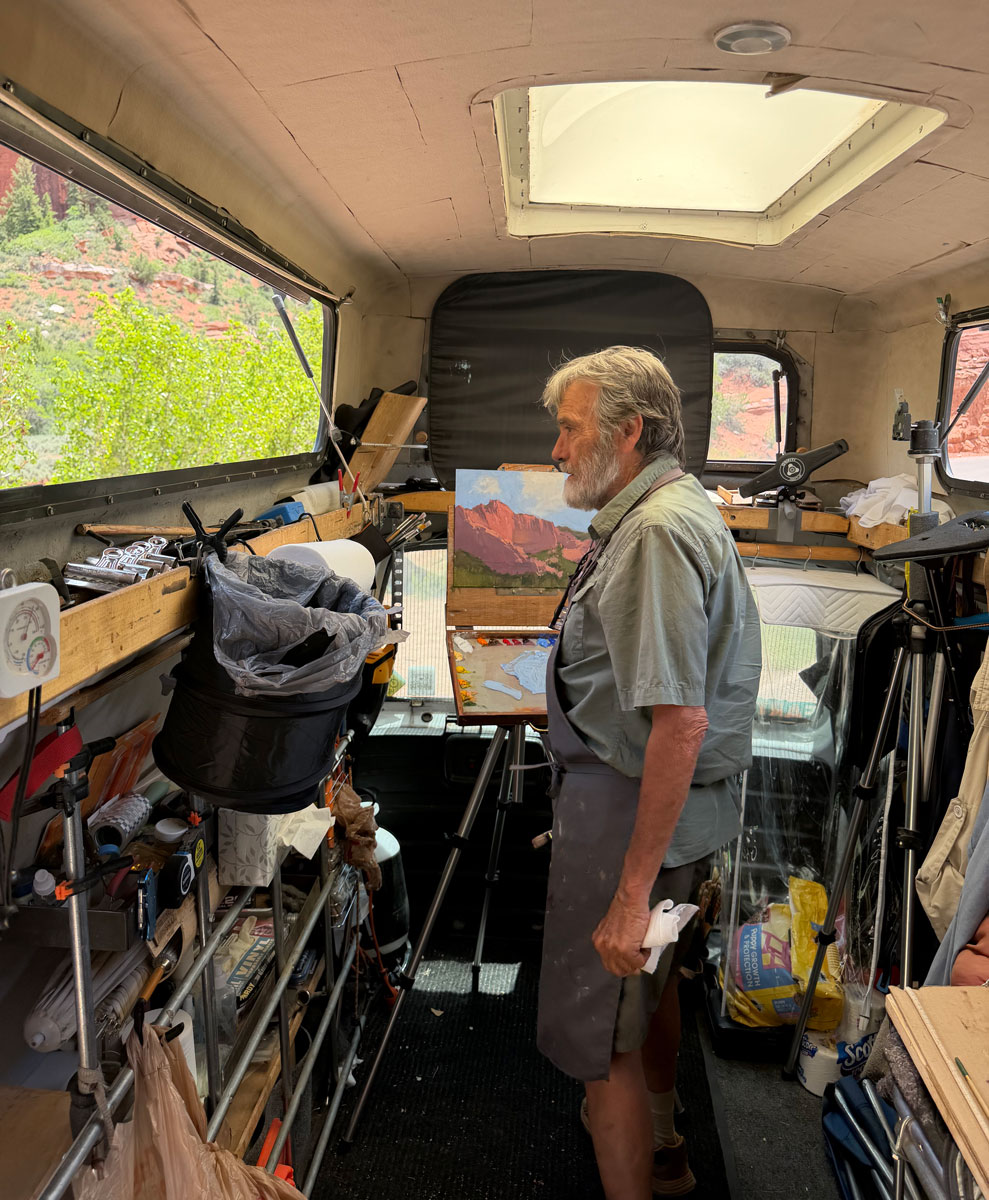
There are four difficulties when painting on location: wind, rain, cold, and people; my mobile studio eliminates all four. It is also my main tow vehicle for our vintage 1955 Airstream trailer when my partner, book artist Sue Cotter, and our dog come along. When I travel solo, the van itself works as a camper with all the comforts I need. It is a regular cargo van with an extended top. This allows me to stand up at an easel with a 260° eye-level view through open windows. I have been traveling and painting from my “paint-mobile” studio for 19 years.
4. What color tips do you have for the Outdoor Painter audience?
We’ve all heard it said, “color gets all the credit, but values do all the work.” I don’t necessarily agree with this idea. For me, there is no separation. The color and the value of a painting are really one; they work together. I don’t believe one does more work than the other.
We don’t see the world in black and white; we see the world in color, and the colors all have dark and light values. They also have higher intensity of chroma or weaker intensity of chroma, as well as warm and cool.
If I had one tip about color to pass on, I would say paint 100 studies, save them all, and look back at them from time to time. Decide for yourself why some were successful, and others weren’t. Try not to get too wrapped up in the academic aspect of values. Try to see values as tones of color.
5. What fundamental design principles make a landscape painting good, as opposed to just mediocre?
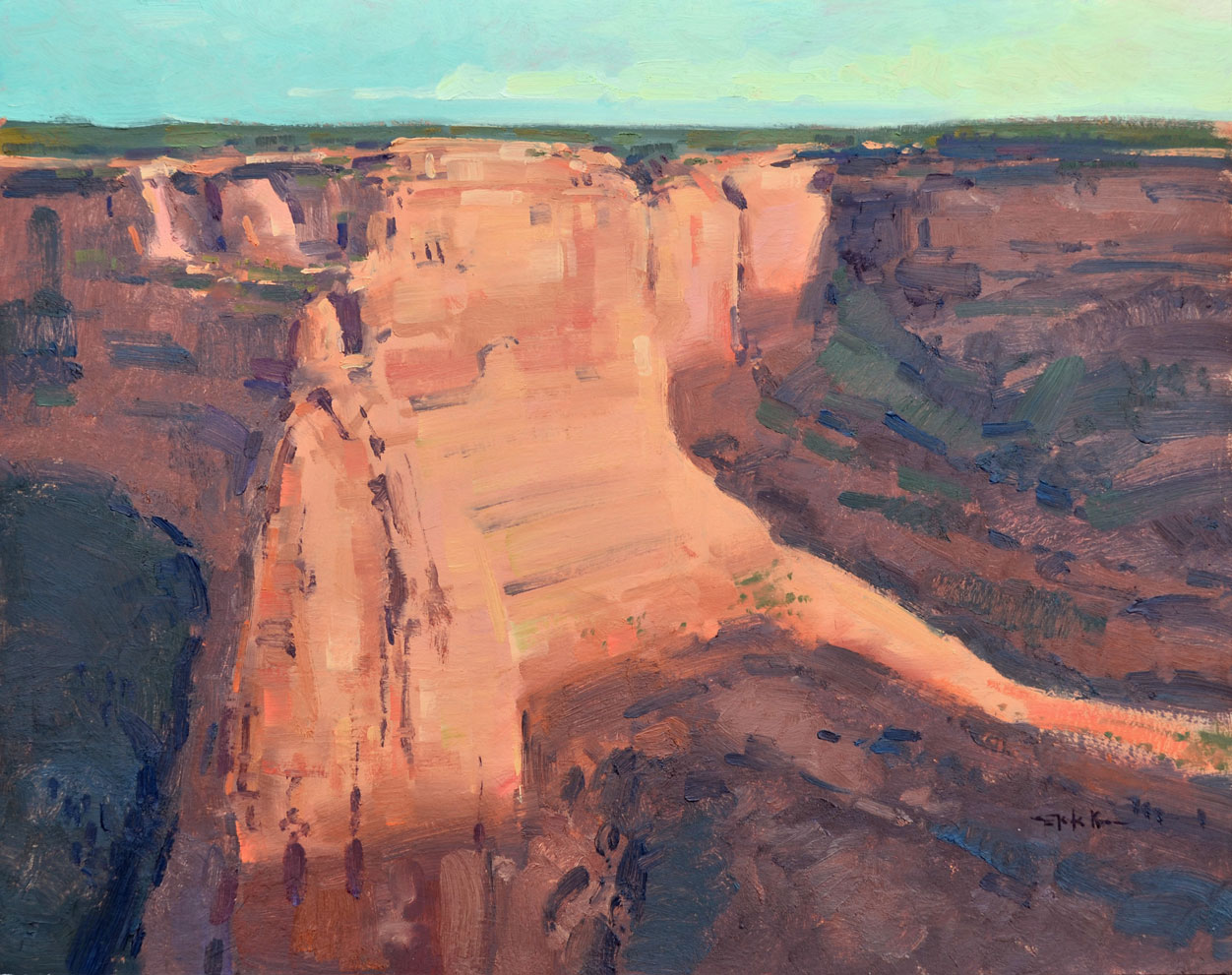
I would replace the word “good” with “interesting” or “dynamic.” You want to draw the viewer in. How is this done? With the dynamics of contrast: light and dark, warm and cool, hard and soft edges, plus the arrangement of shapes in a dynamic way.
My experience has been that great art, when viewed, has three levels of interest: at 30 feet away it catches your attention, then as it draws you closer new interest reveals itself, and even more emerges as you stand right before it. If a work of art doesn’t grab your interest from across a gallery space as you walk through, it’s probably mediocre.
6. Who are the landscape painters of the past that you most closely identify with?
I would say I most identify with Vincent Van Gogh. Not his troubled life, but his passion and struggle to be true to his own vision. He has always inspired me. There are others I admire greatly and aspire to learn from, especially those who worked both in oil and watercolor, such as John Sargent, Anders Zorn, Winslow Homer, and father and son–Edward Theodore Compton and Edward Harrison Compton. I could add many more on-location painters such as Monet, Cezanne, Sorolla, etc.
***
It has been a real pleasure to hear from Spike, who is as dedicated an artist as anyone I know. He’s a real thinker and an artist who goes after his inspiration with a passion. I hope you have enjoyed his thoughtful responses as much as I have… Who will be next to answer 6 Questions for 6 Artists?
Until next time,
~ John
Looking for ways to improve your plein air painting skills?
Don’t miss your opportunity to create lifetime memories at the Plein Air Convention & Expo! All training sessions are indoors on giant, high-def screens, with incredible paint-outs in the afternoons. Beginners and pros feel right at home, so register at PleinAirConvention.com to join us.
Browse more free articles here at OutdoorPainter.com
Blog post prepared for the web by Cherie Dawn Haas, Editor of Plein Air Today