As a plein air artist, you are part of one of the largest art movements in history. In this “plein air heritage” article, learn about those who have helped start this movement in some way, and be inspired to continue your own journey of landscape painting. For even more inspiration, subscribe to PleinAir® Magazine.
Our Plein Air Heritage
Édouard Manet (French, 1832-1883)
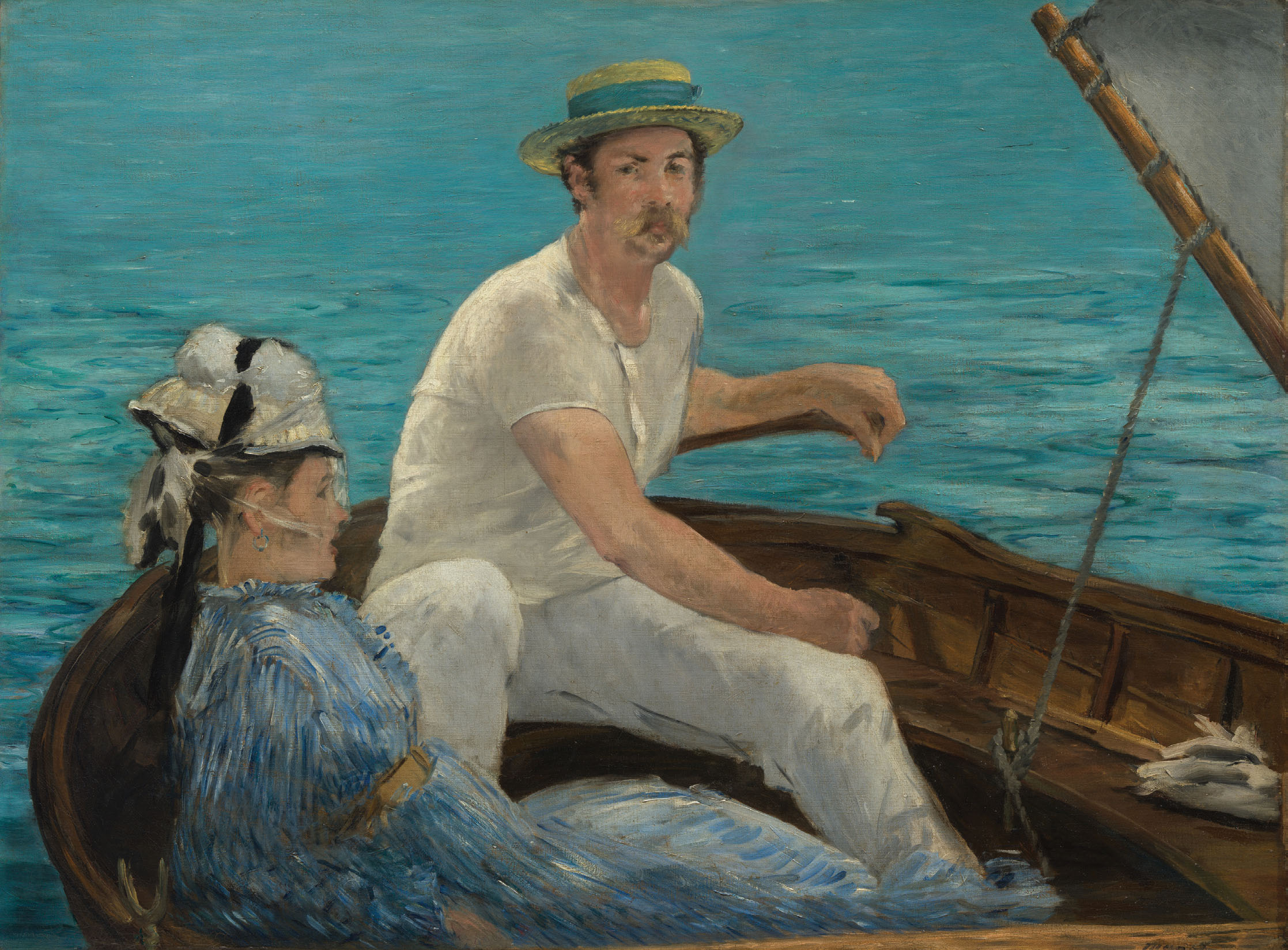
During the summer he and his family spent in Gennevilliers in 1874, Édouard Manet often crossed the Seine to paint with Claude Monet at Argenteuil. Influenced by his friend’s preference for painting en plein air, Manet experimented with a lighter palette, aiming to capture the fleeting effects of natural light on a subject for which they shared an affection — boats.
A reflection of “la vie moderne,” boating had become a fashionable pastime among the middle class. Although he resisted association with the Impressionists, Manet exhibited aspects of their sensibilities in the flickering application of paint in this piece, particularly in the woman’s dress and the eddies of the water created by the passage of the boat. The broad planes of color and strong diagonals reflect the influence of Japanese prints as well.
To emphasize the flat, two-dimensional aspects of the painting, the artist created a low vantage point for the viewer, omitting a horizon line and any visible land beyond the water, and employing an increasingly smooth texture in the brushstrokes as they mount to the top of the blue plane of water. Upon seeing the work displayed at the Salon of 1879, Mary Cassatt deemed it “the last word in painting.”
Published bi-monthly, PleinAir magazine is focused on landscape paintings by historical and contemporary artists, art collections, events, and the process of creating plein air paintings. Beautifully designed with rich reproductions on high-quality paper, PleinAir features the top artists and artworks from around the world. Start your subscription here.
Story prepared for the web by Cherie Dawn Haas, Editor of Plein Air Today