Discover the evocative work of Natasha Isenhour, an artist who captures the soul of New Mexico through her powerful southwestern art. Explore how she translates the desert’s shifting light and ancestral silence into deeply personal portraits of the landscape.
Natasha Isenhour arrived in New Mexico in 1997, but her connection began much earlier. As a child, passing through the state at dusk, she encountered a landscape that lodged itself in memory. For years, she tried to recall what those young eyes had seen, certain she belonged there.
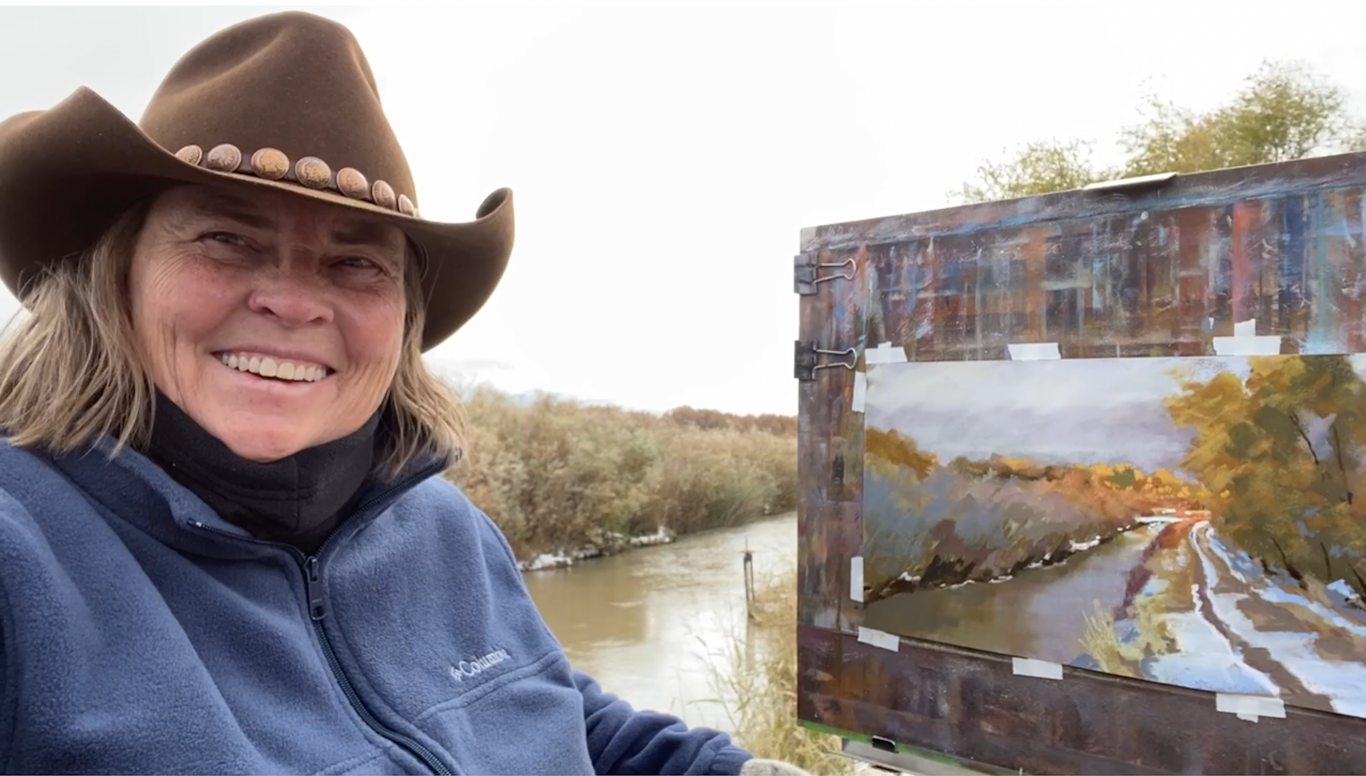
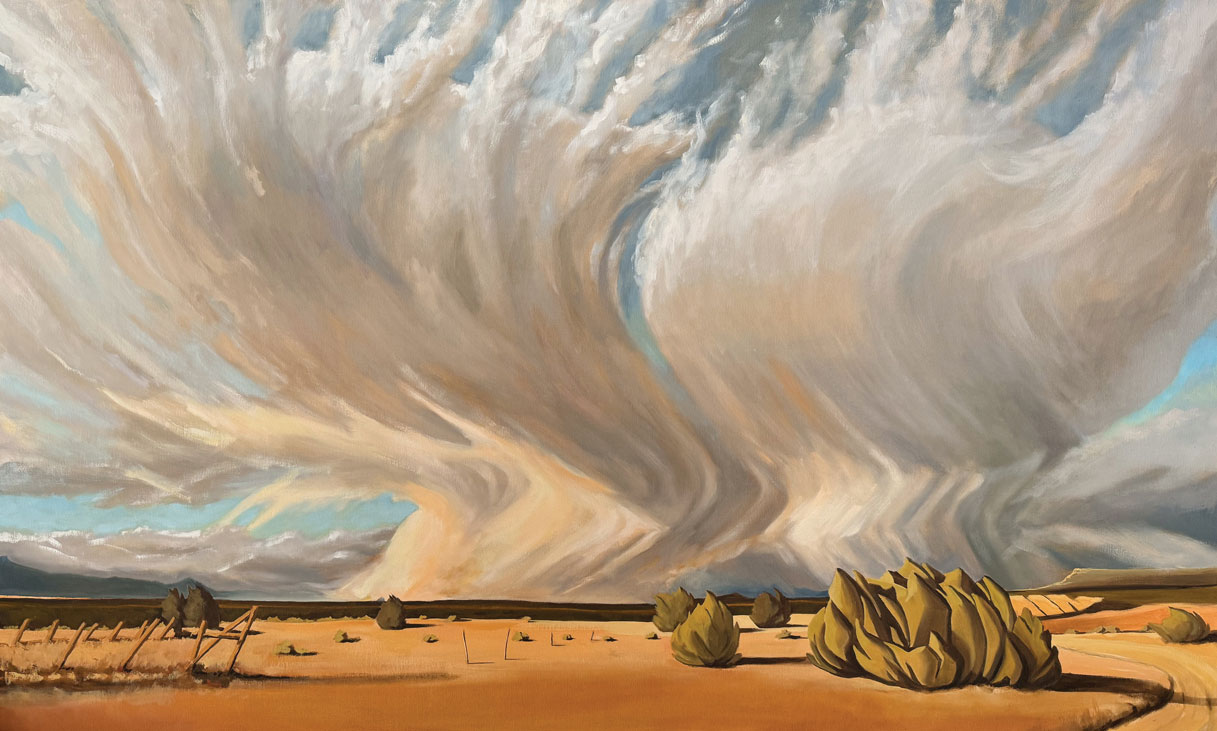
Once settled, Isenhour became obsessed with the light — how it reshapes the land moment by moment. Even while painting architecture and still life, she studied the desert’s shifting forms. When encouraged by her gallery to pursue landscape more seriously, everything she had been holding internally finally emerged.
The wide open spaces of New Mexico remain central to her work: deserts stretching for miles, bounded only by mirage-like mountain ridges in the distance; wetlands reflecting vast skies in Bosque del Apache National Wildlife Refuge; isolated structures standing against emptiness. At Ghost Ranch, where she spends a couple of months each year, the silence feels ancestral, commanding, and deeply familiar. “As I continue painting the Southwest,” she says, “everything I paint becomes a portrait of myself.”
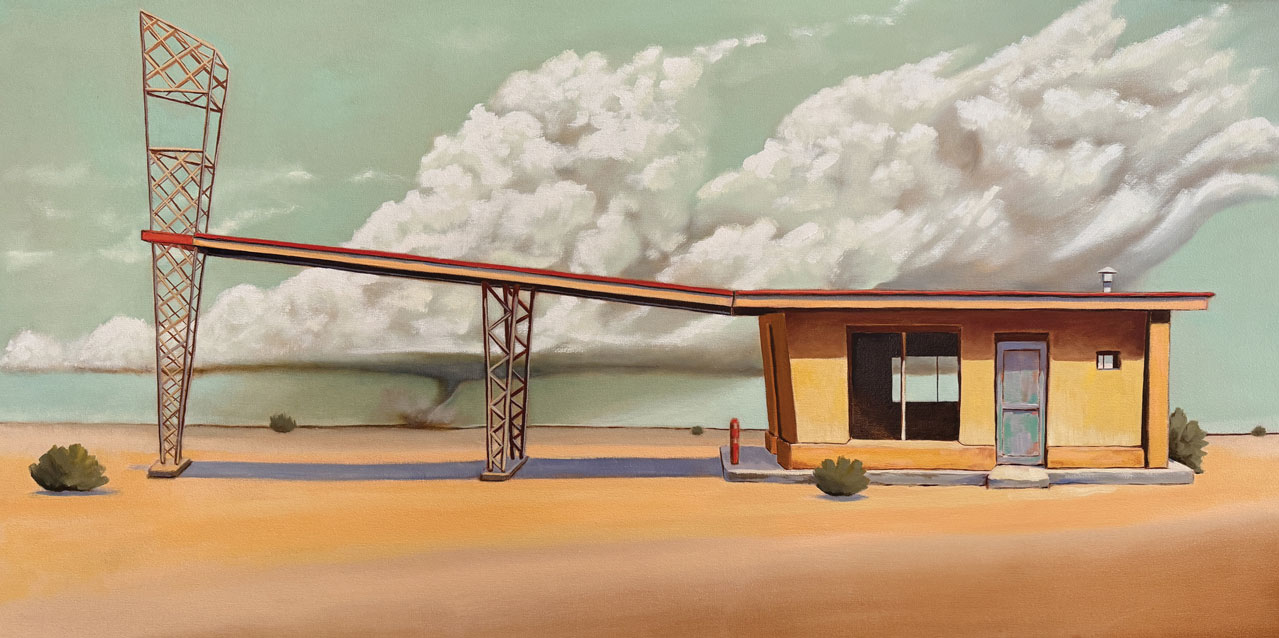
Relics of abandoned buildings become metaphors — open hearts, bones exposed to weather. The land teaches authenticity and impermanence. Change is constant, whether geological or personal, and Isenhour embraces that uncertainty as the point of creative life.
While she resists direct lineage to historical painters, she admires Georgia O’Keeffe’s fearlessness more than her imagery. What matters is not emulation but emotional transmission.
“To do the work is the responsibility,” Isenhour says. Showing up, again and again, is how she honors the land — and herself.
The editorial above is part of a series that spotlights the work of an accomplished artist featured in PleinAir magazine.
Published bi-monthly, PleinAir magazine is focused on landscape paintings by historical and contemporary artists, art collections, events, and the process of creating plein air paintings. Beautifully designed with rich reproductions on high-quality paper, PleinAir features the top artists and artworks from around the world. Start your subscription here.
Story prepared for the web by Cherie Dawn Haas, Editor of Plein Air Today