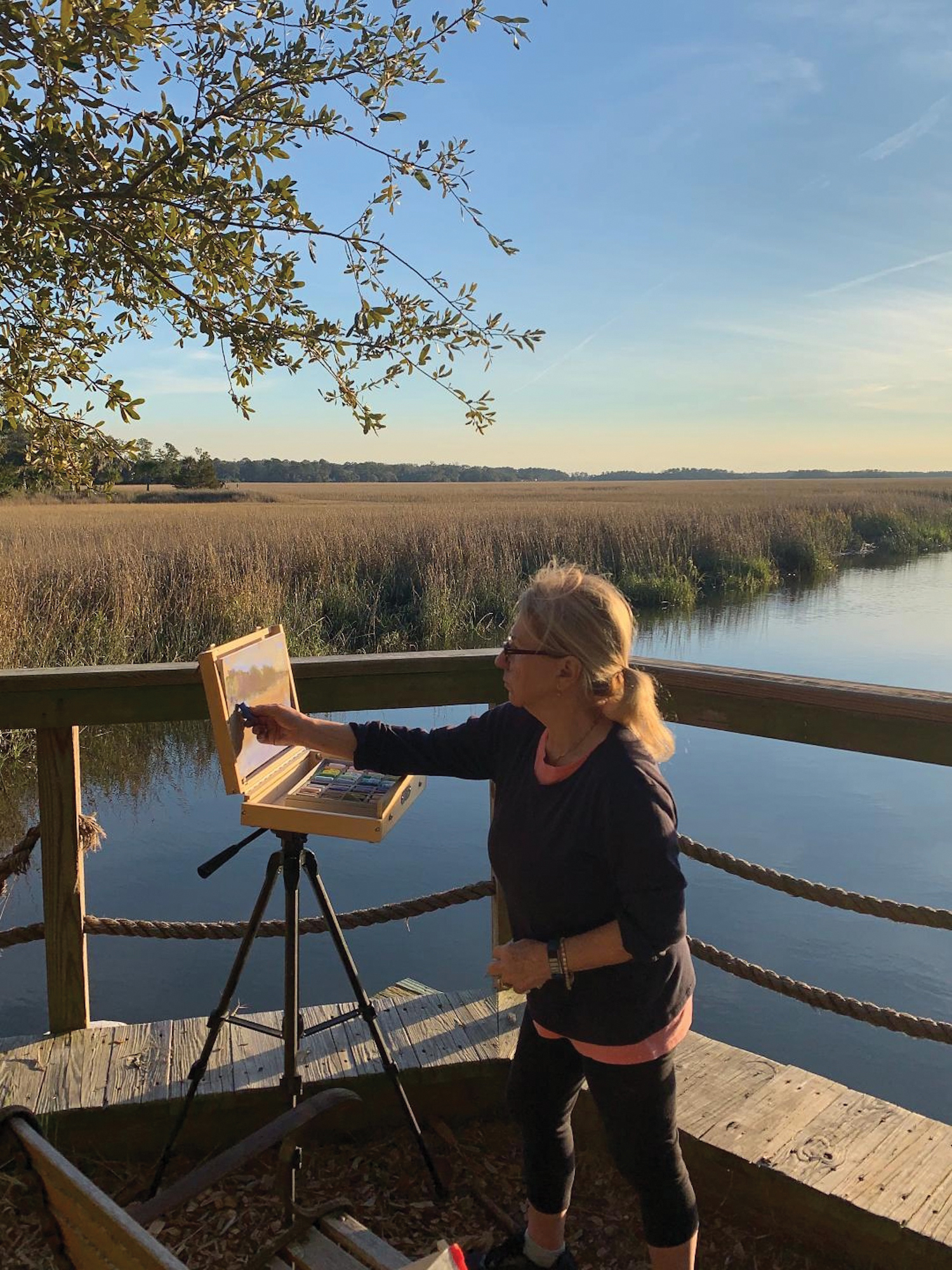
Discover expert tips in this pastel painting demonstration by Eve Miller, who shares her step-by-step process for building atmosphere in a vibrant landscape.
One way Eve Miller keeps her daily practice fresh is by starting with an intentional surface preparation. For this demo, she’s working on UArt 400 mounted board. “Because the surface is quite light, I brush on a thin acrylic wash of cadmium red light mixed with water,” she says. “This warm underpainting provides a lively base that peeks through in places and gives me something to respond to when choosing colors and values.”
What You’ll Learn
- Surface Preparation: How to apply an underpainting wash to create a lively base for pastels.
- Compositional Planning: Using the rule of thirds, value studies, and notans to establish a strong foundation.
- Layering Techniques: Mastering skies, gradients, and pastel application without over-blending.
- Atmospheric Perspective: Utilizing warm and cool tones to push elements forward or back in the landscape. (Click here to browse more articles about painting “atmosphere.”)
Step 1
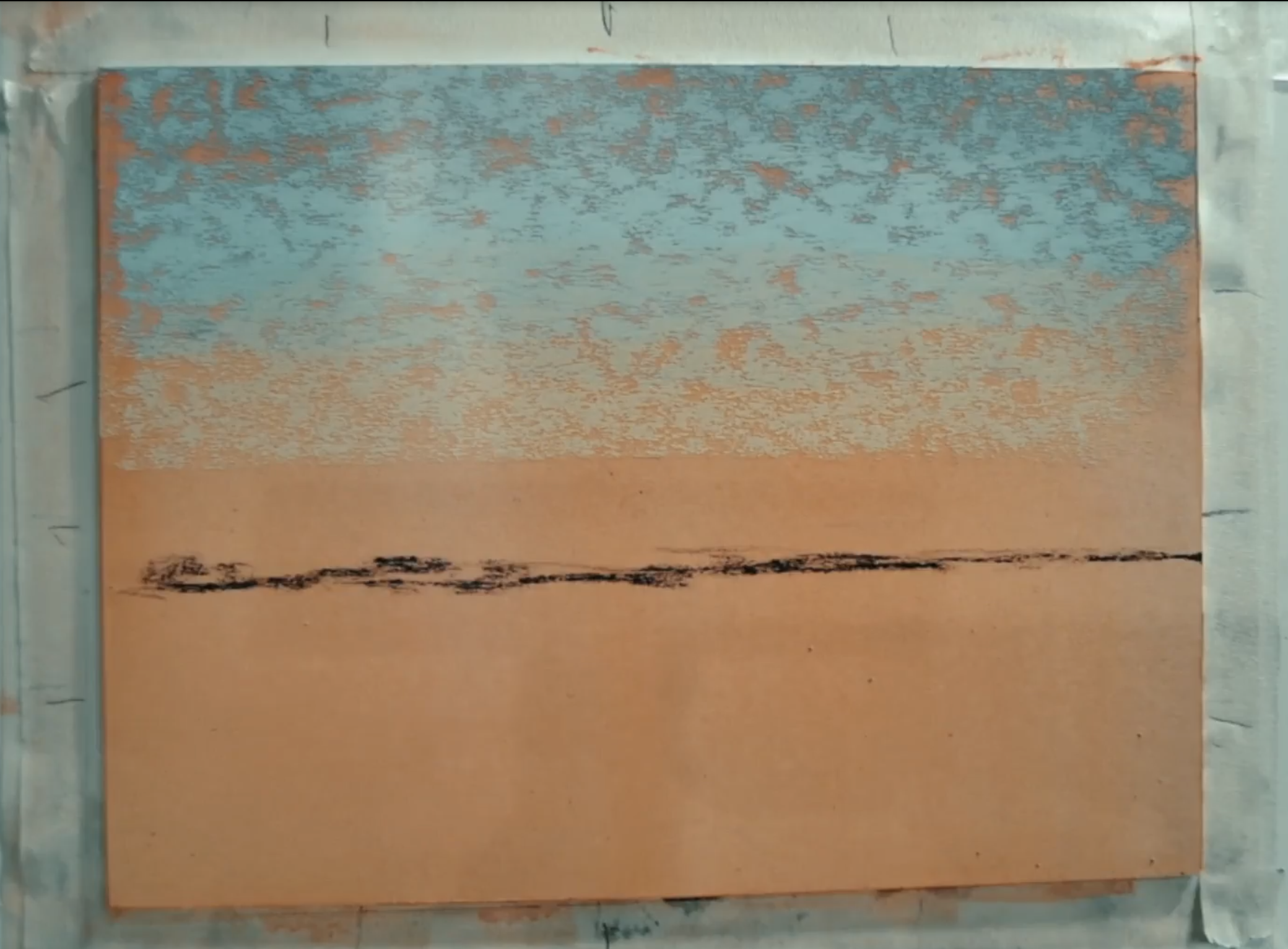
Step 1: “I put a small dot in the center of the board as a reminder not to place anything important there,” says the artist. “Instead, I aim for the rule of thirds, making rough tick marks on the surrounding tape for guidance. About one-third up from the bottom, I draw the horizon line.
“With the composition set, I begin softly with a dark blue-violet NuPastel over the horizon to suggest distant trees. For the sky, I want a gradient: dark blue at the top, shifting to turquoise of the same value, then a layer of yellow that blends into a greenish yellow where it overlaps with the turquoise.”
Step 2
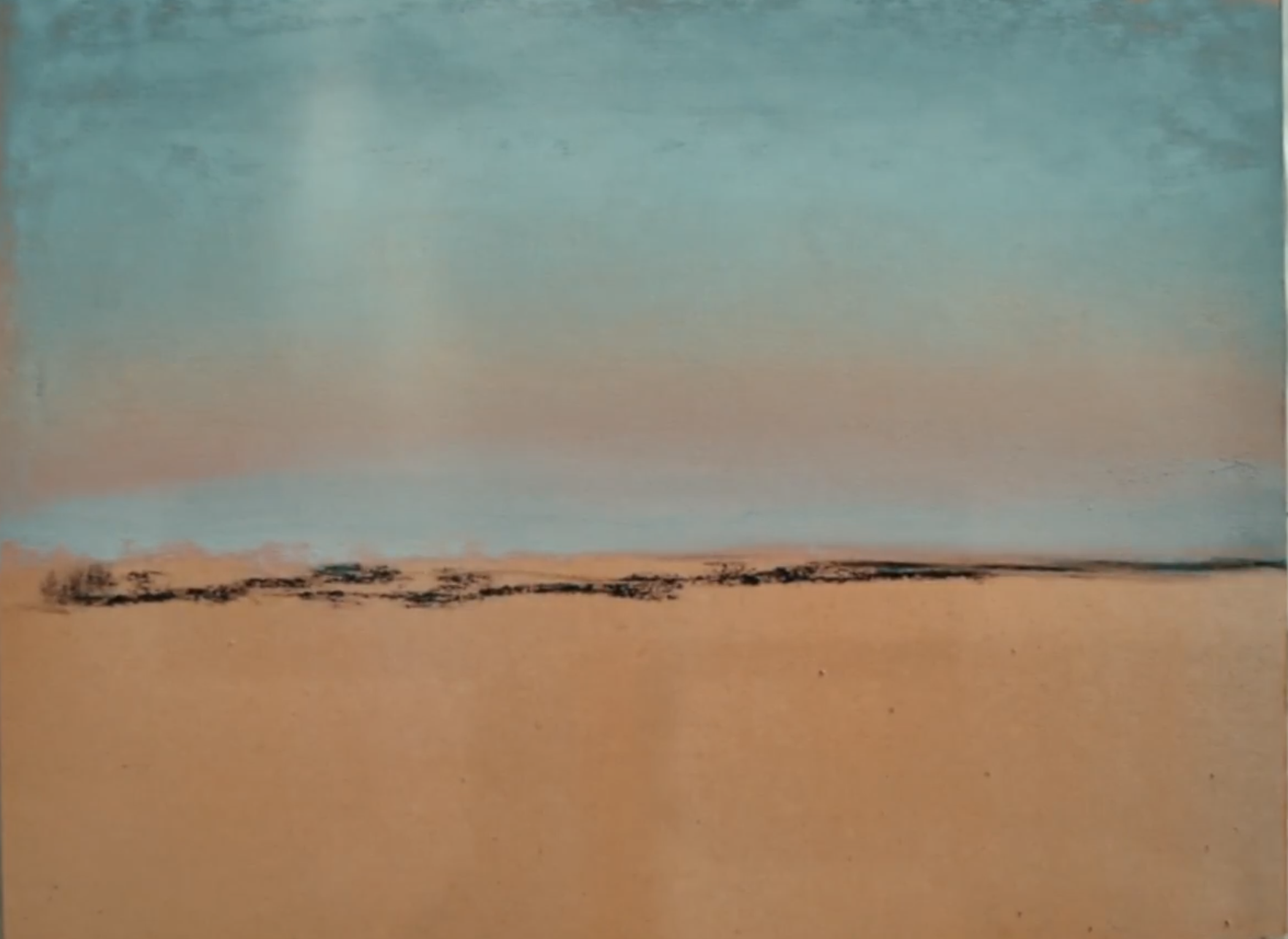
Step 2: “I rarely blend pastels, except when painting skies,” says Miller. Here, she rubs the first three layers together with the palm of her hand, leaving hints of the cadmium red wash visible for warmth. Closer to the horizon, she adds a layer of pink where the sun lights the sky, then, just above the horizon, she introduces a soft blue-violet. “These shifts mimic the way dust and moisture scatter light near the horizon,” she says.
Step 3
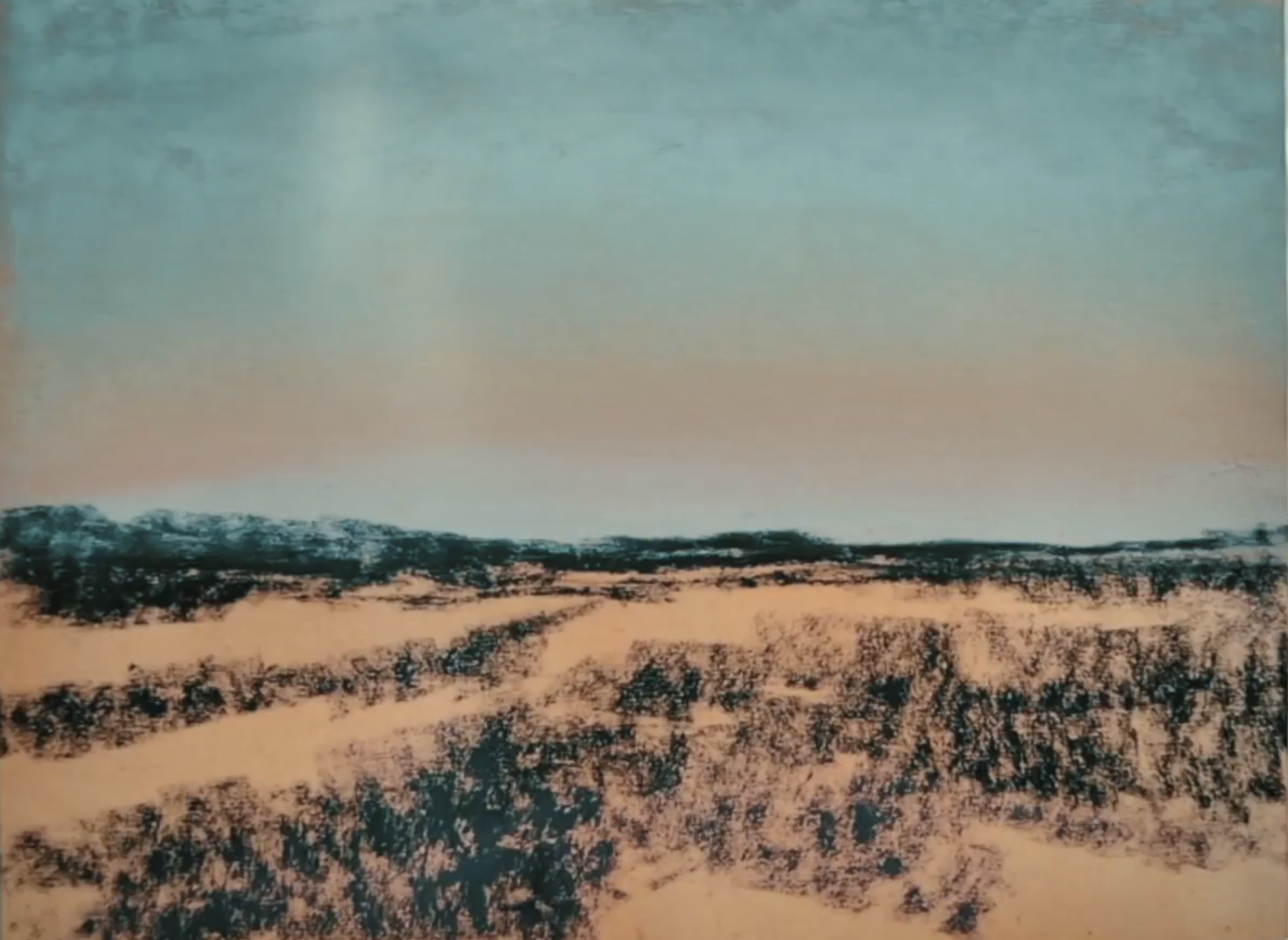
Step 3: With the sky established, the artist turns to the land, blocking in the big shapes with a dark green NuPastel. “I’m not copying the scene exactly,” she says. “I want to interpret how it feels to me.” She varies the silhouettes along the horizon so one side is a little higher, the other lower, encouraging the eye to move naturally across to her focal area. In the foreground, she begins to establish the armature of her composition: an S-curve that further leads towards the area of interest along the horizon, with diagonal strokes adding energy and movement.
Step 4
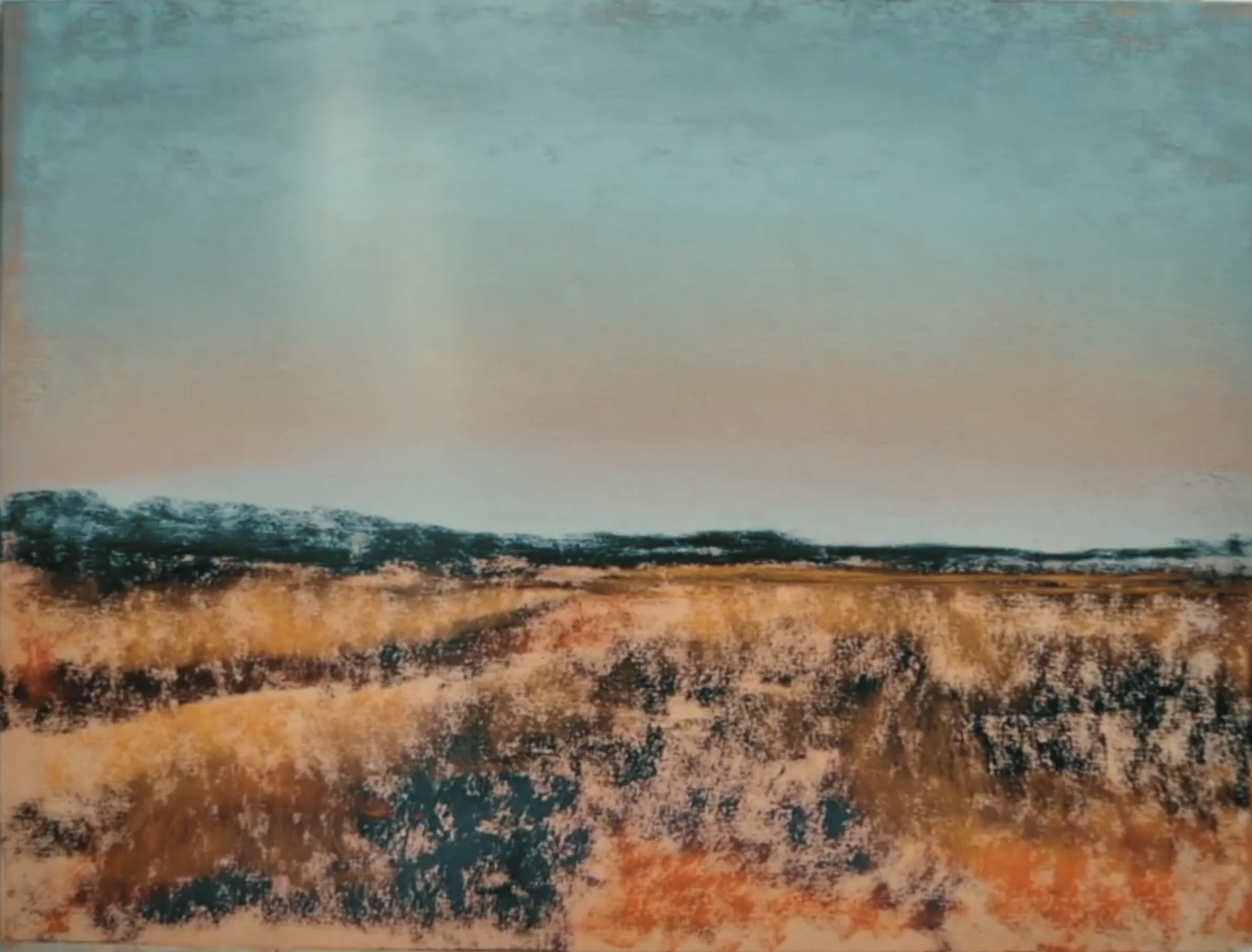
Step 4: Here she lays in orange and ochre for local color, always checking against her value sketch. “Before painting, I like to do three types of thumbnails: a line sketch, a value study with three or four tones, and a notan, which ensures a strong light/dark balance,” she says. “I avoid an even 50/50 split, aiming instead for more interesting ratios like 40/60 or 30/70. (Click here to read about notans in “The Power of Black, White, and Gray”)
“As I build layers, I keep aerial perspective in mind — cooler, lighter tones in the distance and warmer, darker tones up front.”
Step 5
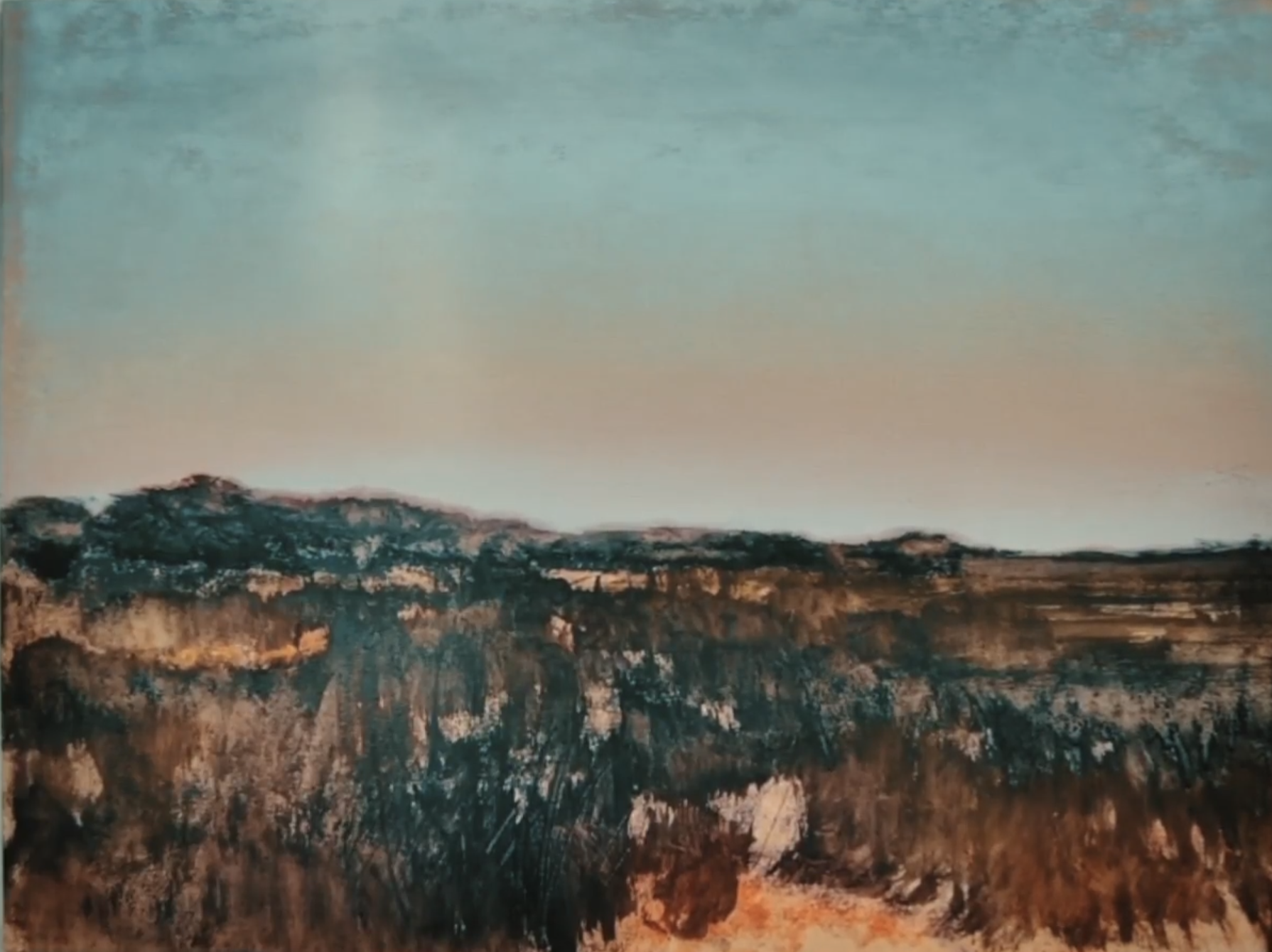
Step 5: Next, Miller applies clear gesso, diluted to the consistency of batter, with a No. 6 brush, tapping it onto the landscape so as not to obliterate her shapes entirely. “If it drips, even better — the unexpected marks give me something fresh to respond to,” she says.
“Throughout, I step back often to evaluate what’s happening on my sur face. It’s easy to get lost in detail and forget the feeling that drew me to the scene in the first place. My goal is always to lead the viewer’s eye through the composition toward an area of fascination — not a single point, but a place where the eye lingers.”
Step 6
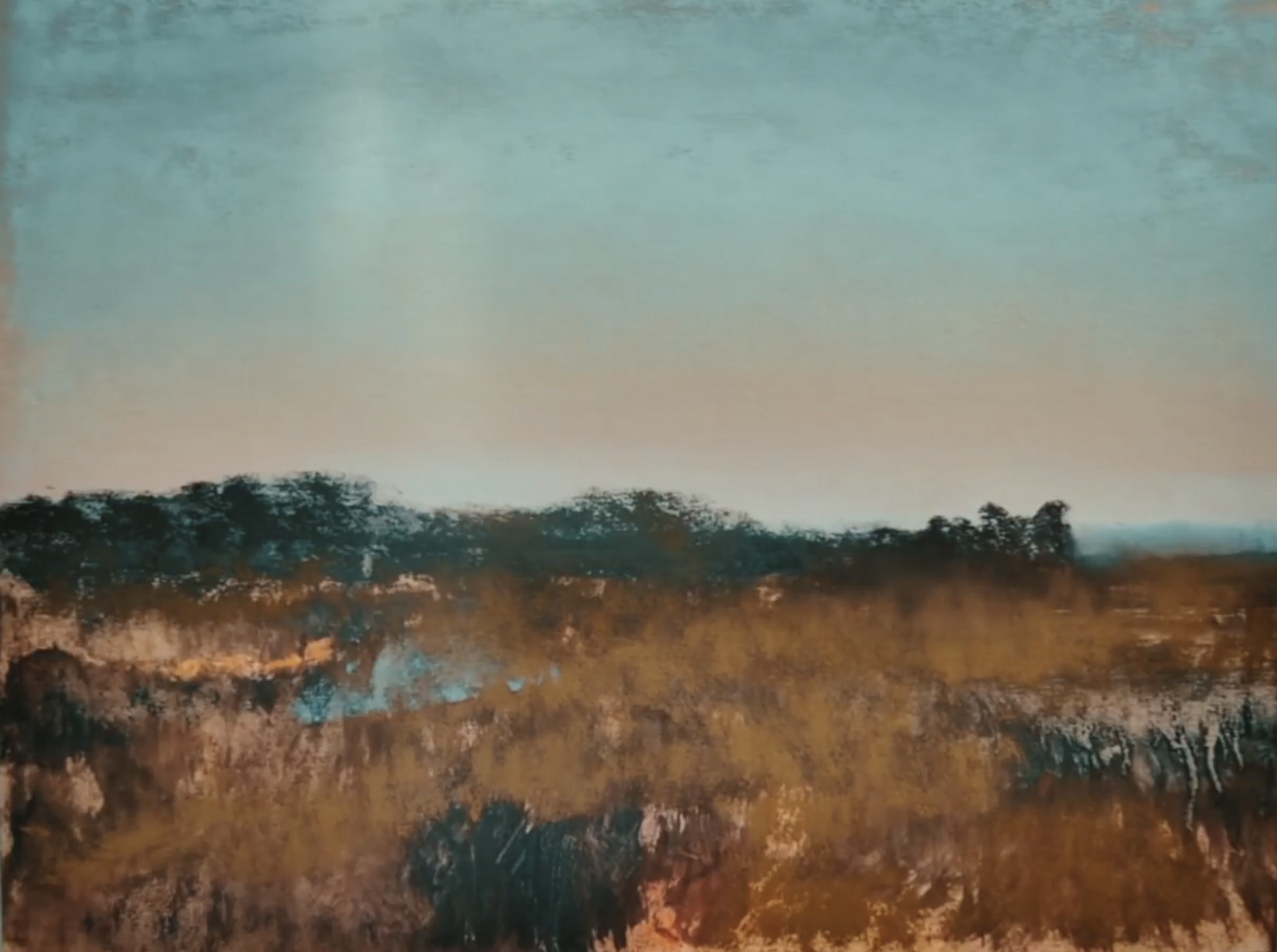
Step 6: With the structure in place, she switches to softer pastels, introducing neutrals and subtle warms and cools. “I put my darkest darks near the focal area and sketch in a few tree shapes simply because the painting feels like it needs them. Warm darks provide balance and push the focal area for ward. I also add bright blue along the horizon, repeating it in the foreground grasses for harmony.”
Step 7
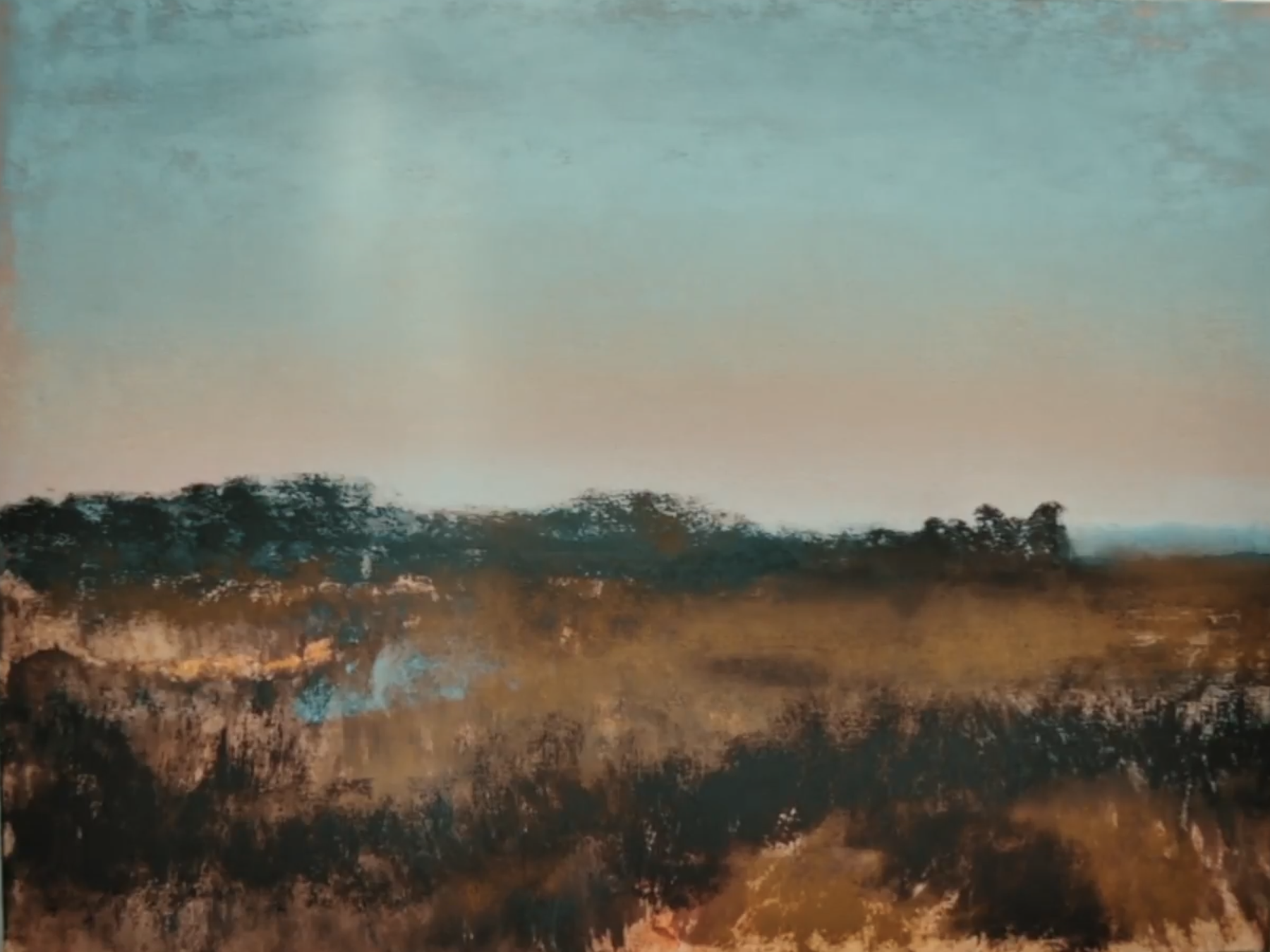
Step 7: Using a stiff fan brush, she removes some pastel in the foreground to let the underpainting show through. “When I compare the painting to my value sketch, I notice I need an additional foreground dark,” she notes. “I fill it in with a warm tone and connect it to the other dark passages for cohesion.”
Final Step
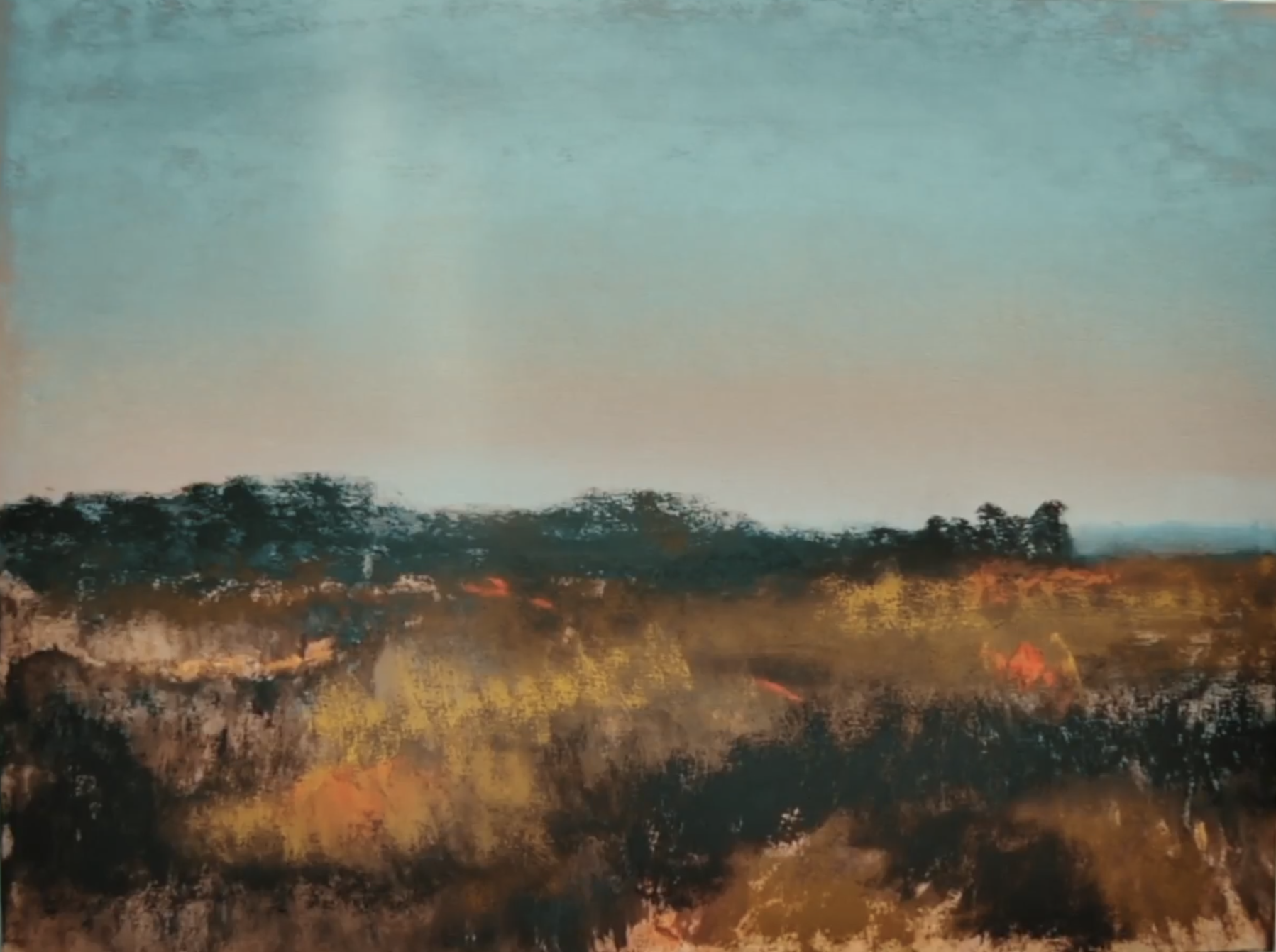
Final Step: To finish, she adds small accents she calls “arm candy.” These little marks add sparkle and keep the eye moving. “My aim is for the painting to feel natural, soft, and believable, but also personal — a reflection of the calm, peaceful mood I felt on site,” she says.
Materials
- UArt 400 mounted board as the painting surface
- Cadmium red light acrylic paint and water for the initial warm underpainting wash
- NuPastels (including dark blue-violet) for blocking in distant trees and shapes
- Clear gesso (diluted) applied to the landscape
- No. 6 brush for applying the gesso
- Stiff fan brush for removing pastel in the foreground to reveal the underpainting
About the Artist: Eve Miller is a signature member of The Pastel Society of America IAPS/Master Circle, Juried Journeyer member of The Pastel Guild of Europe, Juried Member of the Women Artists of the Southeast, Juried Full Member of the Catharine Lorillard Wolfe Art Club, Juried Elected Member of the Salmagundi Club and Associate Member of the American Impressionist Society, Juried Elected Artist of the National Association of Women Artists and Elected Member of Allied Artists of America. Eve is also, a signature member of the Pastel Society of Colorado the Maryland Pastel Society, The Degas Pastel Society, Member of Excellence at the Southeastern Pastel Society and a Fellow in The American Artists Professional League. In addition, she is a member of the National Oil and Acrylic Painter’s Society.
You’ve learned how Eve Miller builds atmosphere in this pastel painting demonstration. Next, explore more lessons and inspiration in PleinAir Magazine ((start your subscription here).
Story originally written by Kelly Kane, Editor-in-Chief of PleinAir Magazine, and prepared for the web by Cherie Dawn Haas, Editor of Plein Air Today