How to Paint Mountain Pine Trees with Allie Zeyer
Mountain pines are not tidy little Christmas trees. They are gnarly, twisted, weathered survivors with a whole lot of character. That is exactly what makes them so much fun to paint.
This episode of Art School Live with Eric Rhoads features special guest Allie Zeyer, who demonstrates how to paint an alpine landscape in gouache. The lesson is full of practical ideas for capturing high mountain trees, rugged rocks, distant atmosphere, and expressive branches without overworking the scene.
Start Soft, Then Build the Character
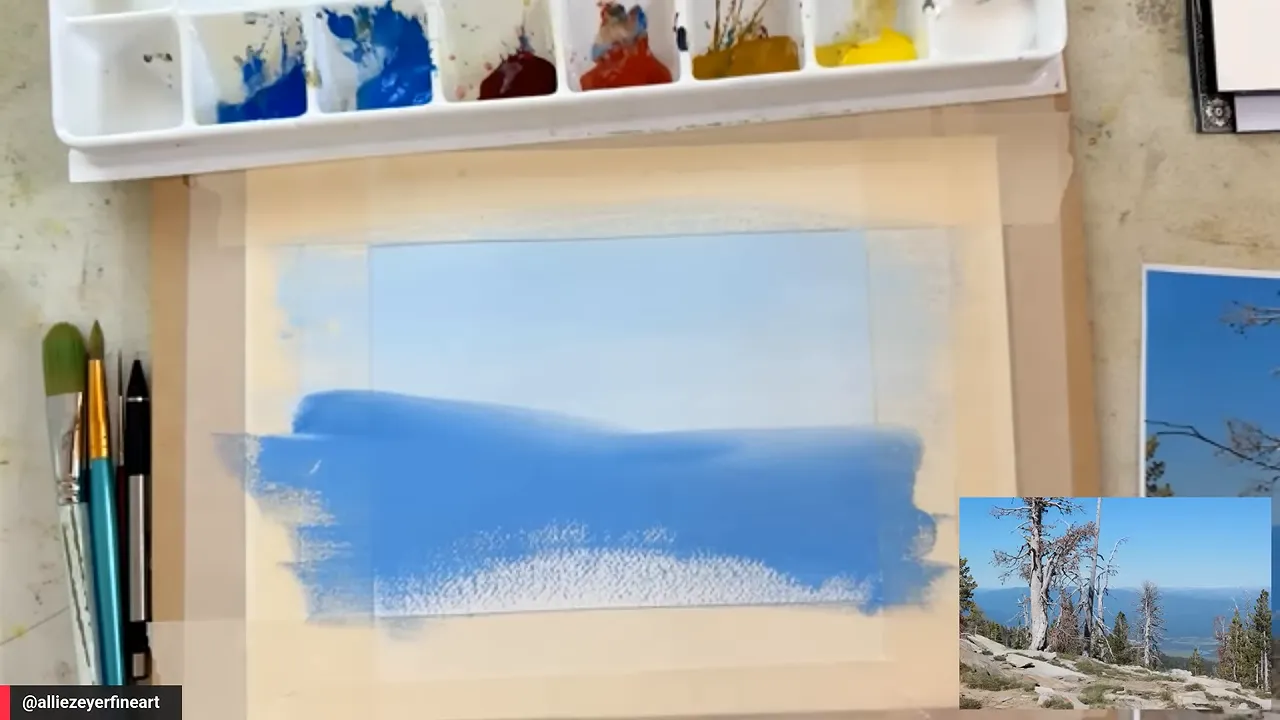
Zeyer begins with the background, working wet into wet on 140-lb cold press watercolor paper. The sky and distant mountain forms are kept soft and simple, using broad passages rather than early detail. This quiet background matters because it gives the eye a place to rest before the sharper, busier tree shapes arrive.
The first goal is not to paint every tree. It is to establish the large planes: distant sky, mountain, foreground rock, and the general gesture of the tree group. The whole painting starts as a conversation of big shapes.
Use Gouache for Both Softness and Strength
Gouache is especially useful for this kind of scene because it can behave like watercolor in the early wash, then become opaque and graphic in later layers. Zeyer builds the background with plenty of water, then shifts to thicker paint with very little water for the trees and foreground.
Her palette includes titanium white, lemon yellow, yellow ochre, Venetian red, alizarin, sky blue, cobalt, neutral gray, and raw sienna. These colors create the warm and cool shifts that keep an alpine landscape from becoming one big green mass.
Gouache is forgiving. Once an area dries, it can be painted over, carved back into, or reactivated with water. That makes it a wonderful practice medium and a practical companion for plein air painting, where a compact kit can replace heavy tubes, solvents, and complicated setup.
Make the Trees Read Through Light and Shadow
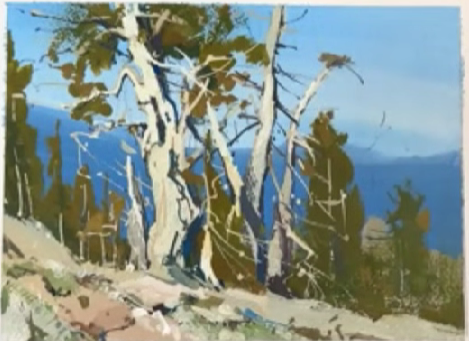
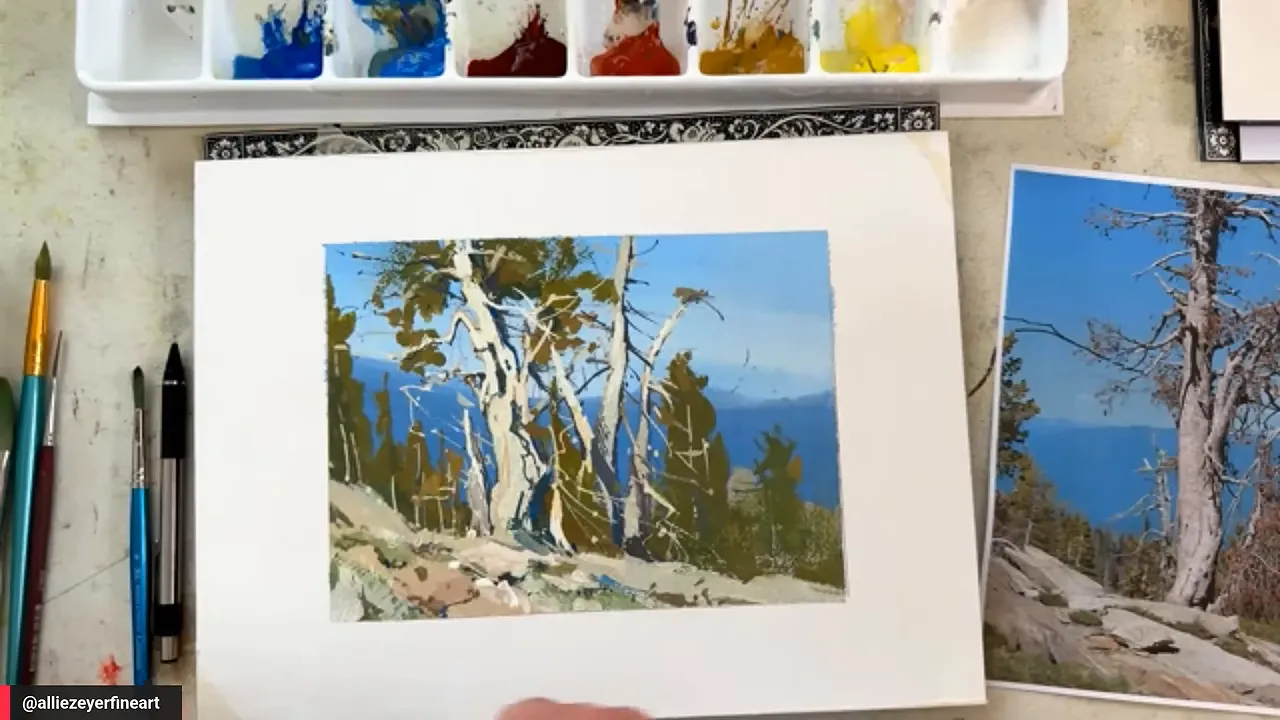
The foreground tree is the star of the painting, so it receives the brightest lights and clearest structure. Trees farther back are quieter, grayer, and less distinct. That simple hierarchy creates depth.
Rather than rendering every needle, Zeyer follows the gesture of the trunk and branches, placing clear light and shadow shapes first. A slender rigger brush then creates twiggy, calligraphic marks that suggest the wild rhythm of alpine pine branches.
It is easy to get carried away with a rigger because those marks are fun. The remedy is to pause, put down the small brush, and return to larger masses. A strong painting needs both broad connected shapes and a few well-placed details.
Let Colors Talk to Each Other
One of Zeyer’s most useful ideas is that the shapes in a painting need to have a conversation. A bright chartreuse green should not sit alone without a related note elsewhere. A warm yellow ochre in the grass can echo warmth in the rocks or tree lights. A cooler green can shift gradually toward the pine mass.
This color relationship keeps every area connected. The reference is only a starting point, not a rulebook. Zeyer deliberately reduces unwanted dead red foliage and emphasizes the greens that better serve her design. The painting must work as a painting, even when it differs from the photograph.
Experiment Without Fear
Dry brush is one of the most expressive effects in this demonstration. With almost no water on the brush, gouache can create scrappy foliage, broken rock texture, and lively surface variation. A palette knife, sponge, or worn oil brush can also create unexpected natural textures.
The important thing is to keep the marks serving the landscape. If repeated marks become too mechanical, paint back over them, simplify, and try again. Even drying shifts become less intimidating with experience. The color may sink in or change slightly, but additional layers can restore the desired effect.
A Lesson in Confidence and Play
The full episode (shown above) is worth watching for its relaxed, practical approach to painting complicated mountain subjects. It shows that alpine pines do not need to be copied needle by needle. Their spirit comes from gesture, value, connected color, and a willingness to make bold marks.
Looking for MORE ways to improve your skills?
Join us for the next Plein Air Live online art conference! Plein Air Live gives you invaluable insights and live demonstrations from some of the world’s best plein air artists. Over the course of 3-4 exciting days, they’ll reveal techniques to improve your use of color, light and shadow, giving you the confidence and skills to paint outdoors and create more amazing artwork than you ever have before. Learn more at PleinAirLive.com.
Browse more free articles here at OutdoorPainter.com
Blog post prepared for the web by Cherie Dawn Haas, Editor of Plein Air Today