Urban Sketching for Beginners > Learn how to simplify your gear, start small, and build confidence with these essential tips from experienced artists.
Whether you’re a painter who needs incentive to beef up your sketching game, a collector who’s been inspired to explore your own creative impulses, or you want a meaningful way to record your travels or daily life, these urban sketchers have the motivation you need to get started. — Kelly Kane, Editor-in-Chief, PleinAir Magazine (subscribe here)
Urban Sketching 101: Insights from Four Artists
Liz Steel
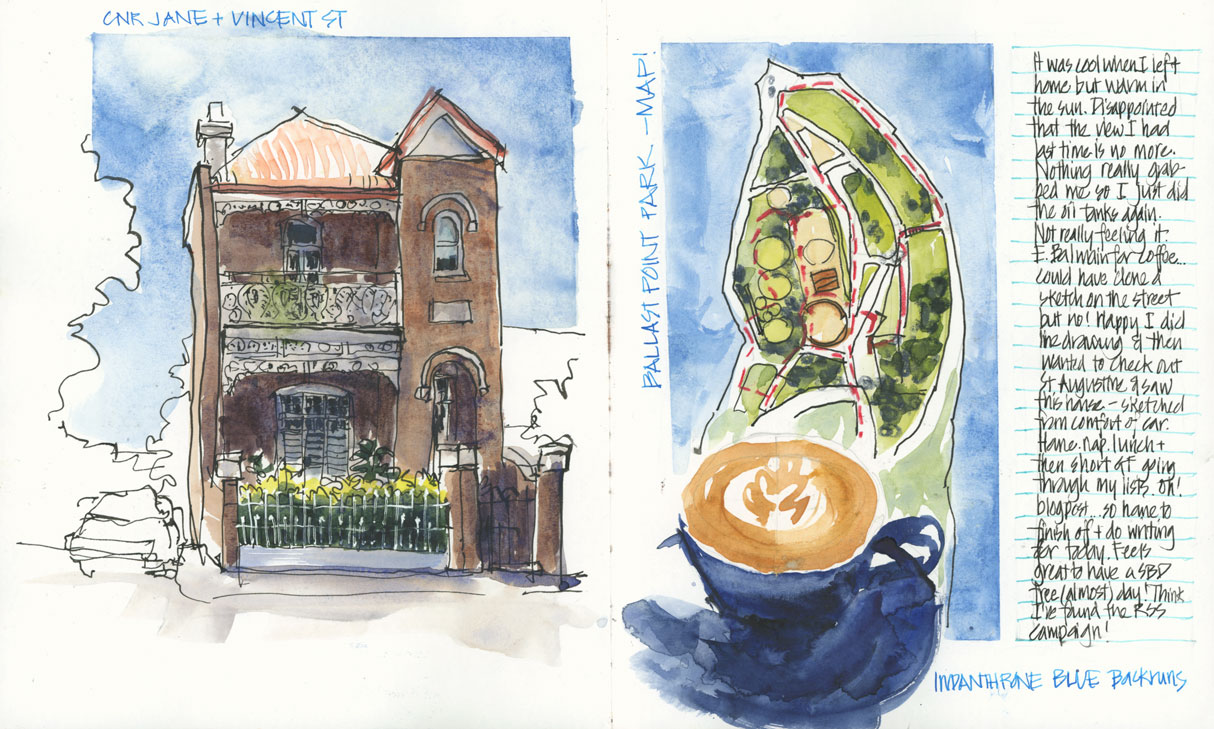
Keep it simple. That goes for your materials and your subjects. You don’t need the perfect sketching kit in the beginning; just get a few tools and start. And when you’re choosing what to sketch, don’t tackle the whole scene. Zoom in on one manageable part and focus on the edges and shapes.
Urban sketching is such a wonderful way of adding creativity into your life, a way of slowing down and seeing things in a new and exciting way that you would normally miss. It will change the way you see the world, and possibly change your life, too! — Liz Steel
Suma CM
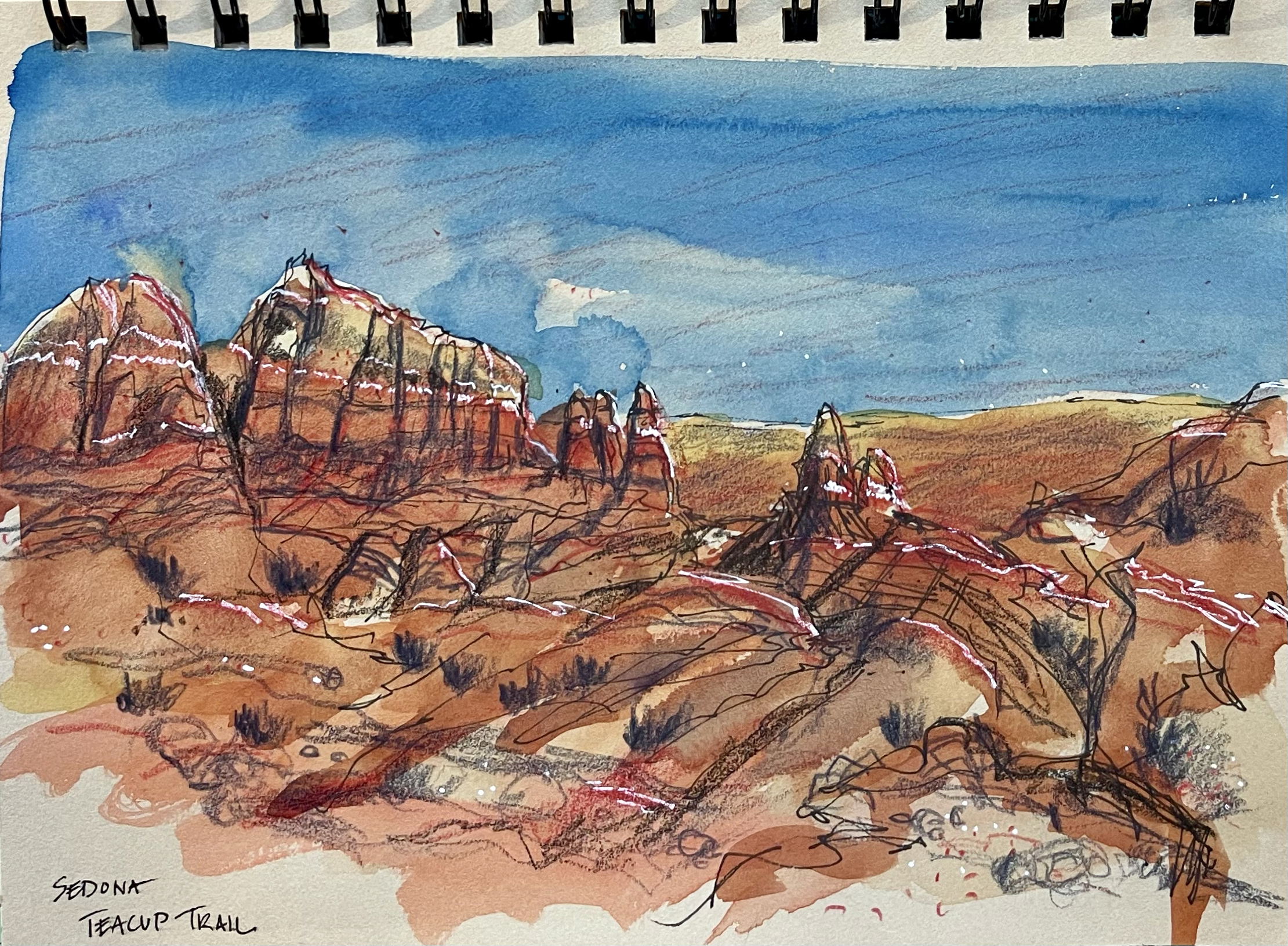
Start small. Give yourself a time limit — what can you capture in 10 or 15 minutes? Don’t be discouraged by your attempts; know that quickly sketching on location is very different from drawing in your studio or even plein air painting with an easel, umbrella, and paints.
… but maybe not too small. While it’s tempting to choose the smallest sketchbook (such as the pocket-size Moleskines many people use), it actually takes considerable skill to be able to draw at that scale. I’d suggest starting with the largest sketchbook that you’ll actually take with you. My personal sweet spot is 5 x 8 inches or larger.
Be bold. Lots of people draw with a pencil … because of the eraser. If you want to learn quick captures, I suggest going straight in with a fineliner, as it keeps you from second-guessing yourself and erasing every other line. If you make a mistake, restate the line and keep going.
Find your people. See if there’s a local chapter of Urban Sketchers (urbansketchers.org) near you. If you’ve never sketched outdoors before, consider taking a class or workshop to become comfortable with the logistics — how to make your kit portable, plus tips for choosing subjects, staying focused, staying safe, and interacting with curious onlookers.
I will note that being comfortable sketching out in public assumes some privilege: many people may not feel comfortable sketching in public, even when in groups. Even I have been confronted by security guards or eyed suspiciously. It’s up to us as artists to be intentional about inclusivity — not only in how we promote our sketch outings and invite and welcome people but also in the subjects and locations we choose to sketch.
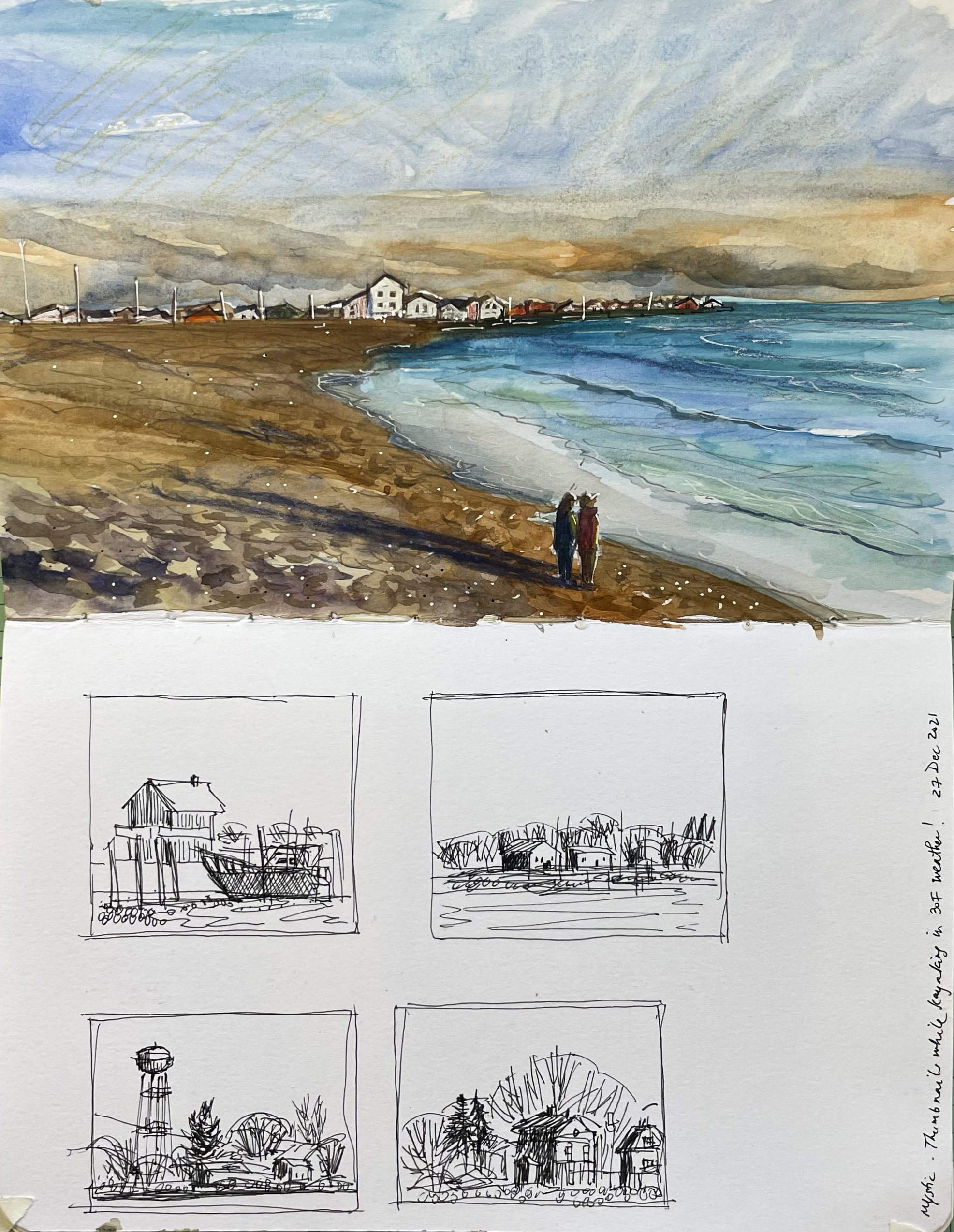
Drawing from life is different from drawing from photos. A photo is already once removed from reality; it’s an interpretation. On-location drawing is about more than capturing what you see. It’s also about recording a spontaneous feeling, and observing with all your senses. While this is true of plein air painting in general, the goal of urban sketching isn’t necessarily to create a finished work; it’s to meet, sketch, and share. What I create when I’m with others is often better than what I’d create by myself, as I can see the multitude of different media and different interpretations in real time. I believe this has accelerated my growth as an artist. — Suma CM
Jane Blundell
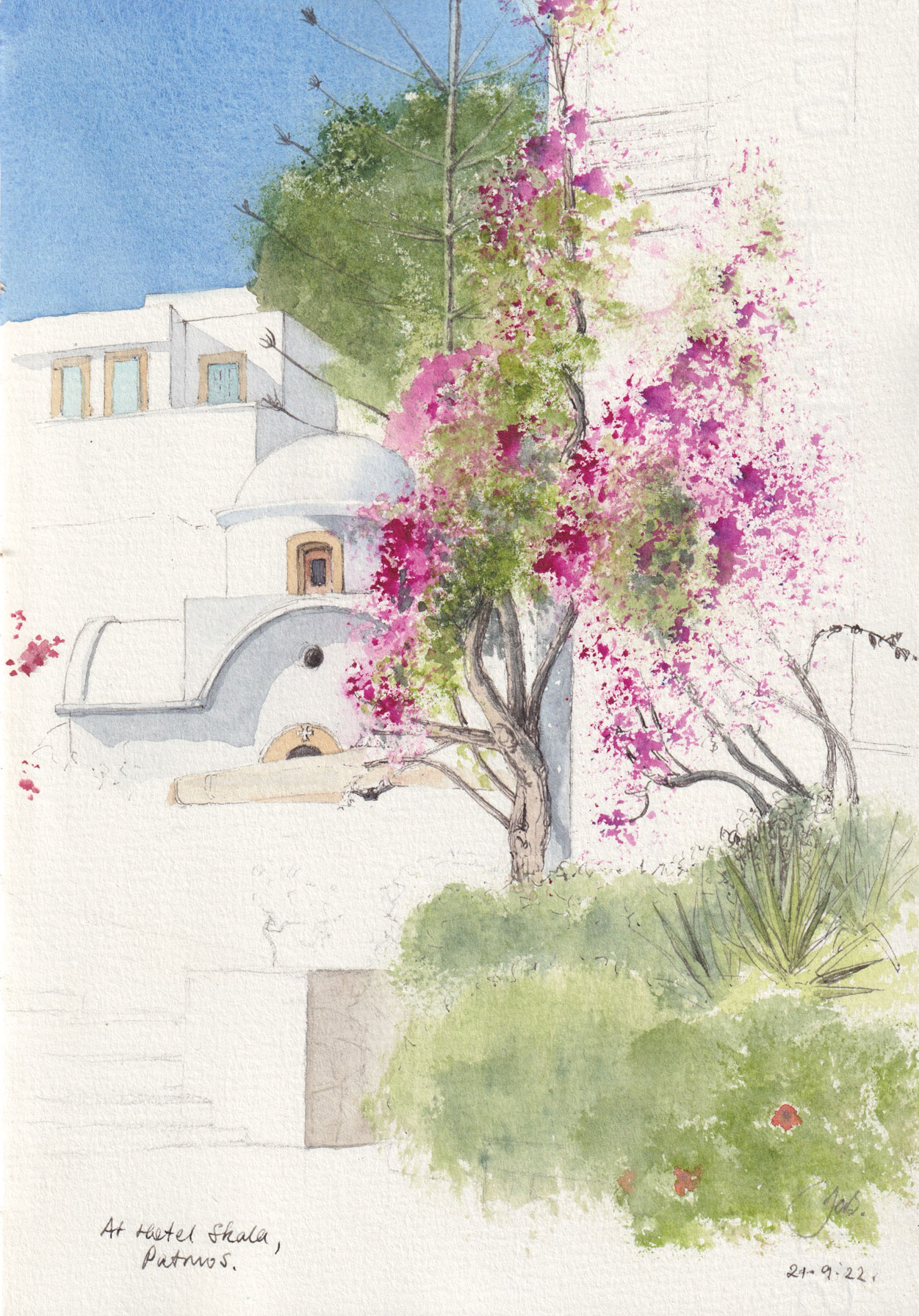
Begin with black and white, and draw things in and around your home, and in your neighborhood. The important thing is to be gentle with yourself. Most people haven’t sketched or drawn since primary school, so it isn’t surprising that many feel their initial attempts are “childish.” Put in the pencil miles and train your brain to translate the three-dimensional world to a two-dimensional paper surface.
The urban sketching community allows one to travel the world and meet up with other sketchers who know the local city well, so you have companionship and local knowledge wherever you go. Sketching generally gives you a richer experience when traveling. While sketching a scene, you have the time to be aware of what is going on around you, listen to the noises, notice more of the scene. You may see less of the city, but you experience it more. The sketches you produce create indelible memories of your travels that are so much richer than a photo. — Jane Blundell
James Richards
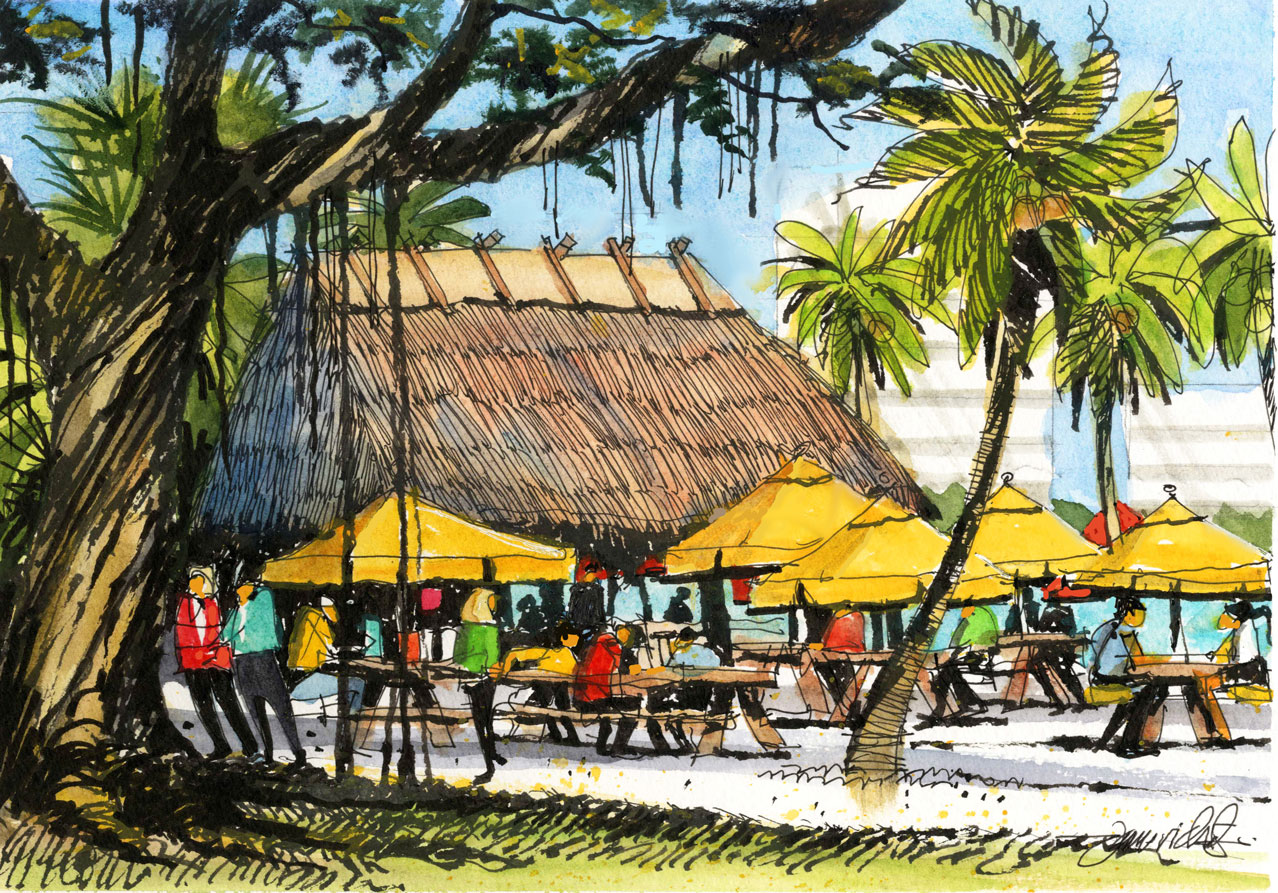
Adopt the right mindset. Your sketching experience and the sketches you create are purely for you and the sense of fun they give you. No one else can create what you do, so don’t compare yourself with others. I often remind students to not aspire to be great. Aspire to be prolific. If you’re prolific, becoming great takes care of itself.
Urban sketching can give anyone a wonderful tool for discovery. It’s a way to discover new places — to see them more clearly and to experience them more deeply. You’ll remember that place through your personal sketches in ways a tourist taking photos will not. When you’ve captured a place on a page, it’s forever a part of you.
It’s a way to discover connections with the locals and the other travelers you encounter. These chance meetings are, for me, at least as memorable as creating the sketches themselves. Some will leave with a new awareness of the scene you’re drawing. Some stay in touch and become friends. Others may decide to give urban sketching a try themselves. All leave you with a new story, a fuller sense of the place you’re visiting, and a feeling that we all have things in common that connect us.
Finally, through urban sketching, we discover things about ourselves. We might tap into a latent talent, or rediscover that child that still lives inside who loved to draw without judgment. It might set us on a path to discover our own creative voice. Any of these is a compelling reason to give it a try. Together, they can be transformational. I’ve seen it many times. — James Richards
Looking for MORE ways to improve your painting skills?
Don’t miss your opportunity to create lifetime memories at the Plein Air Convention & Expo! All training sessions are indoors on giant, high-def screens, with incredible paint-outs in the afternoons. Beginners and pros feel right at home, so register at PleinAirConvention.com to join us.
Browse more free articles here at OutdoorPainter.com.
Blog post prepared for the web by Cherie Dawn Haas, Editor of Plein Air Today