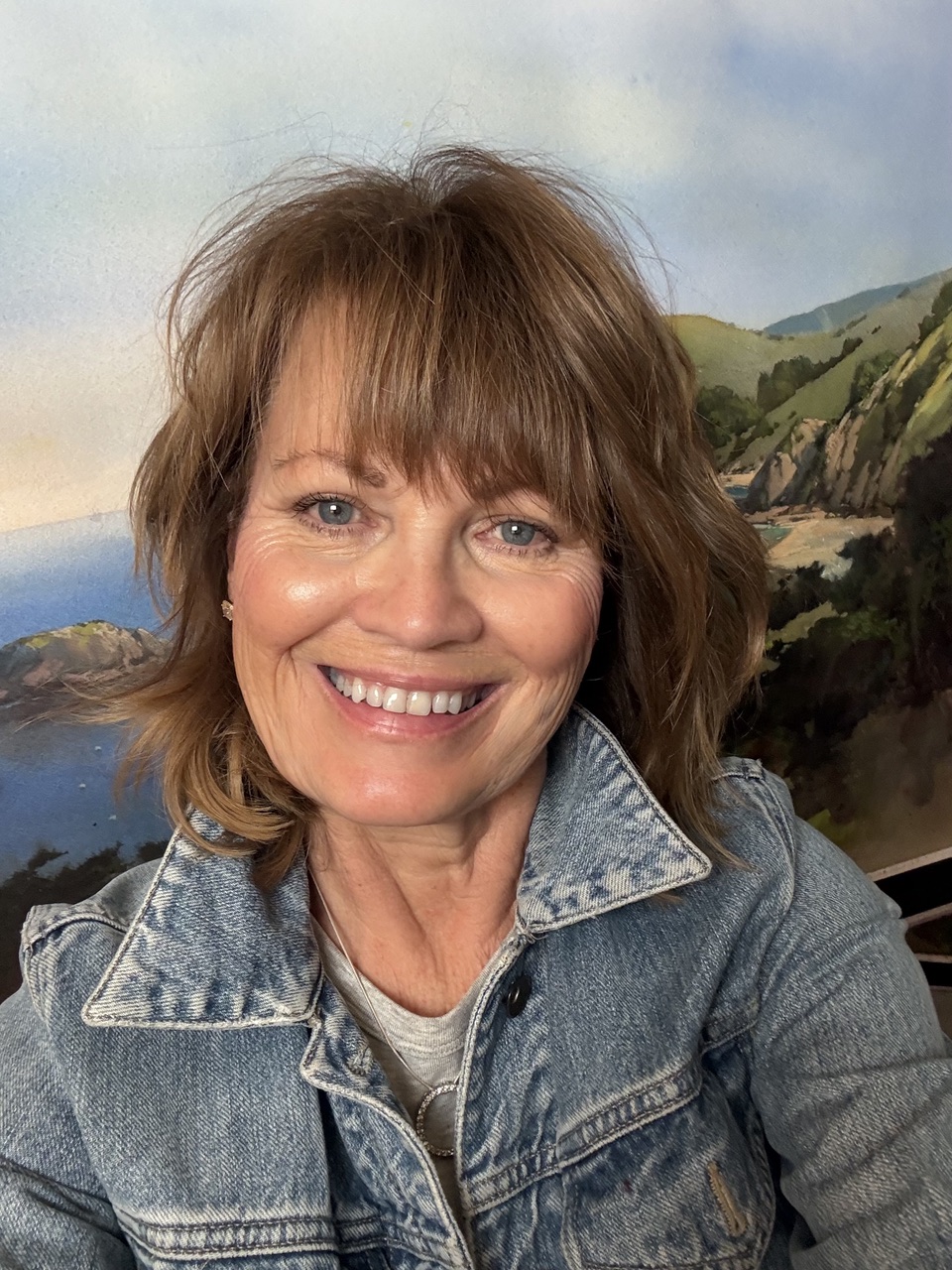
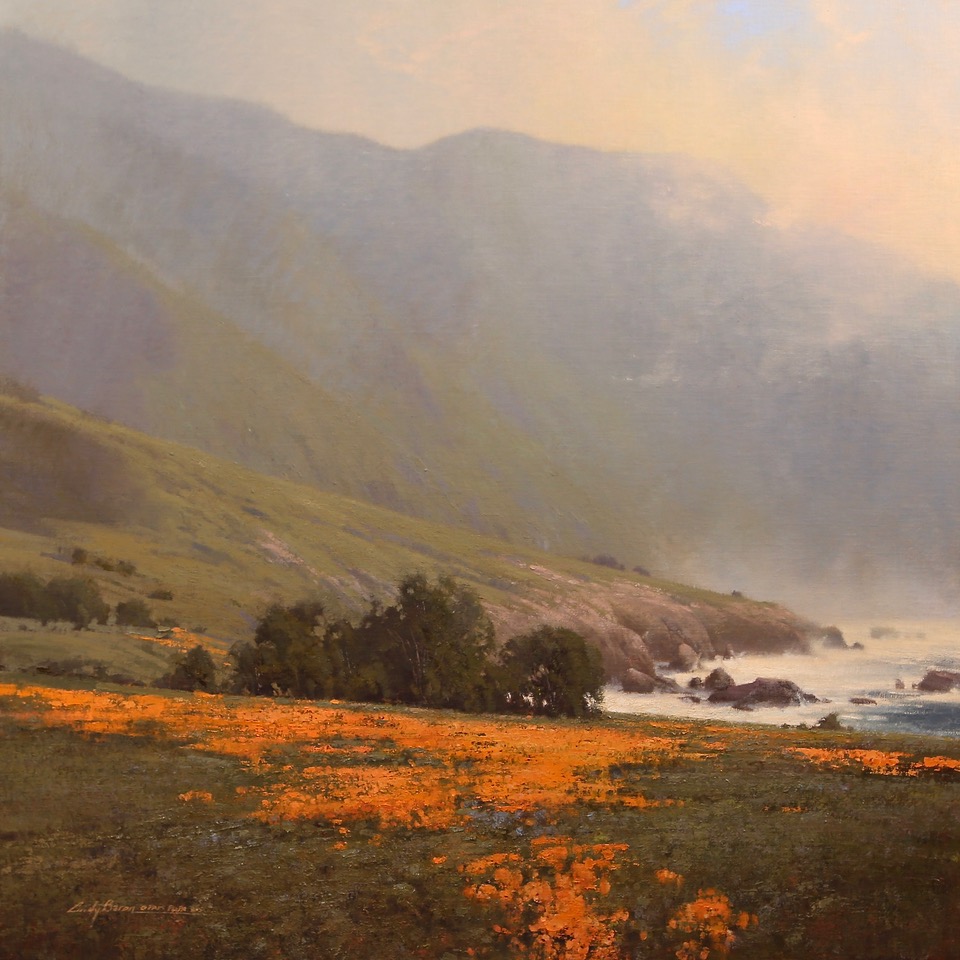
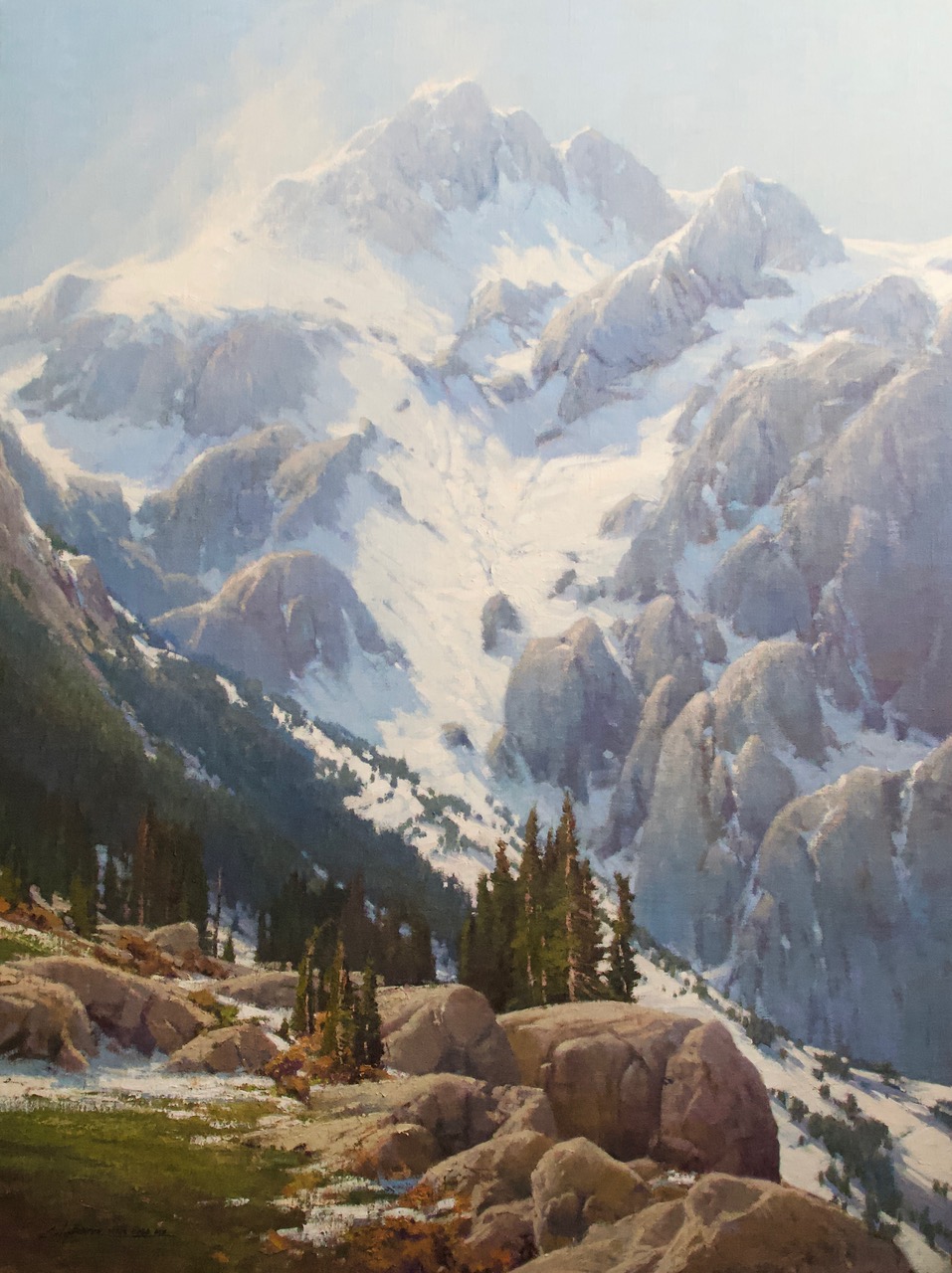
Cindy Baron is nationally recognized in both watercolors and oils, painting the grand landscapes of the western mountains and coastal shorelines. Enjoy our exclusive interview about her path in art and her insights on painting techniques!
6 Questions With Cindy Baron
1. What originally inspired you to paint the landscape?
I’ve always loved being outdoors. I’m inspired by the beauty of natural light, the atmosphere it creates, and the ever-changing shapes, colors, and shadows found in nature. The places I’ve visited have left a lasting impression on me, and painting landscapes became a natural way to capture those memories and share my experiences through art.
2. Who were some of the artists from past generations that influenced you the most?
There are many artists who have inspired me over the years, but a few stand out in particular: Edgar Payne, Nita Engle, Percy Gray, Albert Bierstadt, E.T. Compton, and William Trost Richards. Their remarkable mastery of watercolor and oil painting has greatly influenced my work. Whether portraying majestic mountain landscapes or tranquil seascapes, each artist has shaped the way I observe, interpret, and express the beauty of the natural world. There are many living artists who inspire me to paint as well.
3. How did you gain your art education?
Although I’m not formally trained, I’ve been passionate about art for as long as I can remember. Whenever I traveled, I made it a point to visit museums and galleries, studying the masters— their compositions, brushwork, and use of color. I also come from a creative family, so making art has always felt like a natural part of who I am. Working in a variety of mediums continues to challenge me, expand my skills, and keep me inspired to grow as an artist.
4. What design principles do you take into consideration for a successful painting?
I consider myself a compositional artist; composition has always come naturally to me, while color was something I had to develop over time. Designing a painting begins with understanding what you want to say.
When a painting has a simple design, color and value can be used more boldly. When the composition is more complex, it’s important to find a resting area for the eye, so it doesn’t become overwhelming.
I teach the fundamental principles of design, but I do think you can bend the rules. The great masters certainly pushed those boundaries.
5. Do you use color schemes in your work, or do you rely mostly on the colors that nature provides to achieve color harmony?
I work with a limited palette and follow a few basic principles of color. I mix my own grays and greens, which helps create harmony throughout each painting. Subtle value changes are key to distance and atmosphere in my paintings.
When I’m outdoors, I study nature’s colors carefully and commit to memory what photos cannot capture. This is so important for good studio work. I will enrich or intensify a color to create a focal point to guide the viewer’s eye. My approach is simple, and I think that philosophy has been influenced by the old masters and a few living artists.
6. With all the art movements of the past and present, what do you think keeps landscape painting relevant today?
Landscape painting will remain relevant because it preserves the beauty and character of the world around us. As artists, we are visual historians, documenting places that will inevitably change with time, growth, and development. Every landscape tells a story, and every artist brings a unique perspective to the story.
When we visit museums, we stand in awe of the great masters and experience the world as they saw it. We’re educated, inspired, and appreciate what they interpreted on canvas. Today, we as artists continue the tradition. With so much of the world to paint, no one artist could ever capture it all. We have the privilege of contributing to its story in living color. The enduring connection between the past, present, and the future will be as meaningful as it has always been.
See additional interviews in this series, featuring Clyde Aspevig, Kathryn Stats, and more, here!
Looking for MORE ways to improve your painting skills?
Don’t miss your opportunity to create lifetime memories at the Plein Air Convention & Expo! All training sessions are indoors on giant, high-def screens, with incredible paint-outs in the afternoons. Beginners and pros feel right at home, so register at PleinAirConvention.com to join us.
Blog post prepared for the web by Cherie Dawn Haas, Editor of Plein Air Today