

On Landscape Painting Composition >
The Intersection of Abstraction and Landscape Painting
Like many other painters, in my younger years I thought art forms like abstraction were topics of derision, but with age often comes wisdom. There is something about Abstract Expressionism, especially, that has had a positive influence on landscape painters for a long time. Works by artists like Franz Kline and others have done much to help us break out of the stifling confines of pure depiction for more expressive approaches. For that, we should give them credit, even if it was not their aim.
With that in mind, here’s a practical idea that might help to improve your composition and design skills.
Think of your initial brush marks on your canvas the way an abstractionist would. Sure, you’re going to take it further into the realm of realism, but it’s the underlying abstraction that’s going to hold it together in the end. This will help if you ever get bogged down by the number of details that inhabit the natural world. These points of interest – the details – can be enticing little jewels that crown a scene with flavor but do little to help the overall structure of a painting.
Because of this dilemma, seasoned artists know that one must see past distracting details to get to the heart of a well composed landscape. One of the ways to do this is by learning to recognize patterns in nature, which we call masses.
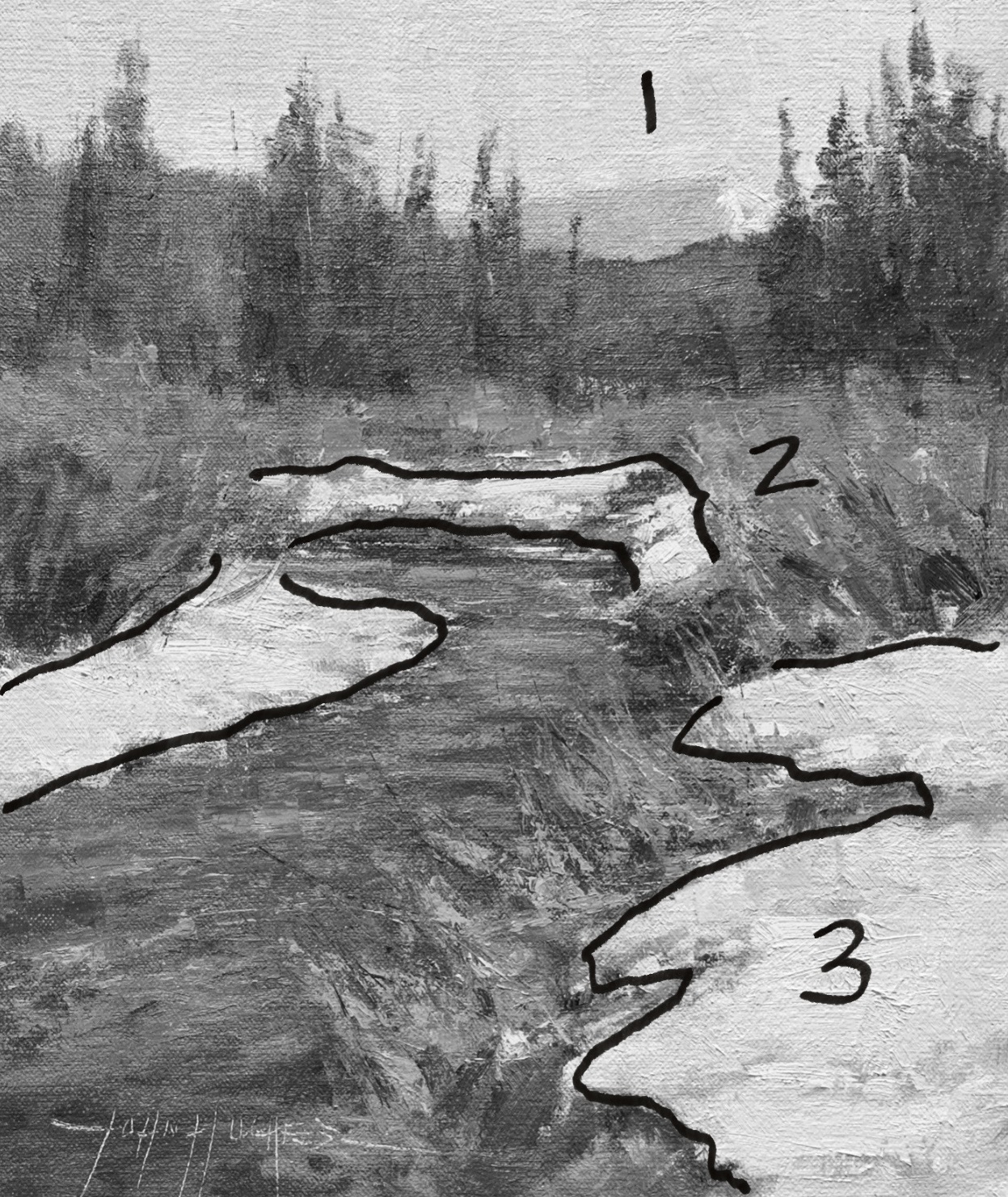
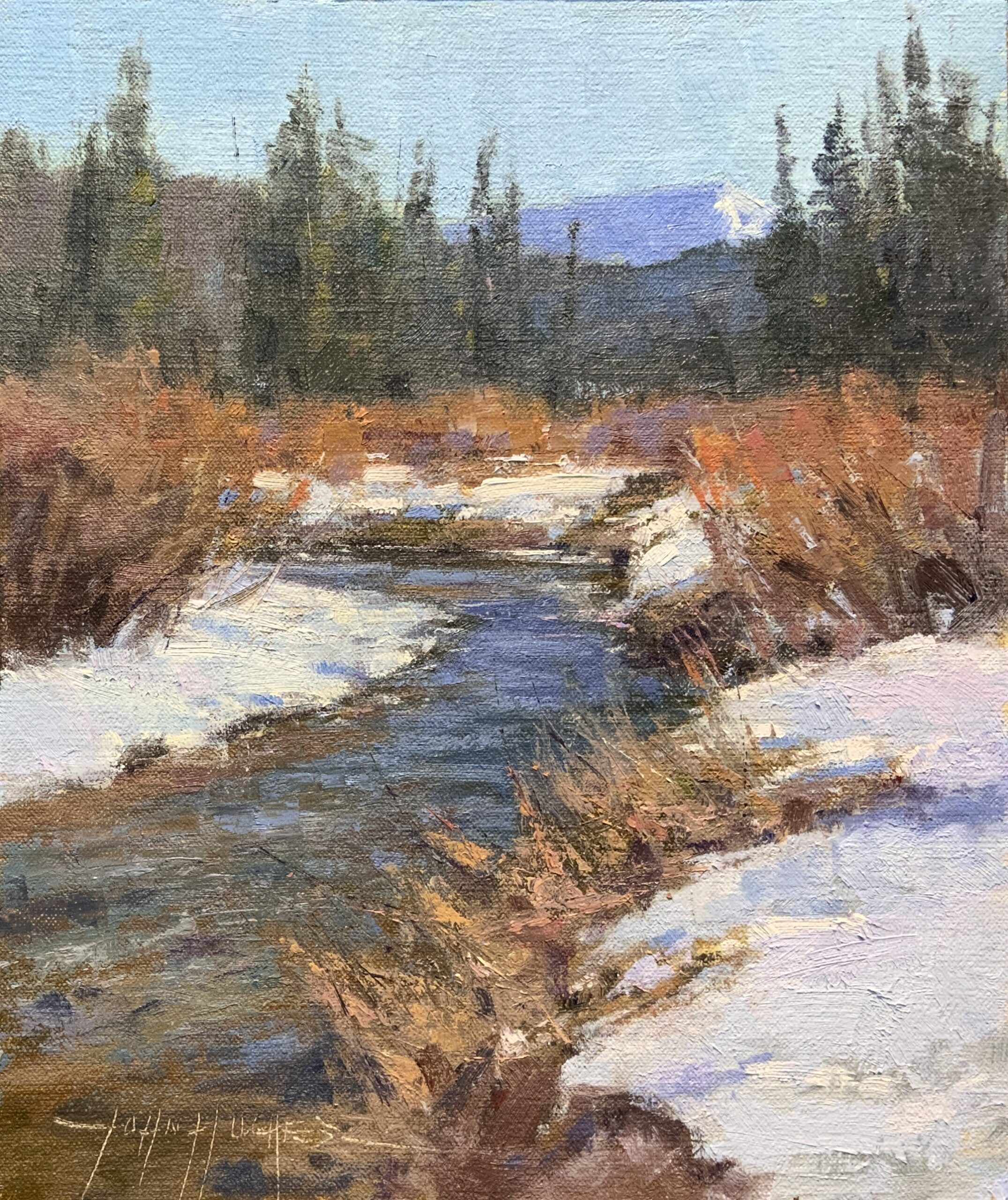
Masses are large abstract shapes of general value families, rather than groups of things, like trees, rocks, and water. These masses can be influenced by color families as well, and there’s nothing wrong with integrating color shapes, but for the most part, values carry the concept.
I usually like to break a scene down into as few masses as possible, but there is certainly leeway in the final count. This helps me to see and appreciate a beautiful scene on one level and then evaluate it for purely artistic merits before diving into a painting.
To see masses, it’s essential to squint at your scene when painting on location.
For illustration purposes, I’m using a river scene to identify its abstract armature. The numbers on the illustrations coincide with the number of masses of light, dark, and mid-tone shapes:
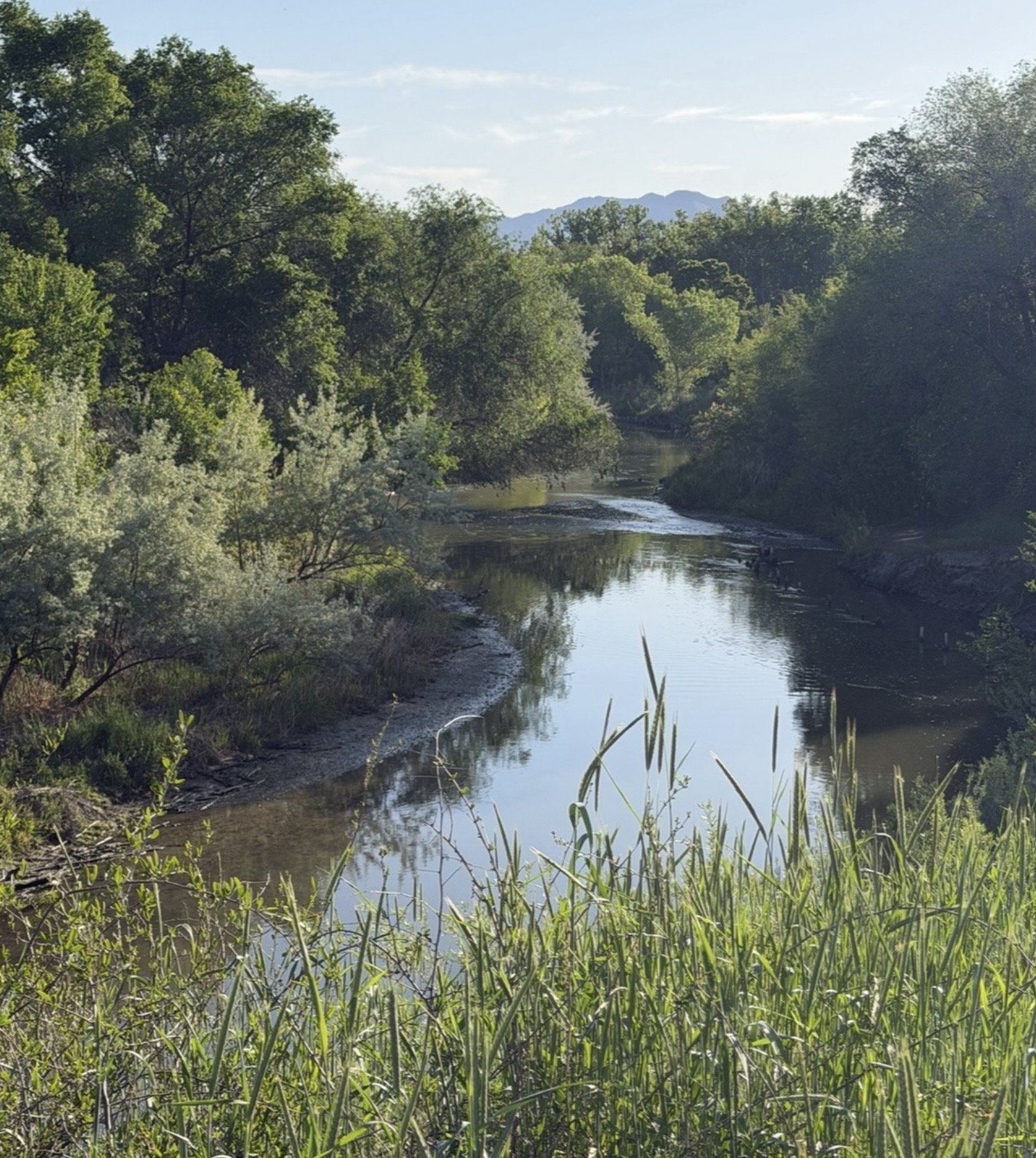
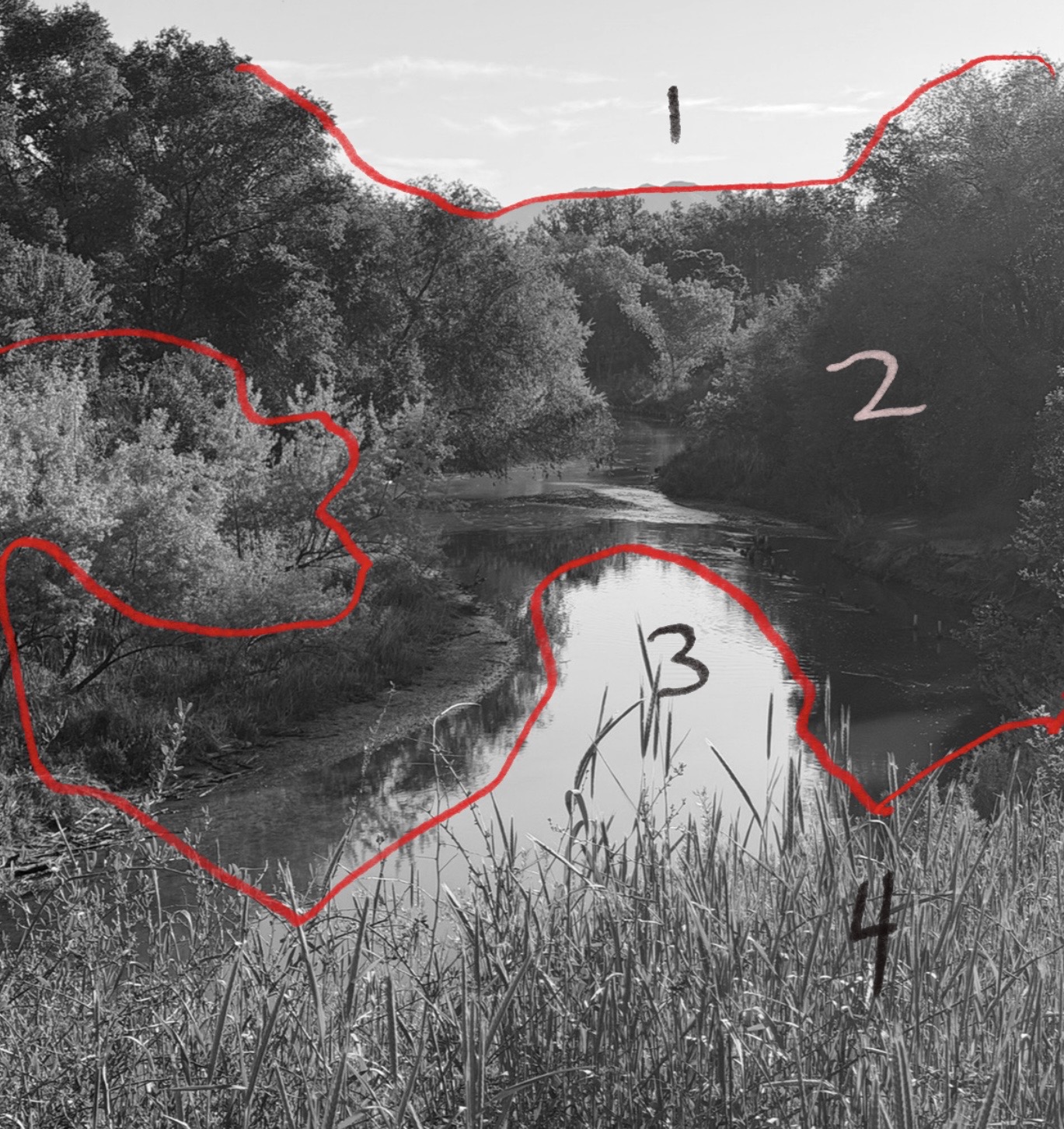
See what you think as you work with this valuable idea in the creation of your own paintings. If you can hold on to the underlying abstraction with the addition of details, you stand a good chance of winding up with a strong painting that reads as a design from across the room. That’s when you know it’s working!
Next time I will discuss mechanical aids to make it easier to see these masses, and to train your eyes to recognize them when squinting. It’s all very exciting stuff!
Until next time,
John
Looking for MORE ways to improve your skills?
Transform your skills at the next Plein Air Live online art conference! Plein Air Live gives you invaluable insights and live demonstrations from some of the world’s best plein air artists. Over the course of 3-4 exciting days, they’ll reveal techniques to improve your use of color, light and shadow, giving you the confidence and skills to paint outdoors and create more amazing artwork than you ever have before. Learn more at PleinAirLive.com.
Browse more free articles here at OutdoorPainter.com
Blog post prepared for the web by Cherie Dawn Haas, Editor of Plein Air Today

Good article.
Thanks Chuck!