

Follow Lon Brauer’s advice – and do this painting exercise – to move your work faster and farther down the road to success.
By Lon Brauer
I hear artists talk a lot about voice, style, and technique. Everyone wants to find their “thing,” that special something that sets them apart — a look, a way of working, or a specific mark-making skill set that speaks to their vision. The truth is your “thing” isn’t something you find, but rather something that finds you. It develops without your knowledge, as a byproduct of your time at the easel. Make a painting, throw it on the floor, do another, build a pile, see what shows up.
Paint One Subject Multiple Times
Consider the activities you do every day while never giving a thought to how you do them — tying your shoes, brushing your teeth, getting dressed, or driving your car. You do these things automatically because you’ve trained yourself; they’ve become habit. And good thing! If you had to agonize over every routine activity in your day, you would be terribly frustrated and nothing would get accomplished.
Painting should be approached with the same principle. We must create habits and familiarity so that we can confront the specific challenges that come up every time we make a painting.
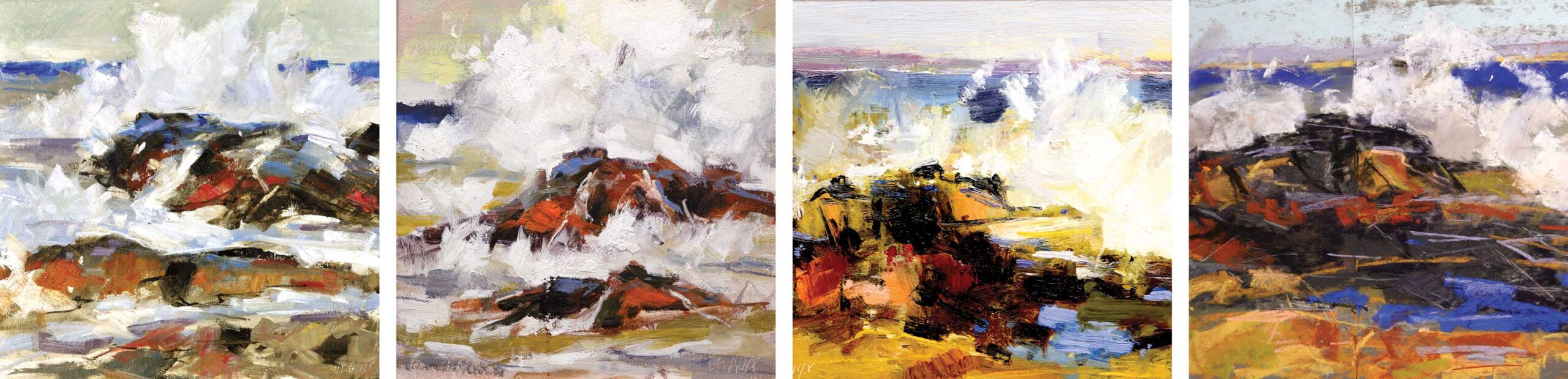
At the end of a good day of plein air painting we might come back with four or five pieces featuring four or five different subjects. Variety is good, right? Well, maybe. As a learning exercise (and we are always learning), painting a variety of scenes offers us nothing to compare. Maybe painting 1 has good color, 2 has good composition, painting 3 is pretty, and 4 is just plain wrong. That’s a form of comparison, but it’s apples to oranges. Is growth possible with such a shotgun approach? Maybe, but it’s painfully slow. What if we picked one subject and explored it beyond a glancing blow? Then we could compare apples to apples.
Try the following exercise as a means to move your work faster and farther down the road to success. Set up a simple still life — a couple of apples on a white table will do. Light the setup however you choose, but keep it simple. This isn’t about making a picture of apples. In fact, it’s not about making a picture at all. Rather, it’s about embracing the activity of painting itself, with as few variables as possible. We’re building familiarity.
Set a time limit — 15 minutes, maybe 20, but no more. Limiting the time you spend on these paintings allows you to accomplish something but reduces your ability to overthink it. Then paint. When the timer goes off, set the panel aside. Don’t concern yourself with the “finish.” It is what it is; move on.
Get another panel. Reset the timer, and go again with the same subject. Repeat this as many times as you can. Same panel size, same brushes, same palette. No variables. After four, five, or 12 paintings, you will begin to develop a true familiarity with this particular subject. You will know it so well that memory will take over. That’s what this painting exercise is all about: building memory, building habits, building a vocabulary, and building familiarity with tools and materials — and, eventually, building a personal style.
Choose Simple Subjects
We think that if the image is complex, it must be better. The more stuff we cram into a composition, the more it will be perceived as something special. Perhaps. But complexity is challenging on many fronts. There’s a time and place for it, of course, but let’s learn to walk before we run a marathon.
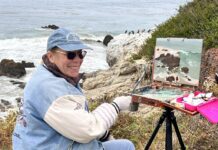
In the studio, I try to incorporate a daily exercise of knocking out a simple painting first thing, just to get the motor running. In plein air, I stop anywhere and throw some paint for that first one. It doesn’t matter what the subject is. The simpler, the better. The first painting is a throw-away, and I know it. I have no expectations. It’s a step to the next step. That said, that throwaway often has all the freshness and spontaneity I crave in a successful painting. It’s a reminder that I need to learn to get out of my own way.
Take One Step After Another
Everything we do is cumulative; each painting leads to the next. When we take a scattershot approach to subjects, we make long strides, short steps, and stumbles galore. The missing component is consistency. Painting the same subject over and over builds a body of work that has cohesiveness. Keep in mind that this is what galleries look for in an artist. Not repetition, but consistency. If the artist does it once … can they do it again? And how prolific can they be? By painting a bunch and fully exploring a subject, you can, within a very short amount of time, show that you have the chops to accomplish big things in your art career.
The struggle I see in students, and I experience the same thing, is losing sight of the fundamentals. We all know how important it is to develop a skill set to be able to do what we want to do. But for some reason we throw that concept to the wind when it comes to making paintings. Try learning the violin with that approach and see how far it takes you.
Painting is a simple thing, really. A brush, paint, and a surface — that’s all it takes. Make a single mark, any mark, and you have made a painting. But as representational painters, we want more. And to get more, we need to put in some extra effort on the front end. Doing exercises such as timed multi-painting will get us up to speed in a hurry.

Enjoy the Journey
Everyone wants to make a picture, frame it, show it, and sell it. Forget all of that. Approach painting as a journey, not a destination. Make a painting and throw it on the pile. When the pile is overflowing, you can see what you’ve wrought. No doubt there will be some gems in there that can help you start to identify your true vision. Likely it won’t be what you expect; we all have an intuitive streak that guides us more than we think. Too often, we left-brain the work to death, destroying what we know to be true. Act like a 5-year-old and let your creative juices fly. Good stuff will happen. In fact, art will happen.

Whether physical or mental, exercising is never fun. Without a purpose, it feels like an obligation and quite frankly drudgery. But practice is the core of what we do. We’re always learning. The key is to learn with purpose, with efficiency, and with enthusiasm; then the fun begins. The skills we develop through exercise make it easier to explore new methods and ideas.
Art is about problem-solving. Often we can define a problem, but to attack that problem we need to have an arsenal at our disposal. Skill, dexterity, and insight — we need them all to make paintings that sing.


Thank you, Lon, for this insightful article. It makes so much sense to me as a beginning painter, and I will definitely put it to use.