With a keen interest in plein air painting, Hema Gupta’s goal is to paint in a loose and impressionistic style. Here, she shares her advice for effectively including figures in your next landscape.
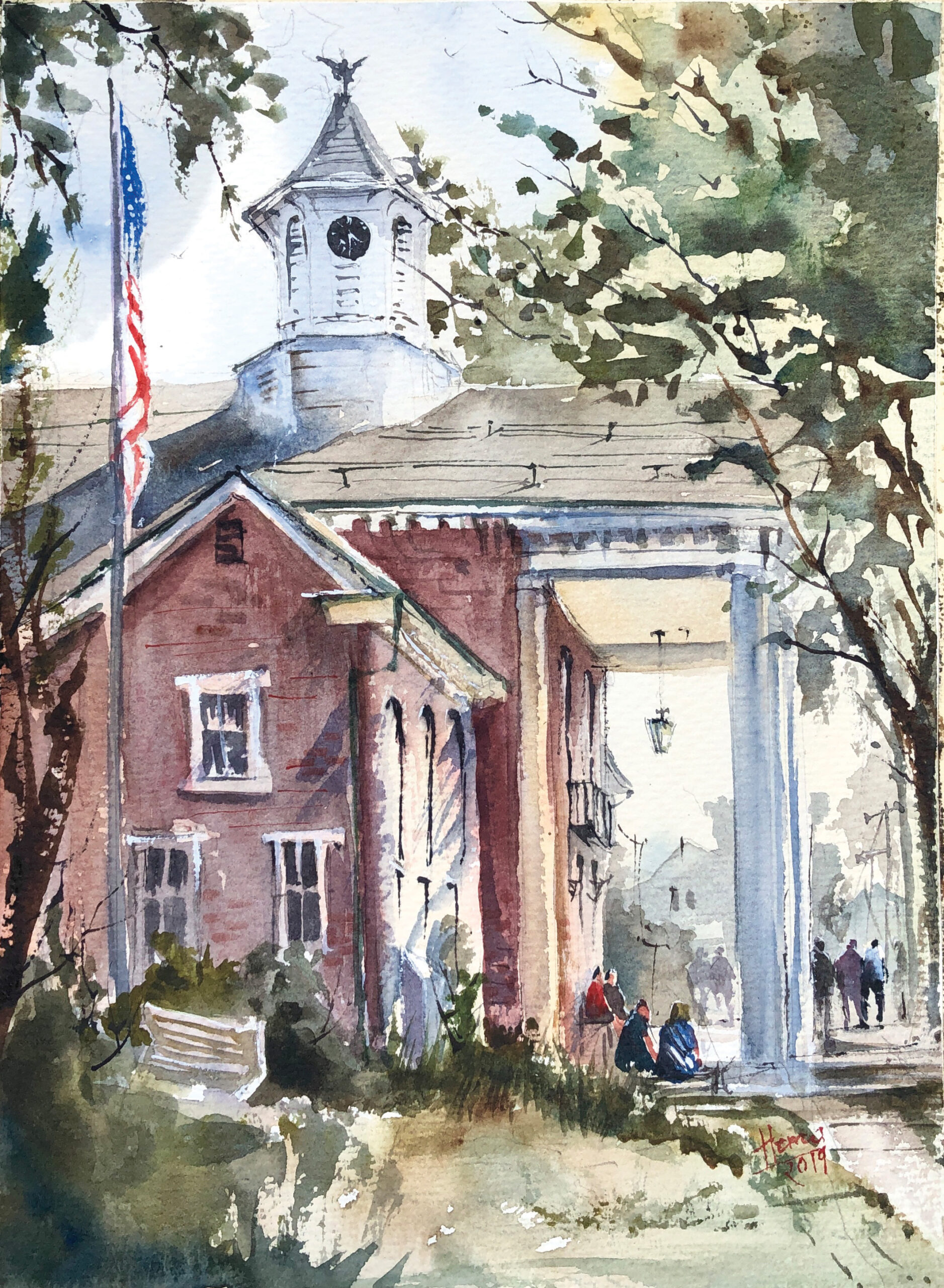
In this piece, painted during the Victorian Days festival in Belvidere, New Jersey, I used lighter values for the figures in the distance and bolder colors for those up front to create a sense of depth.
By Hema Gupta
Everything I know about painting figures, I learned from Ladybird Books.
Although I never went to any classes, I drew a lot as a child. One book was particularly influential — Learn About Drawing from the Ladybird Book series. Chock-full of useful tips and information, it taught me that the head and torso make up half of the human body, and the legs, the other half. Size-wise, the head goes into the body about seven and half times, and a man’s shoulders are wider than a woman’s.
Here are a few more tips for drawing and painting figures I picked up along the way that can help you make better people shapes in your own work.
- Start with a stick figure and add more structure once you’ve captured the gesture correctly.
- Judge the size of your figures by comparing them to other elements in the scene; for example, a figure near a house should not be so large that it cannot fit through the door.
- Perspective is equally important. When adding several figures, say in a street scene, ensure that the heads of all the figures are at the same level, but make those in the distance smaller compared to the ones closer to you. As long as the heads and shoulders are placed at the right position and are the right size, they will look believable, even if the rest of the bodies and legs are not explicitly defined. A couple of quick drybrush strokes for the legs are often enough to indicate movement.
- To integrate a figure seamlessly into a scene, paint wet-into-wet as much as possible, allowing some color from the surroundings to run into the figure. Keeping some of the edges soft also helps to avoid a pasted-on look. Adding a touch of white highlight to the heads and shoulders makes figures pop, especially when painting them as silhouettes against the light.
- Practice making figures directly with a brush and paint, without any drawing. As you get more confident with your drawing, the direct approach will become easier, and the figures will look more fresh and loose.
- Study the work of other painters you admire. It can inspire new ideas on how to incorporate figures into your own plein air paintings.
Landscapes made livelier with figures will always have an appeal with viewers. All it takes to make your work stand out is a little practice.

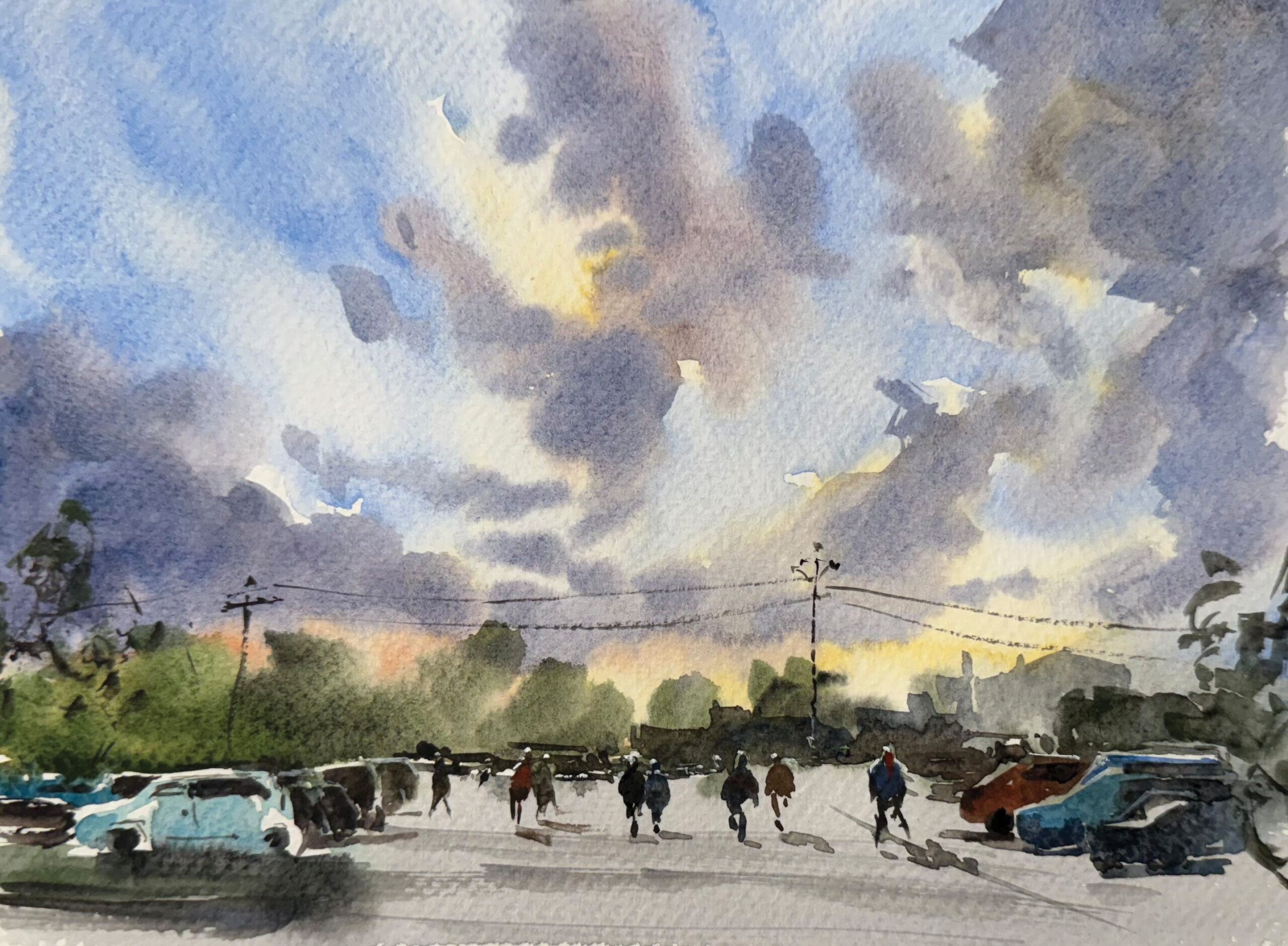
Though this fun little painting is all about the sky, I had the option of making up the landmass as a simple tree line and maybe some rocks in the foreground. The initial inspiration for the scene came from a parking lot, however, so I went ahead and added the cars and figures. The simple shapes added so much life to the painting.
Connect with Hema Gupta at www.hemapaints.com.
Editor’s Note: Join us for the 6th Annual Plein Air Live online art conference, featuring Daniel Gerhartz, Christine Lashley, and many more! The next Plein Air Live takes place September 16-18, 2026. Learn more at PleinAirLive.com.
Browse more free articles here at OutdoorPainter.com
Blog post prepared for the web by Cherie Dawn Haas, Editor of Plein Air Today