Hema Gupta is an award winning self-taught artist, working primarily in watercolors. She enjoys watercolors for their spontaneity and challenge. With a keen interest in plein air painting, her goal is to paint in a loose and impressionistic style. She enjoys painting all types of subjects from urban landscapes and still-life to portraits.
Here, Hema shares a step-by-step watercolor painting demonstration, featuring figures in a narrative landscape scene:


To start, I test some sketches of the figures I plan on including in the work, particularly the ones whose postures are somewhat complex.
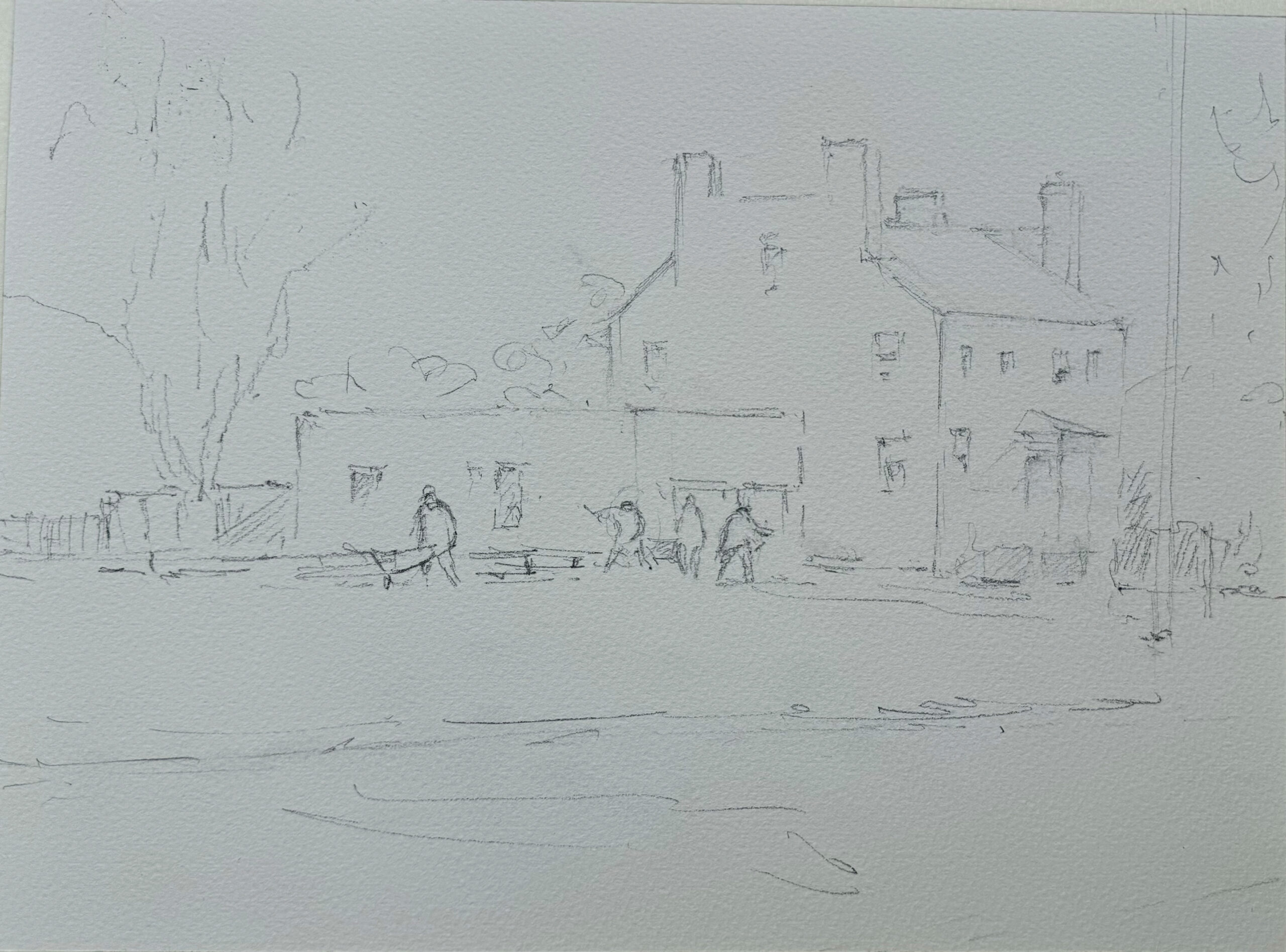
Step 1: I start with a loose drawing on 140-lb. Saunders cold-pressed paper using a soft pencil. I establish the main elements as clearly as possible, paying special attention to the figures. The somewhat imperfect line quality of the freehand drawing will encourage me to paint loosely in the coming stages.
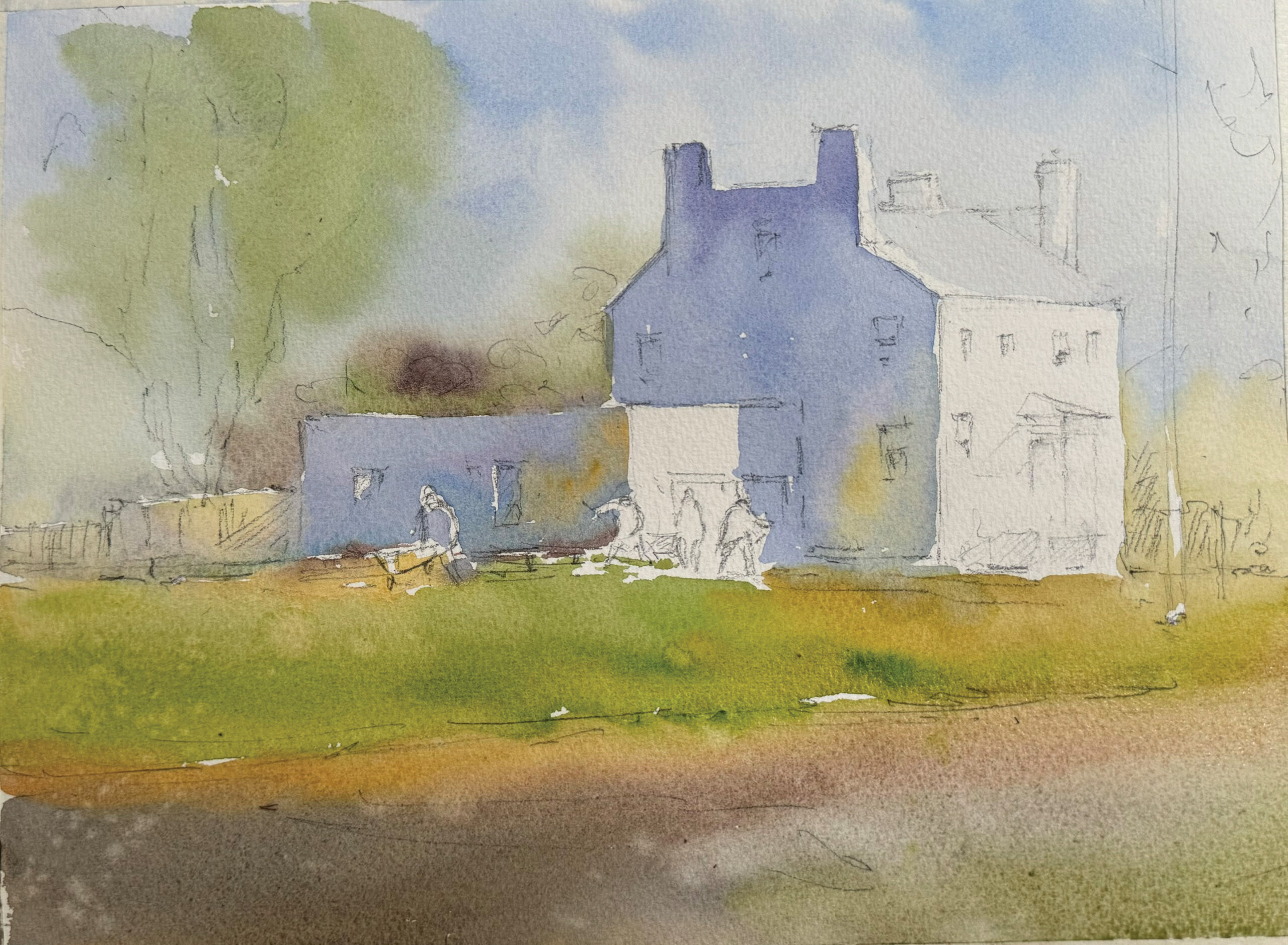
Step 2: For my first wash, I begin at the top, painting the sky with a mixture of cobalt blue and a touch of ultramarine blue. For the tree foliage, I use sap green and raw sienna, keeping it light near the fence on both the left and right side of the house. I leave parts of the buildings that face the light source untouched and cut around the figures as well. I paint the shadow side of the building with a mix of ultramarine, cobalt blue, and permanent rose. I vary the mixture and drop in some yellow.
At this stage it’s important to move fast so as not to get hard edges. I drop some burnt sienna into the foliage mixture for interest and paint the grass, allowing the color to flow into the road. I add some darks as I move down the paper. As the wash starts to dry, I spatter some clear water on the lower section of the painting to break it up a bit.
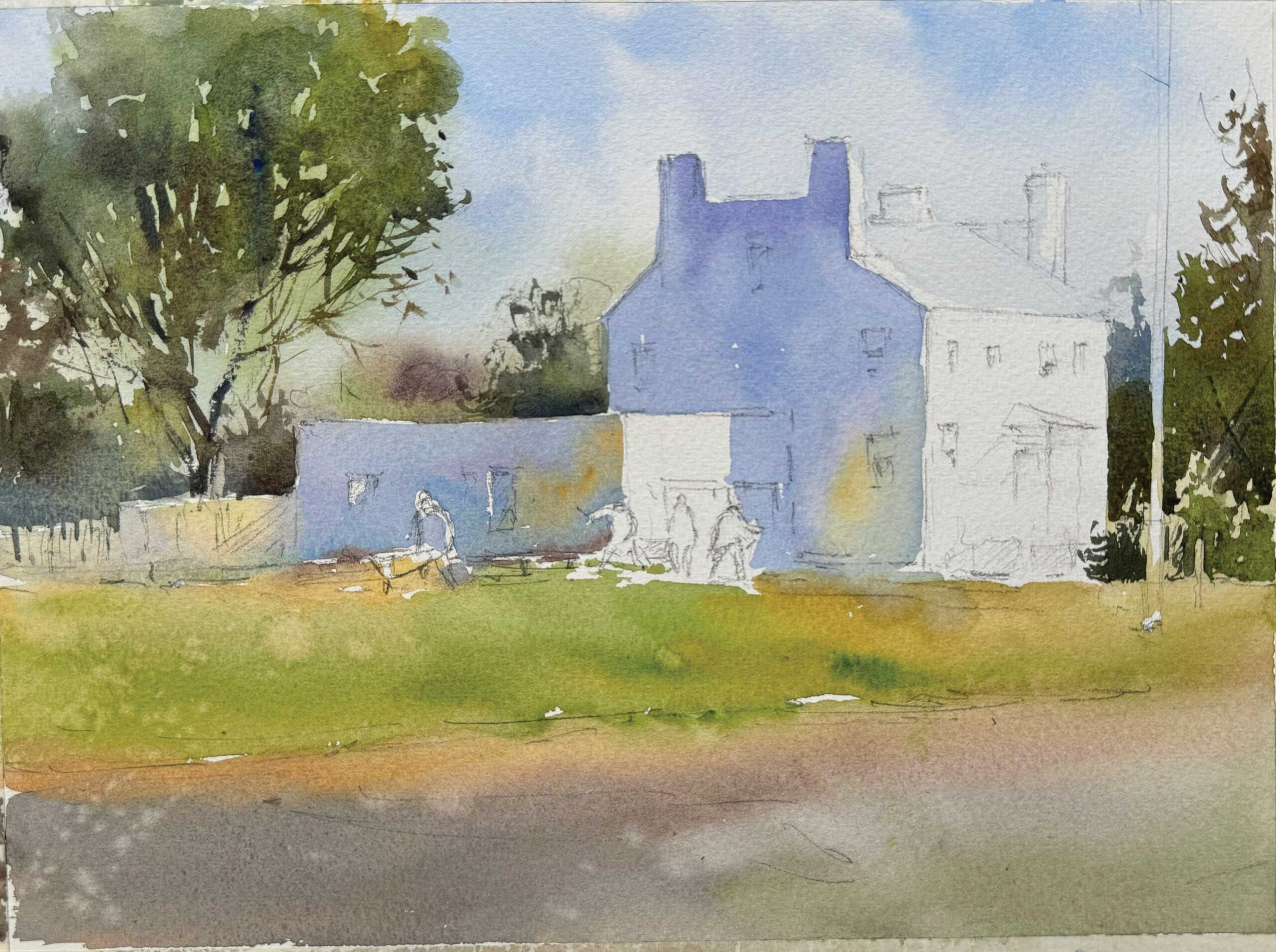
Step 3: Once the previous wash is dry, I start painting the background. For the tree, I loosely brush in a darker mix of the same colors used in the first wash. I use a variety of brushstrokes to suggest leaves. I then add the tree on the right side, carefully painting around the pole, and indicate the fence by adding a few broken lines.

Step 4: I continue to add more details, painting the roof with a mixture of ultramarine blue, burnt sienna, and a touch of neutral tint. At this point, I notice the shadow side of the smaller building looks weak, so I glaze a darker shadow over it. At the same time, I start defining the figures by painting the dark of the doors around them. I loosely brush in the porch, door, and windows. Notice how I use negative painting to leave some highlights near the figures.

Step 5: I drybrush the electric pole and the small pole next to it. These verticals break up the straight hedge line, adding interest. I then turn my attention back to the figures. I add some color, mostly a bluish mix made from previous mixtures on my palette. Taking care to leave some white, I use dry-brush strokes to suggest the figures’ legs. Although I try to get the shapes right in one shot, it doesn’t always happen. In any case, I try not to worry too much about mistakes; in plein air, it’s all part of enjoying the process.
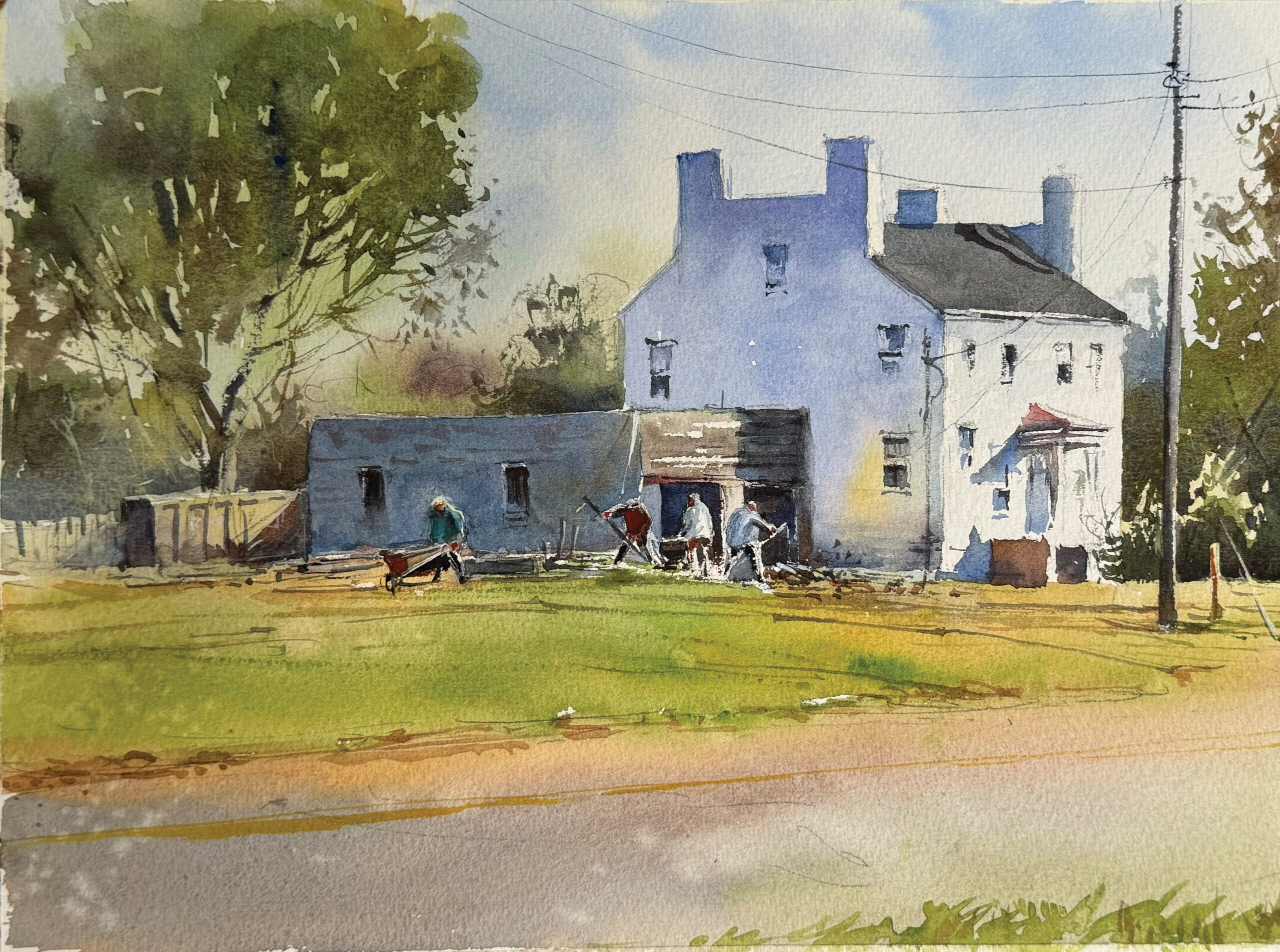
Step 6: I continue refining the area around the figures. I paint the wheelbarrow and put in some marks suggesting a pile of sticks and some random objects. I feel that the figures don’t stand out enough, so I add some red to one of them to draw attention. I also put in some grass in the foreground, and wires using a rigger.

The final step: At this stage, I walk away to take a break. Back with a fresh perspective, I add a few highlights around the figures using white gouache. I also apply some more drybrush strokes on the edge of the road and some directional lines leading toward the figures. To pull it all together, I add a shadow in the foreground, which helps bring in more light to the painting, then soften it by spritzing it lightly. In the end, I’m happy with my attempt to tell the story of these men hard at work on a bright sunny day.
Connect with Hema Gupta at www.hemapaints.com.
Browse more free articles here at OutdoorPainter.com
Go from feeling afraid to show off your paintings to being proud of your skills when you join us for Watercolor Live, taking place January 21-23, 2026, with an optional Essential Techniques Day on January 20. Visit WatercolorLive.com for the all-star faculty lineup!