The 6th Annual Watercolor Live came to an end recently, wrapping up with even more of today’s best watercolor artists sharing all of their secrets, explaining their materials, methods, and more.
“This is more than a conference — it’s a global celebration of watercolor,” said Host and CEO Eric Rhoads. “This week is about growth, fun, and transformation. You might feel frustrated at times. Maybe you are working too hard. Learning doesn’t have to feel like work. Think of it as play — as a creative adventure where frustration is part of the fun. Dive in, play, experiment, and let yourself grow. Remember: Talent isn’t some magical gift—it’s process + enthusiasm. Believe in yourself. You’ve got this!”
Join us next for Gouache Live on February 19, 2026. It’s a one-day, beginner-friendly bootcamp that makes gouache easy and fun!
Landscape Highlights from the 2026 Watercolor Live
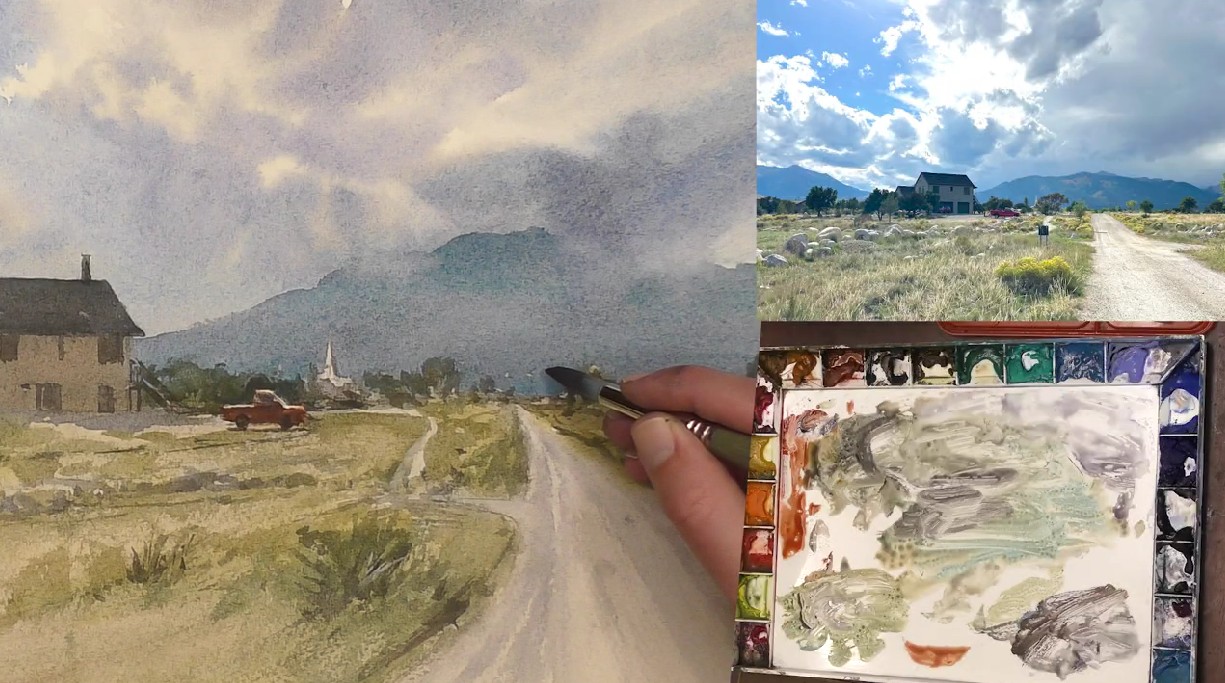
In his dramatic sky and landscape demo, Matt White said he doesn’t like leaving only white paper for the clouds, so after dampening the entire paper, he added just a little bit of tone to the sky. To create a neutral warm color for the clouds, he used a mixture of raw sienna and a touch of lavender.
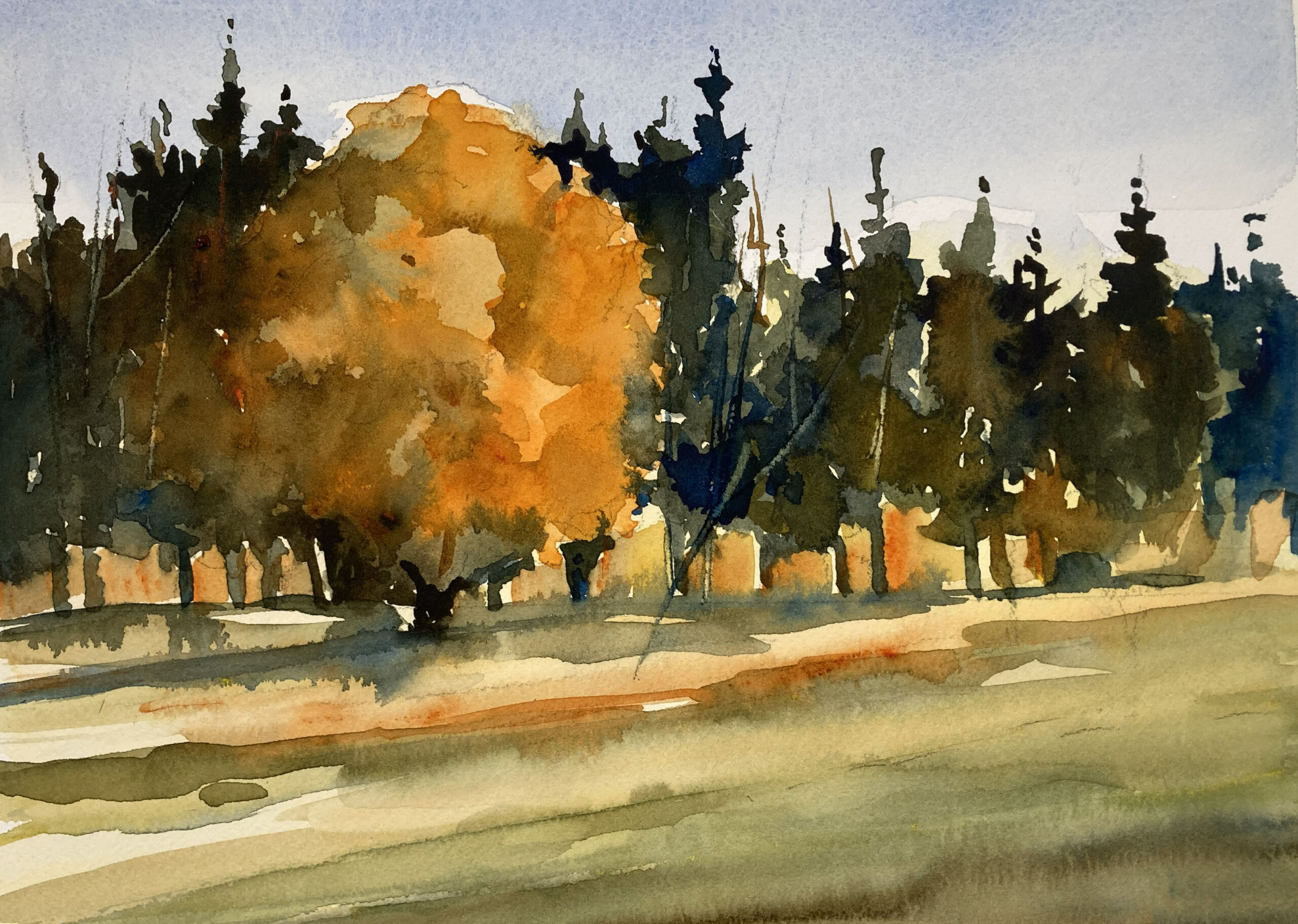
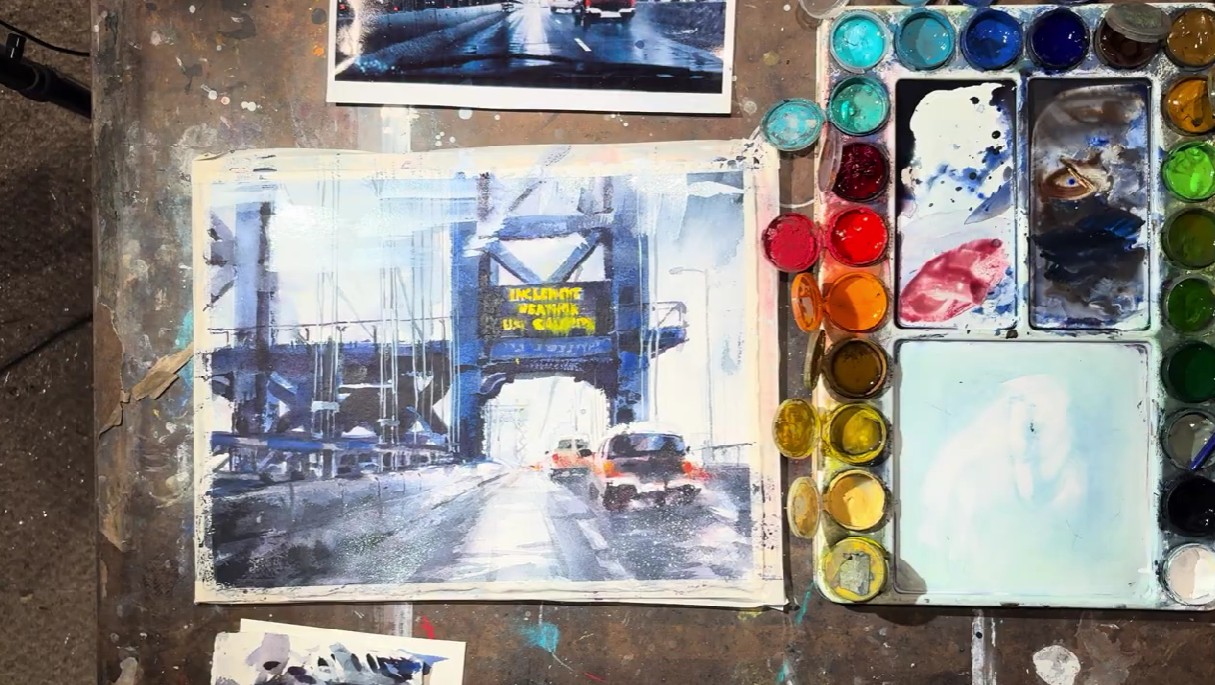
“Bridges are fascinating to me because they are the largest man-made structure in the world,” said Antonio Masi, adding that “some bridges are beautiful enough to be in a museum, though no museum is large enough for them.” Masi is the President Emeritus of the American Watercolor Society, and he shared his approach to bridges as a painting subject, including his materials, brushes, and color choices.
Watercolor Tip and a Warning: To speed up drying, Antonio uses a heat gun because it’s quiet and fast. “Don’t leave the heat gun on one area for too long, or it will burn a hole in the paper,” he said. “I’ve done that. You name it, and I’ve probably done it once in my life.”
“Antonio’s narration brings me right into the feeling of his painting, and his description of how he uses his ‘brush’s voice’ is very helpful.” ~ Linda A.
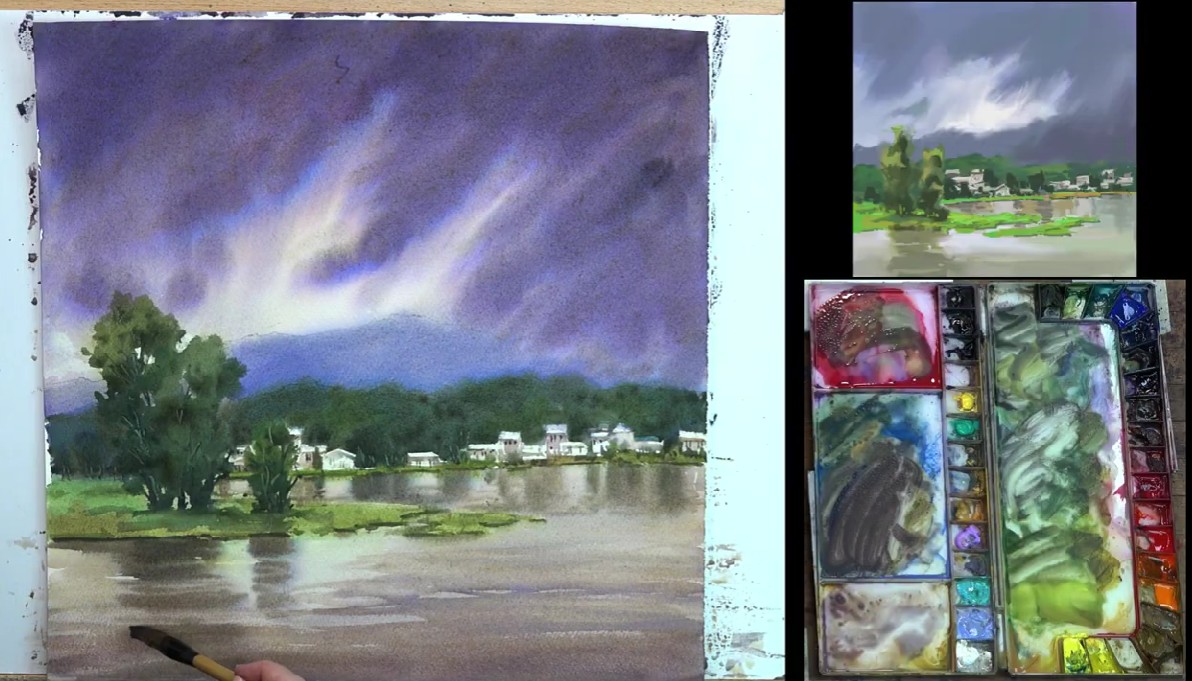
Brienne M. Brown shared a demo on how she uses plein air references for studio work, using a photo reference from her 2025 trip to China, where she created studies on location.
Brienne’s Tip: Use a kneaded eraser to lift some of the light pencil marks after your initial drawing (for composition) is complete.
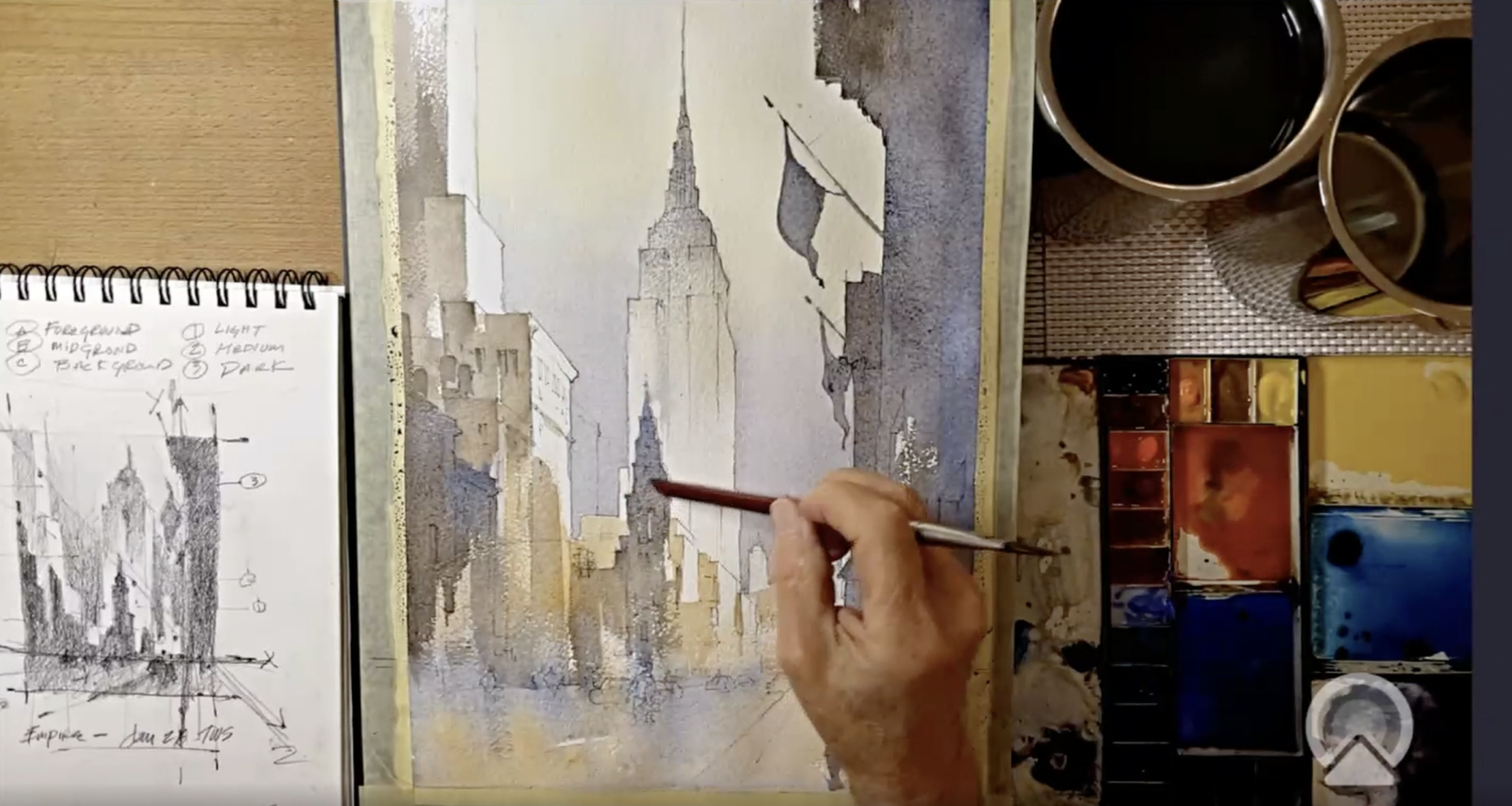
In a live-on-camera session, watercolor favorite Thomas W. Schaller joined us from his studio, where he painted a scene largely from imagination – no models, no photo references, no studies. “I’m always fascinated by his painting process because there’s something new to learn every single time,” Eric said, adding that this was “a rare opportunity to see Thomas’s creative process unfold in real-time.”
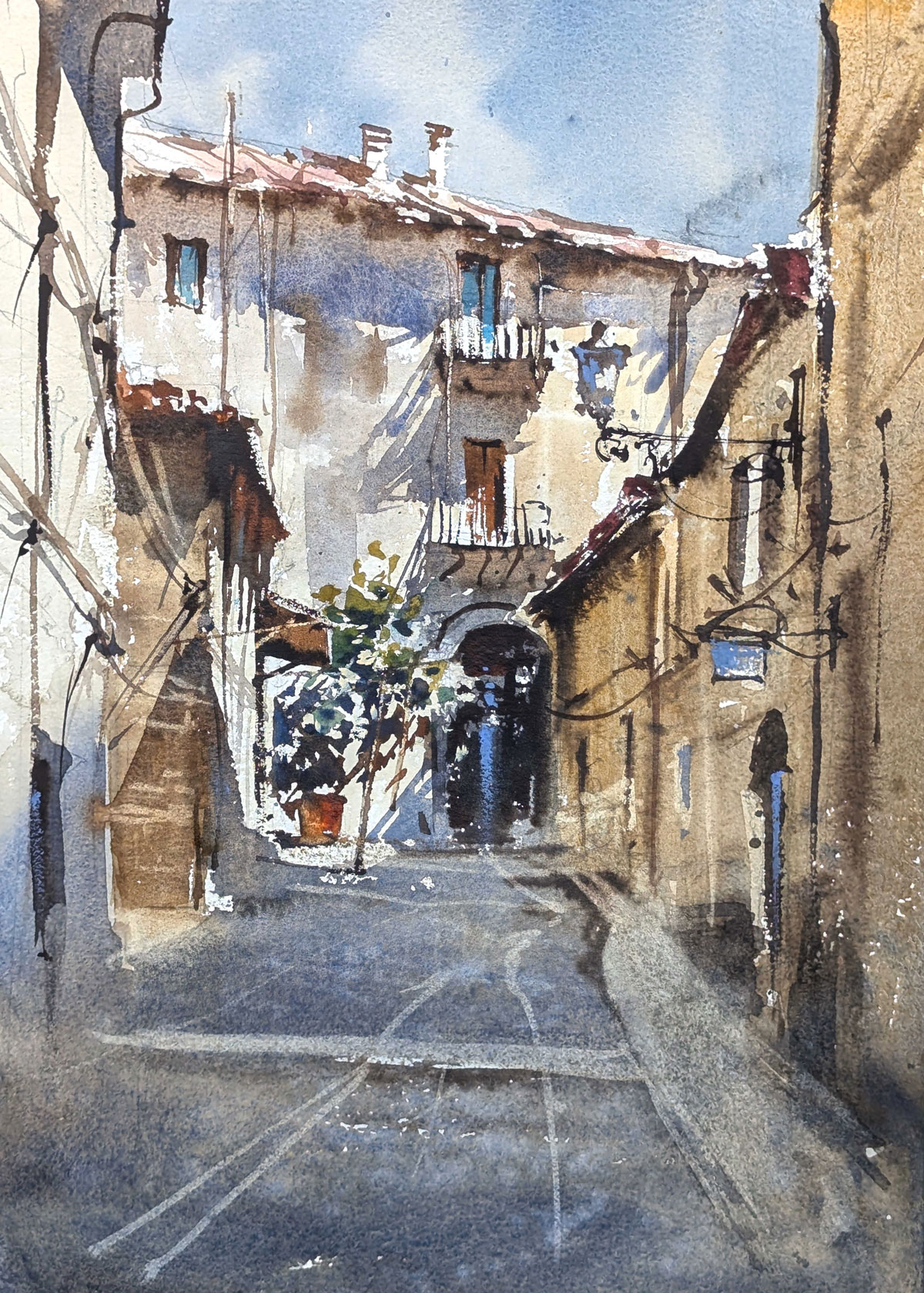
Italian artist Massimiliano Iocco painted a street scene from the village of Tagliacozzo, Italy. He used a mop brush after creating the initial sketch, advising to use more water than color at this stage.
Massimiliano’s composition tip: Try to avoid having the left and right sides of the composition be the same size; this helps the work be well-balanced.
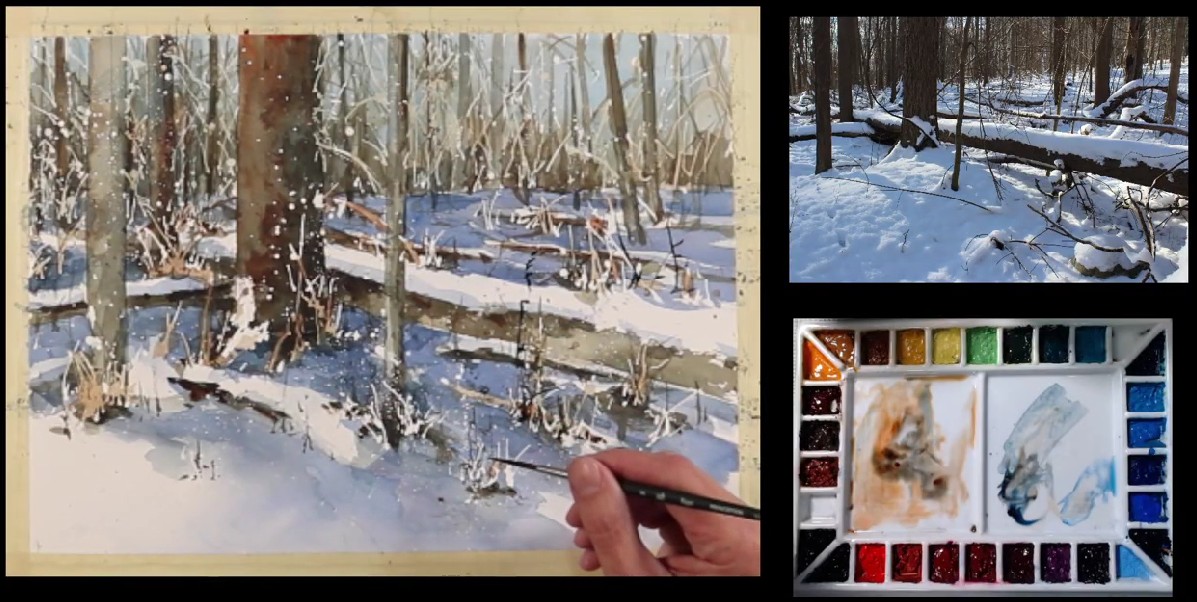
Rick Surowicz loves to paint winter scenes – but not typical ones: he prefers the “rustic side of winter,” such as the brier bushes, tangled weeds, and sticks found along a frozen river … patterns and textures that most people would overlook.
In his watercolors, he suggests detail using textures and patterns rather than rendering every stick and branch with a tiny brush.
“If you’ve got a weird shape that you don’t like,” said Jessica Bryant, “fill in the gaps where it’s light with a darker value to make it one whole shape that’s the same value. It’s a little bit tedious, but it’s better than hating something that happened in your painting.”
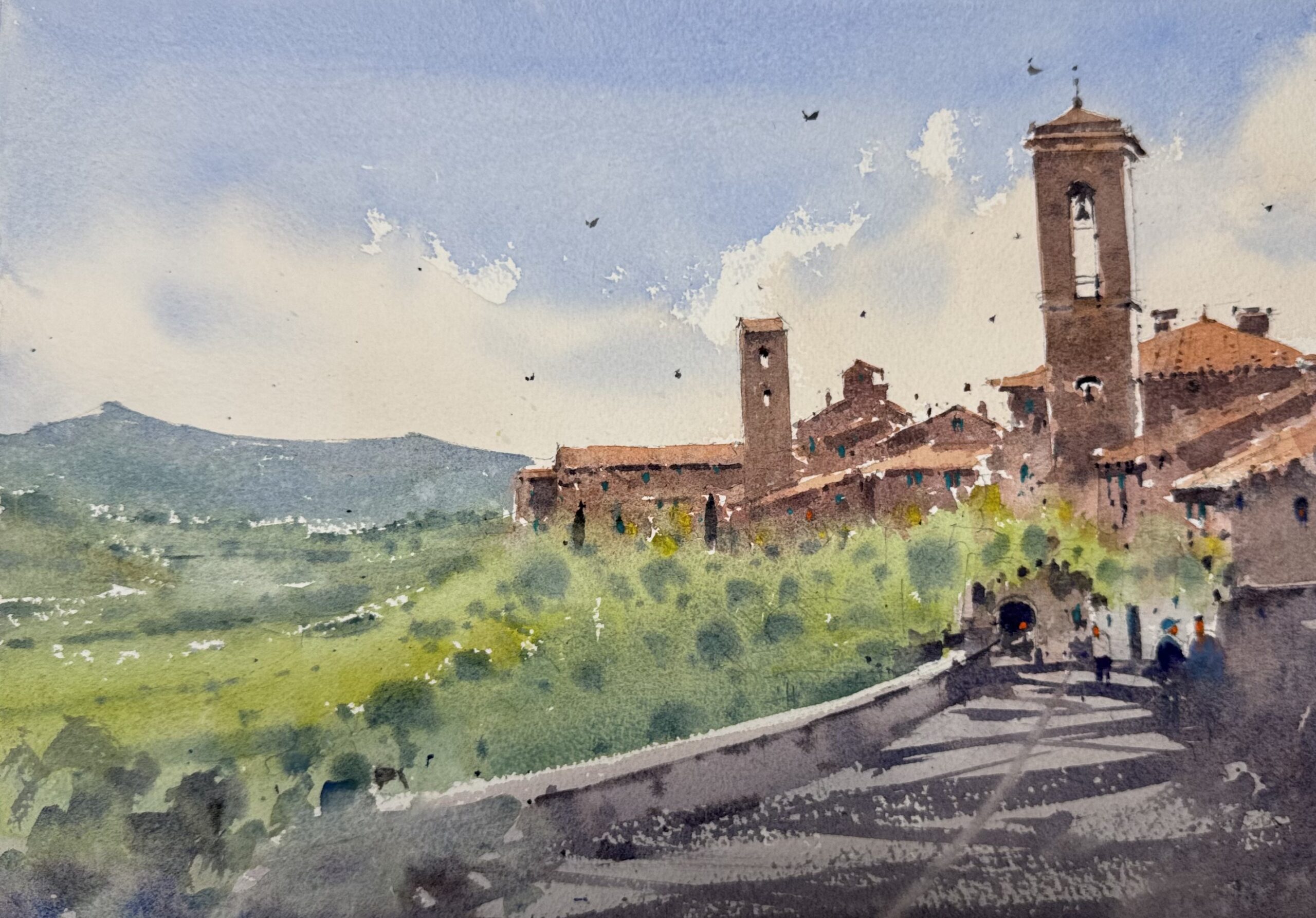
Amid El Haddad said he only paints locations that he has personally visited, which allows him to paint the mood of the place. He led a demo that featured a village in Tuscany, which uniquely combined a city scene with a natural landscape. He said that when it comes to watercolor, it’s crucial to do studies before jumping into your actual painting.
Another key takeaway > Establish your drawing in three levels: foreground (which draws you into the picture), middleground (the main subject), and background (which should be soft).
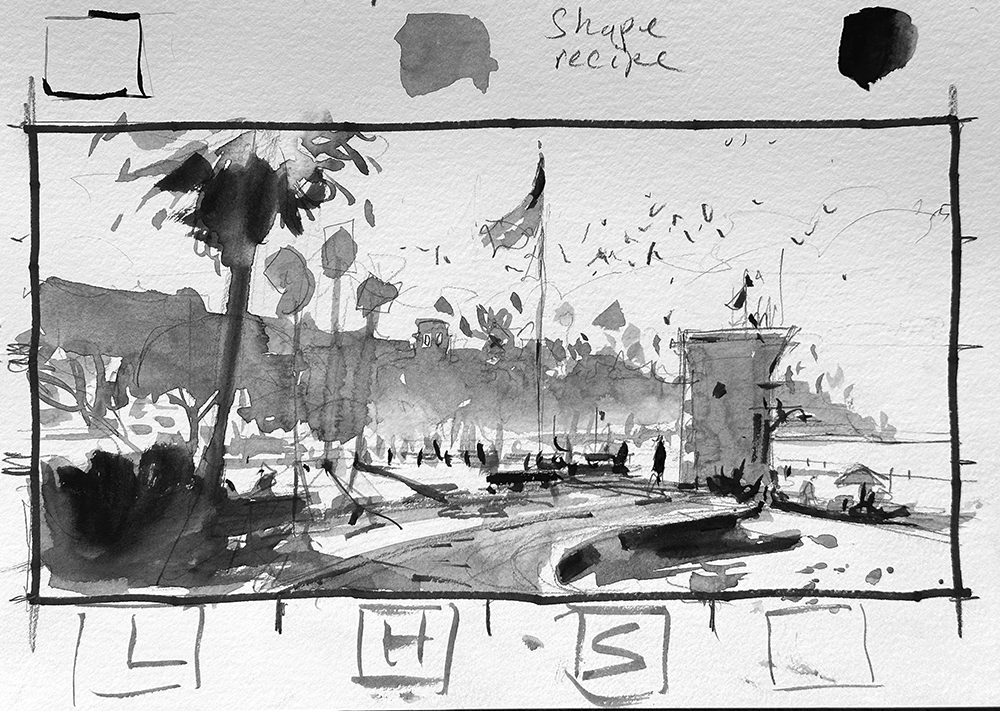
Lucky for us, Geoff Allen experienced a special morning when birds flew across the scene he was painting en plein air, and he chose to feature this subject for his Watercolor Live demo. He focused on his initial sketch, which informed his overall plan, the atmosphere seen in his reference photo, the “calligraphy” of the Laguna Beach palm trees, and why it’s helpful to work in sections.
Remember! Join us next for Gouache Live on February 19, 2026. It’s a one-day, beginner-friendly bootcamp that makes gouache easy and fun!