“Even at a very young age, I would notice light and shadow, texture, and color, but almost without realizing I was doing it,” says Deborah Tilby. “I don’t know where the need to try to paint those observations comes from, but it has motivated me all my life.”
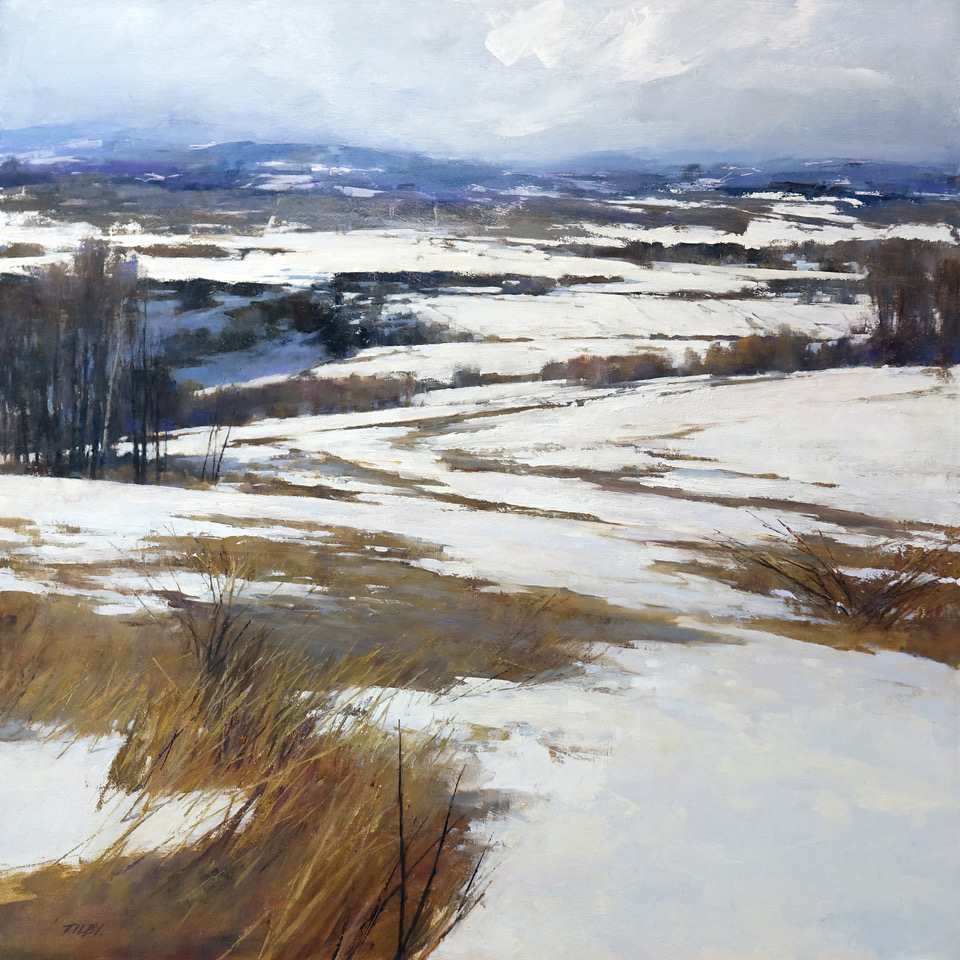
Deborah won First Place Overall recently in the PleinAir Salon (now known as The Salon Art Prize), and here, she takes us through her process for the landscape painting “Prairie Snow.”
Landscape Painting Demo: “Prairie Snow”
Usually I start a painting by laying in the darks with thinly applied (not thinned) paint and working up to the lighter values, But with this one, I started with the sky and worked my way down because I wanted to bring in the snow at the same time as the hills and trees, which I think helped balance the soft and hard edges of the snow against the hills.
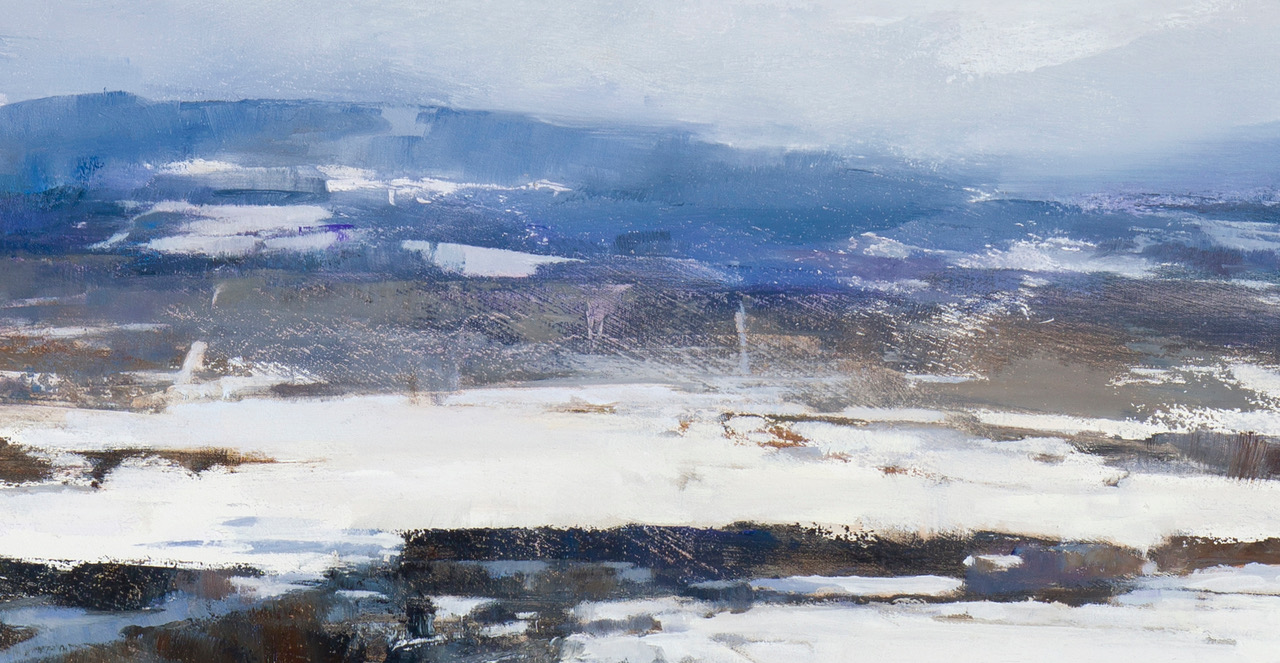
This detail (above) shows a close up of the distance where I used a combination of brush and painting knife to lay in the violets and blue/greys of the hills. I warmed them up as I came forward and then I dragged a squeegee very lightly across the surface, which gave a credible impression of a dusting of snow on the trees. The knife and credit card were used for the patches and strips of snow.
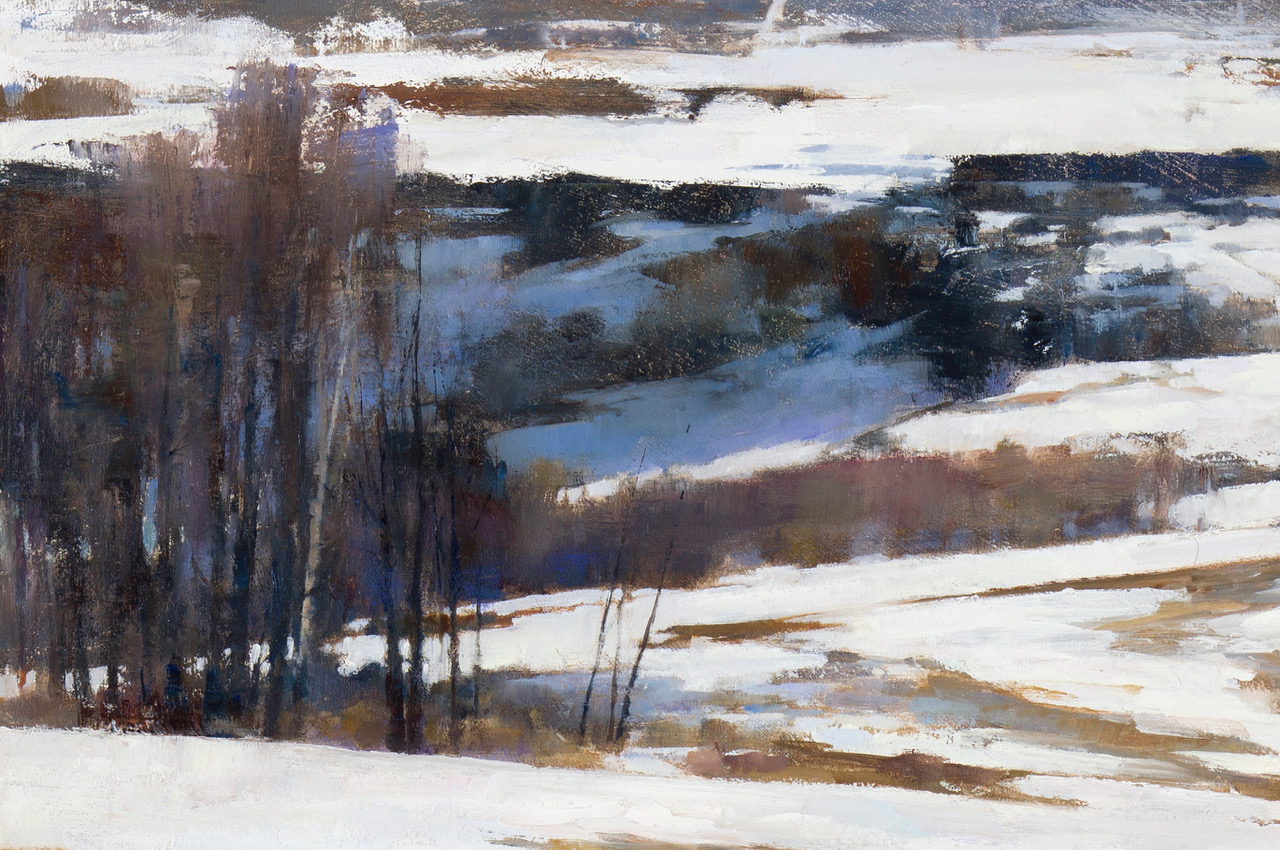
This image (above) shows the handling of the clump of trees in the mid-distance. They are close enough to need some detail but I still kept them very loosely painted. I laid them in with a brush, then dragged a bristle brush sideways and used the knife to add trunks and branches. In areas such as this, I generally paint the darks first and then ’tuck’ the white or blue/gray of the snow in and around the darks. I often go back and forth between the bushes and trees and the snow until I arrive at the edges that feel right.
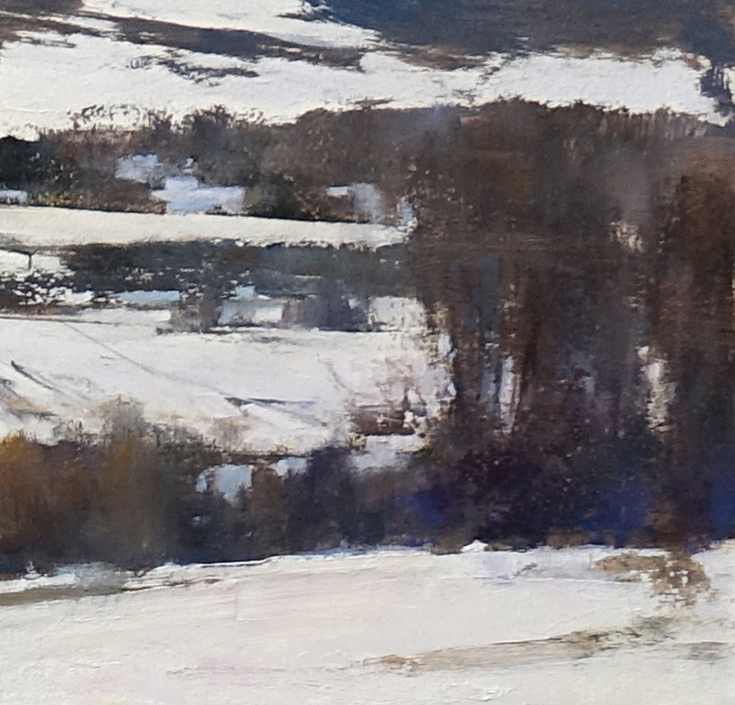
The stand of trees on the right of the painting was kept very simple in value and color with almost no detail at all. I wanted these trees to be there for balance but I didn’t want to draw attention to them, so I kept their value only a smidge darker than the row of trees/bushes behind. This close up and the previous one show the violets that I like to work into my shadows near to the finishing of the painting.
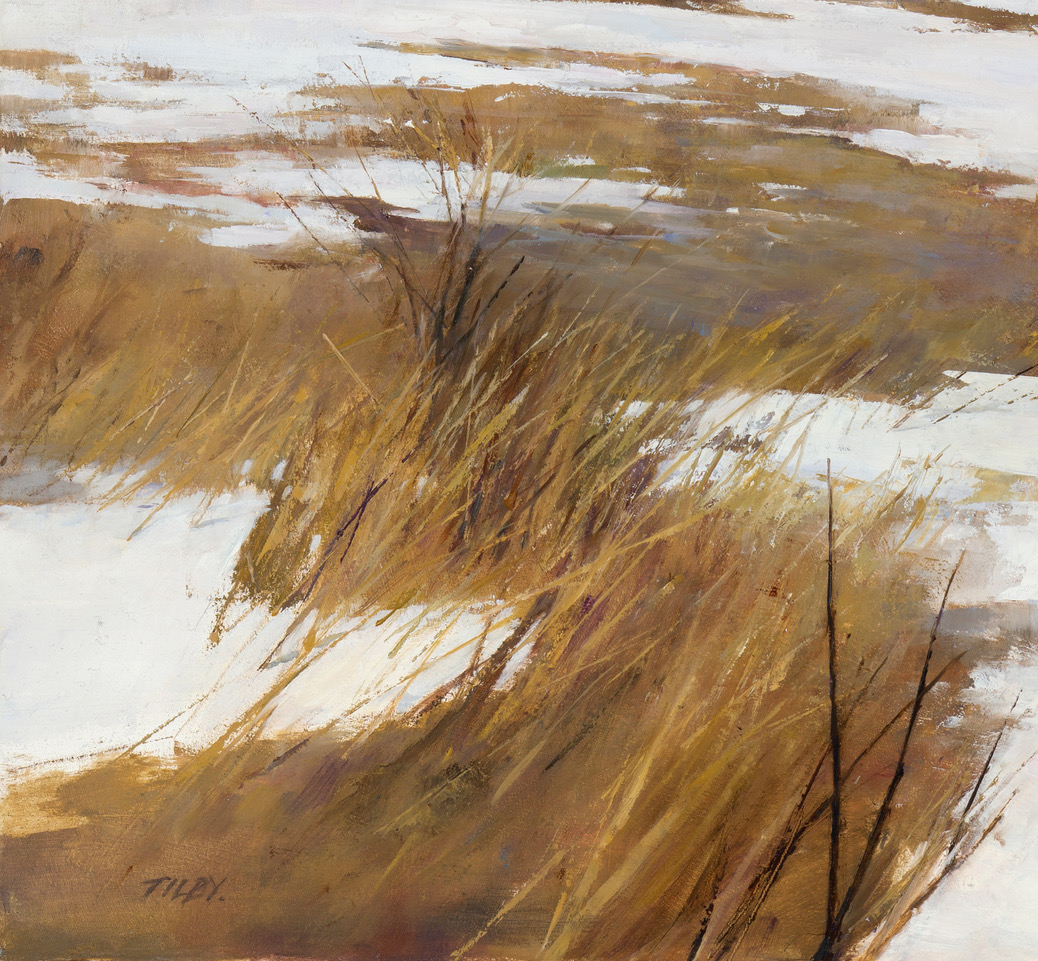
I had a bit of a struggle with parts of the area shown in this close up. I wanted to give the feeling of melting snow but it wasn’t working until, after it was dry, I layered in some soft violets and blues over some of the ochres. Using a variety of edges between the patches of ochre grass and the snow also helped. The taller grasses and twigs were done with my painting knife, which is long and flexible. (I couldn’t be without it). I used a soft bright with a good edge for some of the softer, lighter grass.
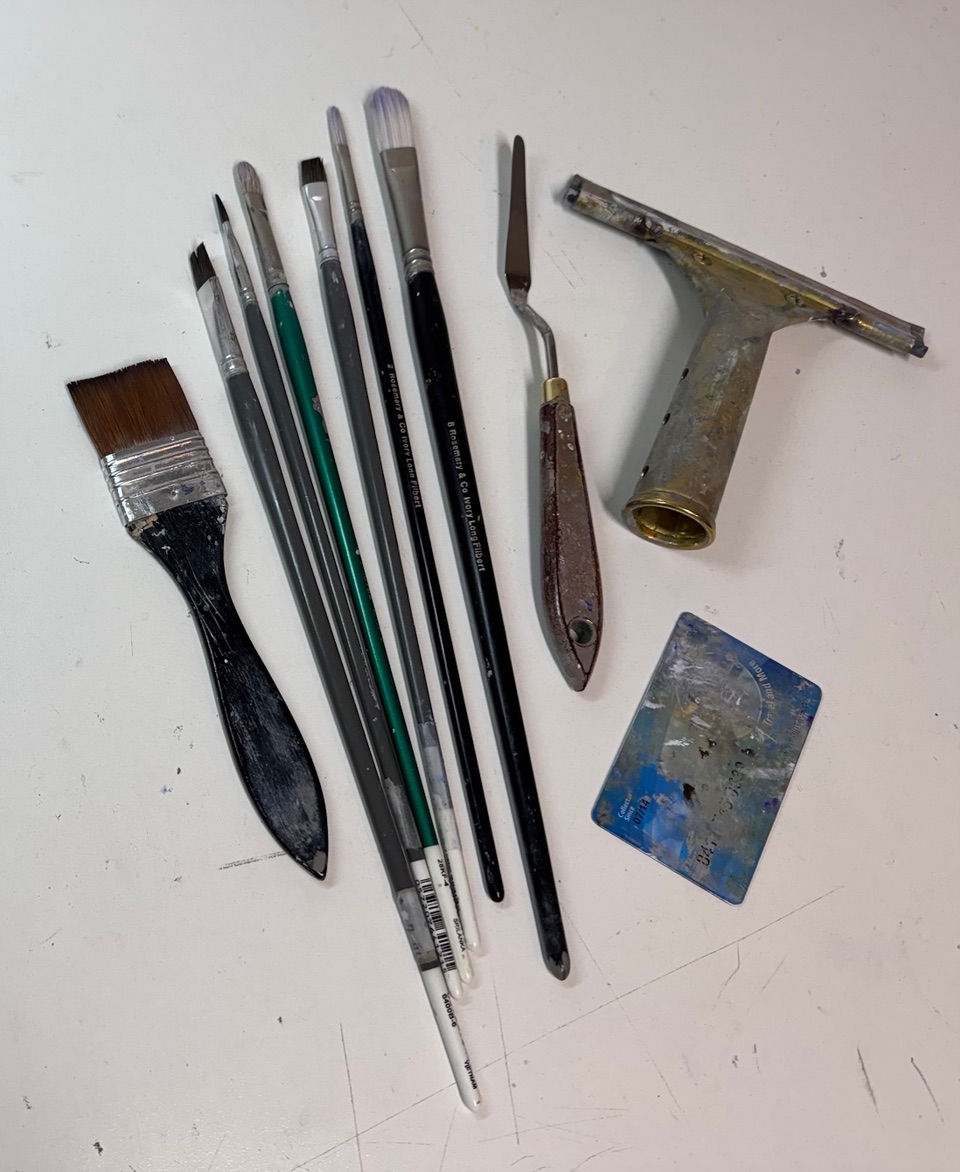
Supplies: I used Rosemary and Heinz Jordan brushes, a Connoisseur #16 painting knife, an Ettore squeegee, and a credit card.
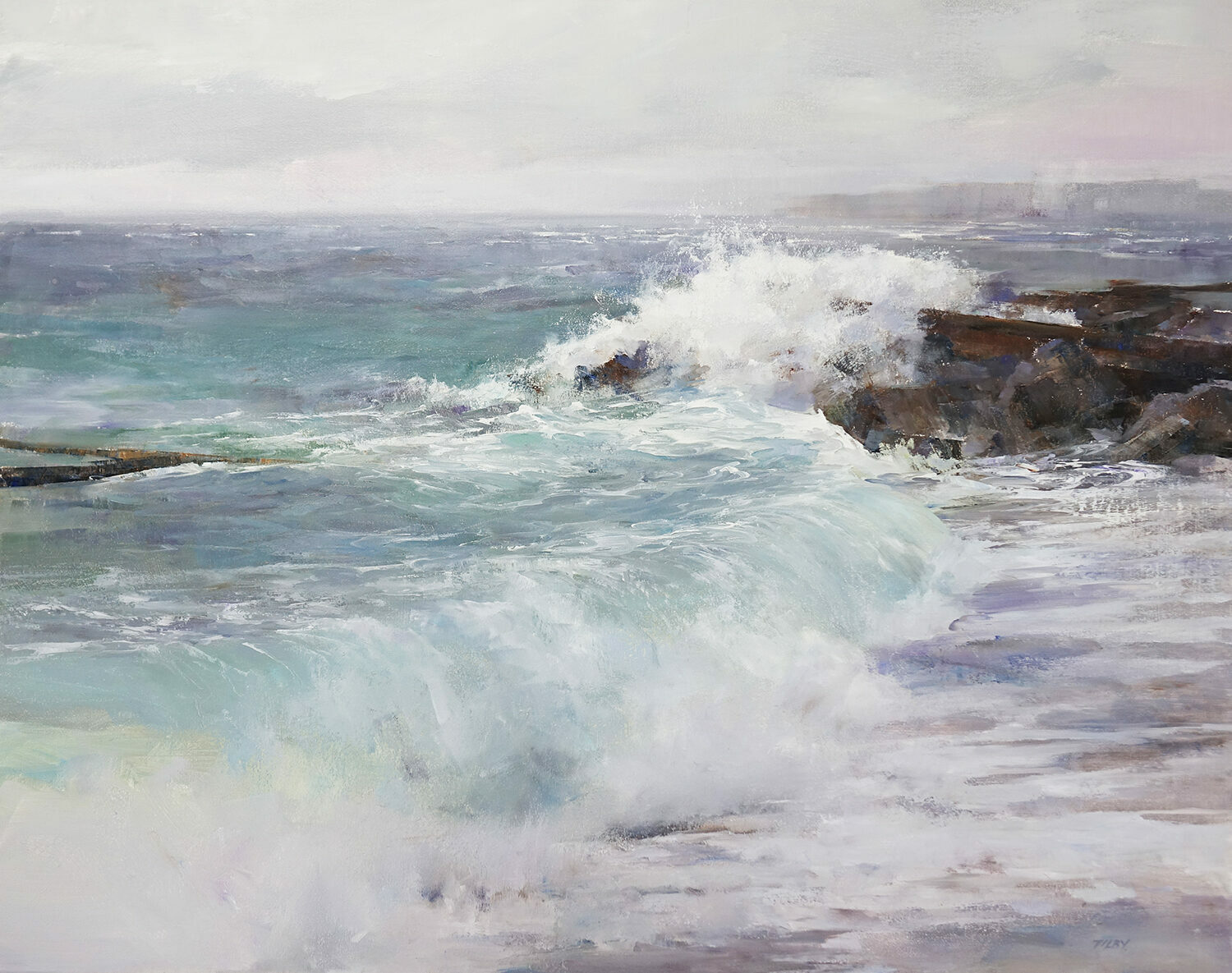
Connect with Deborah Tilby at www.deborahtilby.com.
Don’t miss your opportunity to create lifetime memories at the Plein Air Convention & Expo! All training sessions are indoors on giant, high-def screens, with plein air paint-outs in the afternoons. Beginners and pros feel right at home, so register at PleinAirConvention.com to join us.
Browse more free articles here at OutdoorPainter.com
Blog post prepared for the web by Cherie Dawn Haas, Editor of Plein Air Today