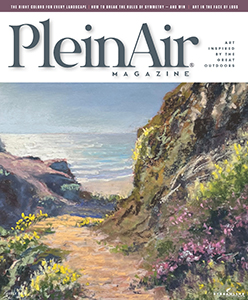
Preview the newest issue of PleinAir Magazine with the Editor’s Letter:
Permission to Fail
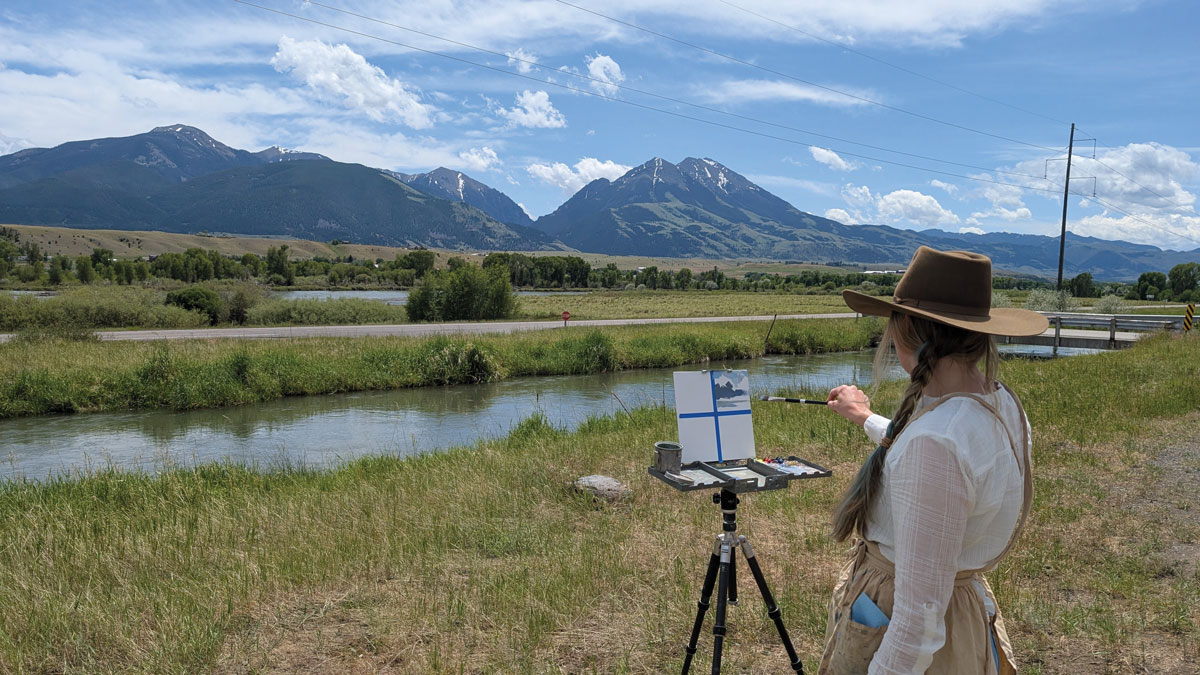
In this issue, you’ll meet Ellie Wilson — a painter who has accumulated what she describes as “piles of plein air paintings,” and arrived at a philosophy that I think every artist, at every level, needs to hear. “Not every painting is going to work,” she says. “Half of them might go in the garbage — and that’s okay.”
That’s okay.
It sounds simple. It isn’t. For most painters, the gap between the painting they envisioned and the painting they made is a source of genuine frustration — sometimes discouragement. We judge the session by its product rather than its process. We pack up feeling defeated when we should be feeling educated. Wilson has found a different way to think about it. For her, plein air painting isn’t about producing finished work, it’s about gathering information. Observing. Recording light and shadow as accurately and as quickly as possible. Building what she calls a visual library she can fish through later, looking for the spark that will ignite a studio painting. That reframe changes everything. When the goal is information rather than masterpiece, every session succeeds — even the ones that end in the trash.
There’s something else in Wilson’s approach worth sitting with: volume. She paints multiple pieces in a single session, sometimes dividing a single panel into studies, forcing herself to simplify. “You can’t nitpick a tree when it’s less than a centimeter tall,” she says. It’s a reminder that constraints are not the enemy of good work — they are, often, the very thing that produces it. Speed forces decisions. Small scale forces clarity. And doing more paintings, not fewer, is what builds the mileage that makes you better.
In the 30 years I’ve been interviewing artists and writing about their inspiration and their creative processes, I’ve learned that the best painters share one quality almost without exception: a willingness to work, to accumulate, to let the bad paintings happen on the way to the good ones. They don’t treat every painting session as a high-stakes performance. They treat it as practice — joyful, curious, open-ended practice.
And the word joyful matters. There is something intrinsically valuable about standing outdoors with a brush in your hand, regardless of what ends up on the surface. The light on the water. The smell of the air. The particular quality of stillness that settles over you when you’re fully absorbed in looking at something. These are not consolation prizes for a failed painting. They are the point.
Plein air painting, at its best, is permission to be present. To observe without agenda. To let the experience be enough, even when — especially when — the painting isn’t.
Wilson’s philosophy is one I find myself thinking about well beyond the context of painting. How often do we judge any endeavor solely by its outcome, discounting the value of the attempt itself? How often do we let the fear of a bad result keep us from doing anything at all? The failed attempt, it turns out, is not the opposite of success — it’s the path to it.
“Failure is the most important part of an artist’s training, and one you cannot afford to do without.”
— Gustav Holst (1874–1934), a renowned English composer, arranger, and teacher
So the next time you pack up at the end of a session, brushes cleaned, panel tucked under your arm, feeling something between satisfaction and resignation — know that whatever is on that panel, something valuable happened out there. The mileage always counts.
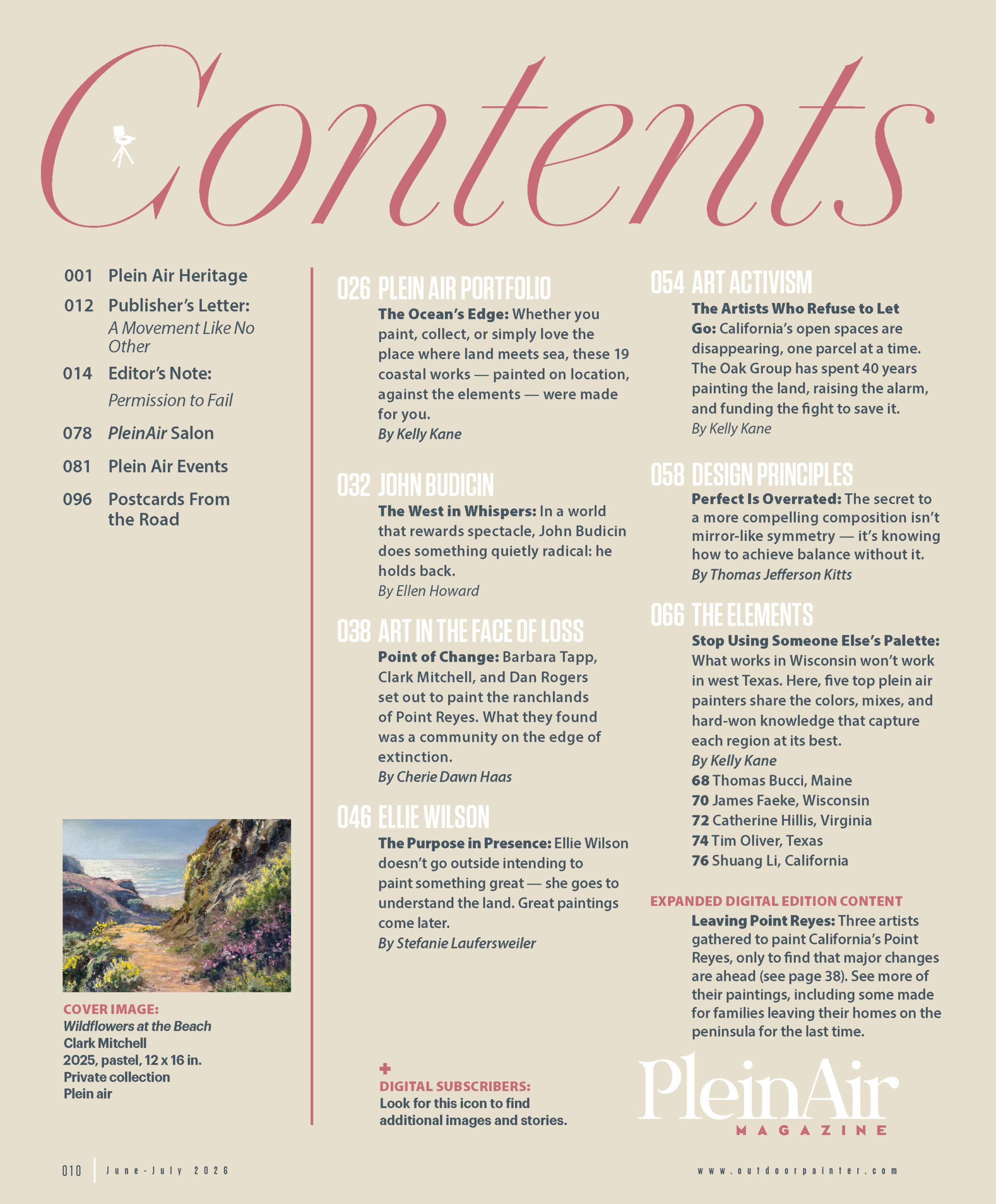
PleinAir Magazine June/July 2026
Helpful Links: