Can you use gouache on black paper? Yes! Jan Poynter is not afraid of the dark, and she’s not afraid of phthalos. Here’s what that means for her artwork.
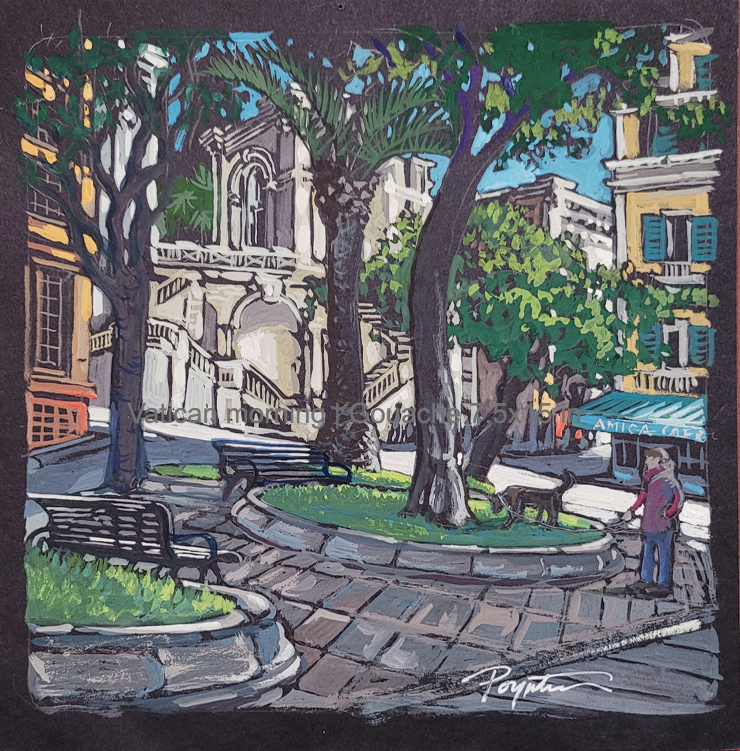
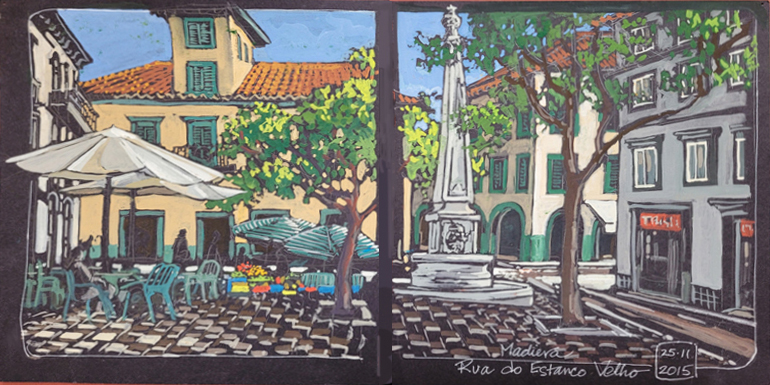
Since the artist was 17, she has painted with gouache on black paper, approaching the painting process in a way almost the opposite of most processes. The surface is already dark, so she begins with the lightest lights. Thin applications mean darker shades, while thick applications result in lighter passages.
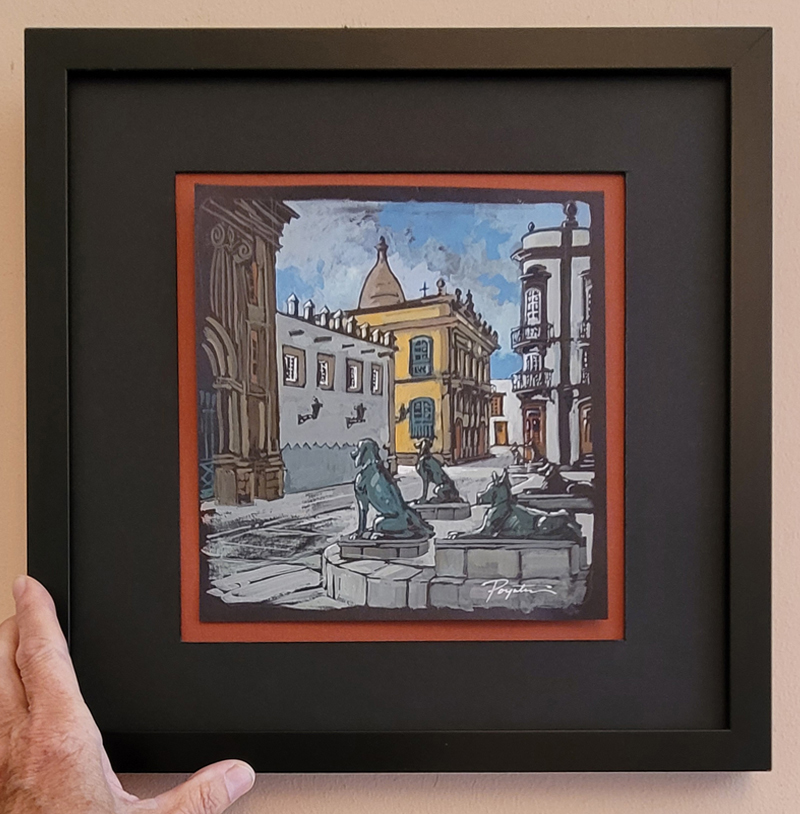
“The gouache just jumps out at you because it is so chalky and opaque,” says Poynter. The British Columbia artist finds that traditional gouache is an excellent traveling companion, as it dries quickly but one can always go back into it by re-wetting it. The only weather it does not fare well in is rain, and for the same reason, gouache paintings need to be framed behind glass. Poynter occasionally sprays fixative or applies cold wax directly on gouache, but she finds that it darkens the values significantly, so you must paint lighter in anticipation of this effect.
“As with any plein air work, the changing of the light/shadows is your primary concern. Dramatic highlights on structures, shadow angles, sparkle, reflections or sky conditions will change!”
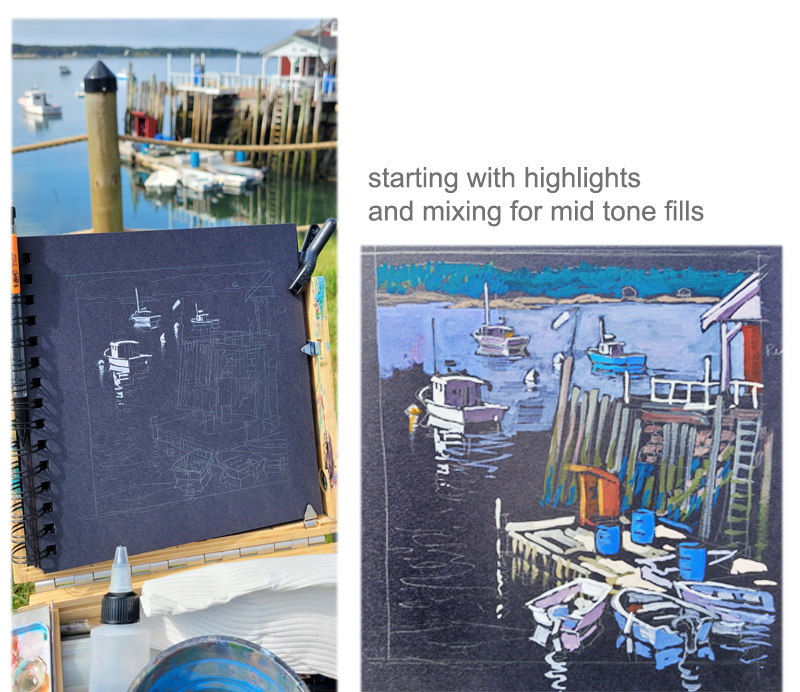
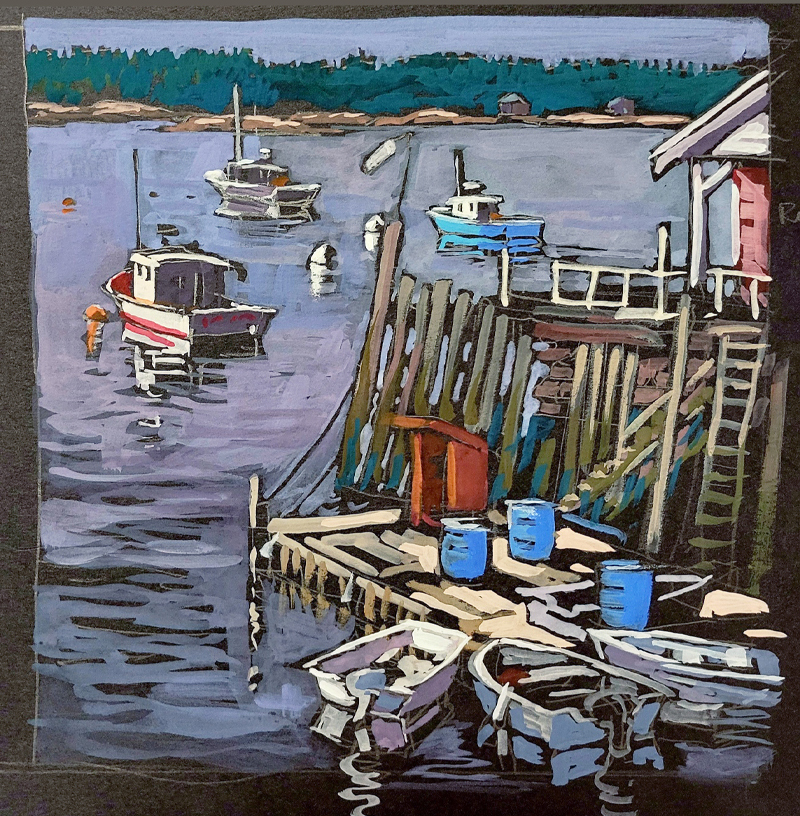
In her examples shown here, Poynter says to note the highlights done first: “Not in white, but very light gray/color tints. Reserve your pure white for that final sparkle. This also gives you a comparison to start mixing your light to mid tones and dark colors.”
One of the most striking aspects of Poynter’s gouache paintings is her use of unpainted portions of the surface. It is indicative of her training as a printmaker and career as an illustrator. “Those little marks that I left black are not something I would add in with paint in a normal situation,” says Poynter. “The process of painting gouache on a dark surface gives you little gaps and spaces that you would have some difficulty rendering. It suggests the freshness of linocut or scratchboard. It gives me little surprises along the way.”
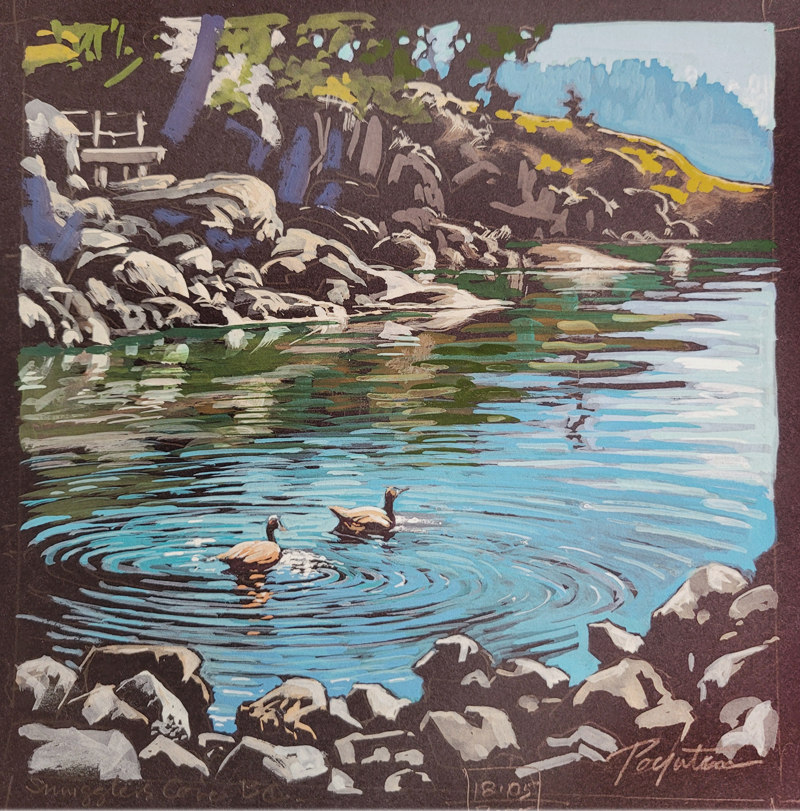
Sometimes the effect is subtle. Other times, Poynter plays up the dark background by leaving an outline around objects. “If you want bold representation, leaving that black outline silhouettes it and makes it stand out,” she points out.
Poynter has worked in pastel on black paper and in oil and acrylic, toning the canvas black, or in shades of black. She likes phthalo blue and strong reds and greens in making her ground color, and she sometimes allows a gradation in the ground from top to bottom.
“I have started working with gouache for landscapes in a series – tinting the pages of watercolor sketchbooks for quick studies.” The finished book becomes a wonderful collection of inspiration and informs the larger paintings and color planning in the studio. (See her Rivers & Ranches collection here.)
A Note on Types of Gouache
“Traditional Gouache is really old school – illustrators used it as ‘fill’ before digital programs – to create flat and even areas to be photographed for reproduction in printing. If the gouache is water soluble artist-grade, then even if they are dried up, you can peel open the tubes, crack the paint apart, and re-wet it. It will still work. Note that acrylic gouache will not work in a travel palette – it dries as waterproof plastic.”
Poynter buys sketchbooks made with acid-free paper that were designed to be used as scrapbooks. “The paper is about 200lbs, and it’s quite smooth and a little bit absorbent,” she reports. The artist does a detailed line drawing with graphite (2B pencil), including the rounded corners of the composition that suggest both an etching and a vignette style of painting.
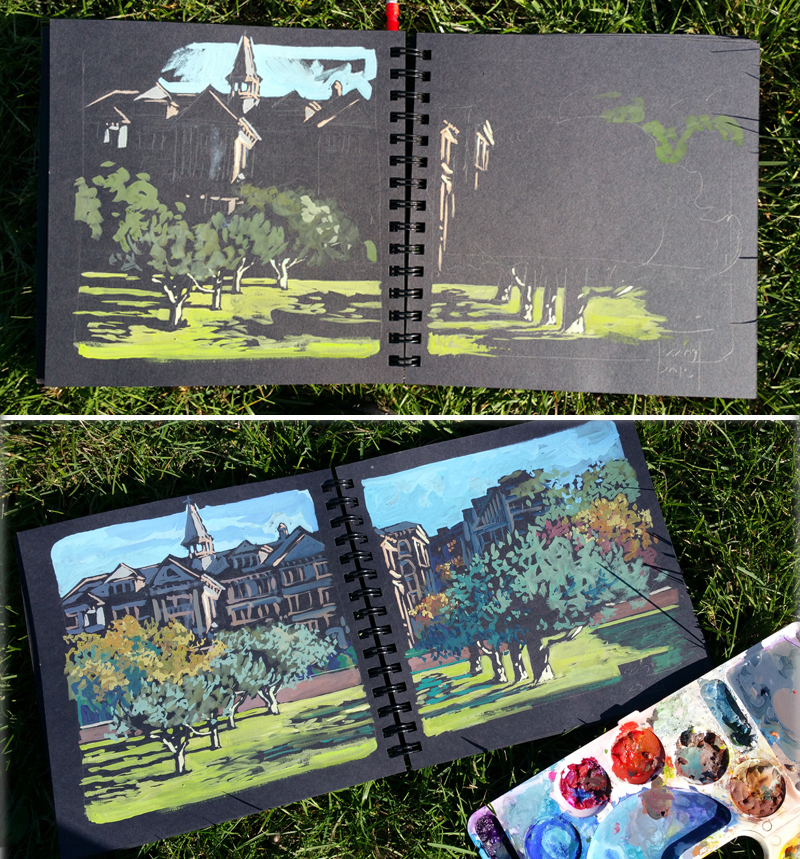
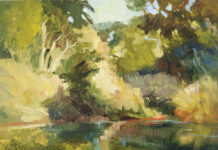
Bottom: Jan Poynter, “Old Orchard / Victoria, BC,” gouache, 7.5 x 15 in.
She sometimes lets the painted subject matter break the frame she has drawn with a pencil to emphasize the object. After she has finished painting, Poynter sometimes erases the graphite lines. She also leaves large passages unpainted in her composition, which means black. “I stand back from the piece, and if it is speaking to me well enough, then I stop,” she says.
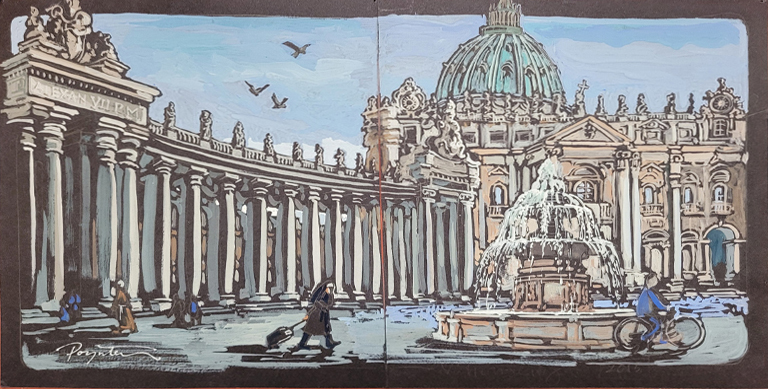
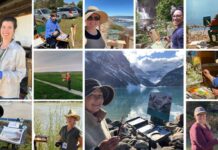
“You will see in my various architectural and landscape subjects – this technique lends itself to rendering silhouettes and dramatic high contrast subjects. I really enjoy watching it come to life as I fill in all the negative space with color – leaving the dark structures bold and hard edge. Sometimes I just carry a small shoulder bag with a sketchbook, water brush, and tiny gouache palette. I also show here my smallest Guerilla pochade box rigged up for some more serious work on location. Traditional gouache dries fast and is easy to pack – even in carry on. It’s easy and low stress. Start with some simple pencil lines and then paint ‘around’ them with fills of color. In other words, no excuses — give this technique a try.”
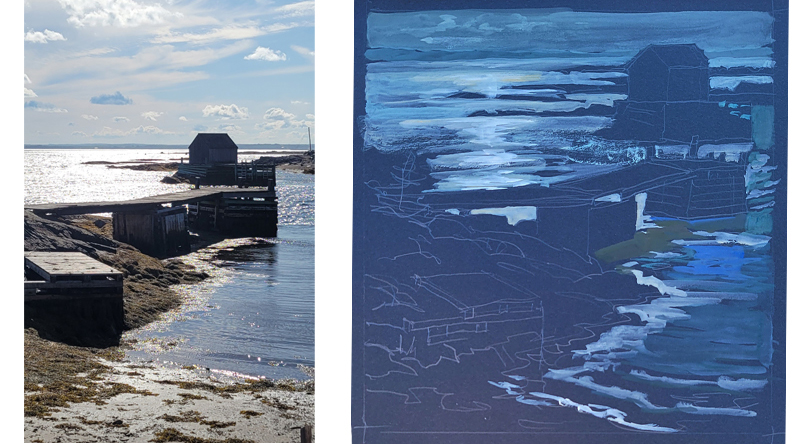
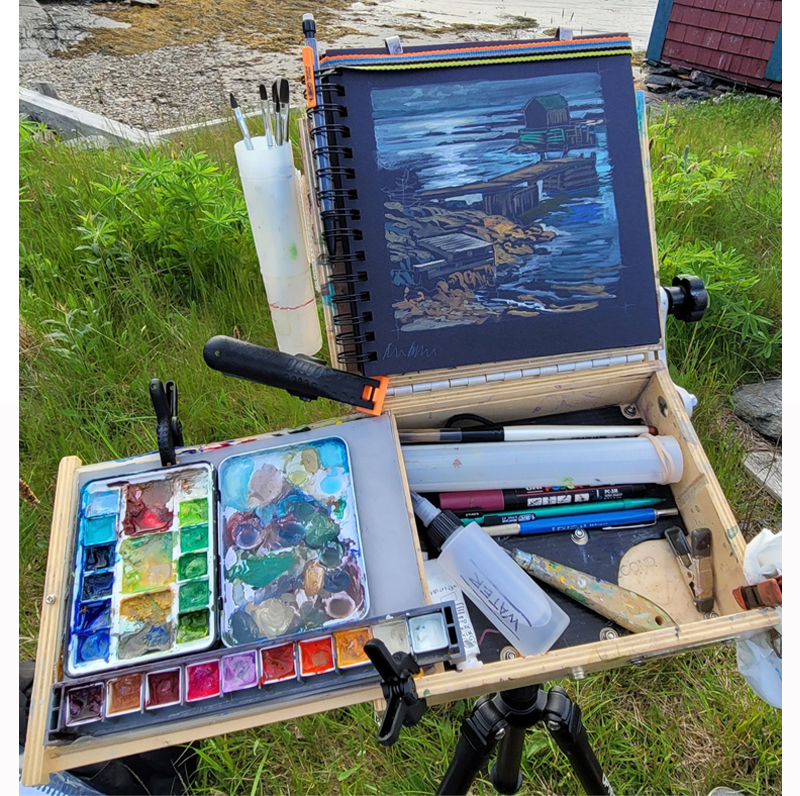
Poynter’s Art Supplies
BLACK PAPER: It’s not easy to find the black spiral bound books anymore, but a heavy weight, smooth archival black paper will do. Mixed media is preferred – as the small brushmarks and limited application of the large wash areas with gouache don’t result in buckling paper.
BRANDS: Strathmore 400 Series Black Field Sketchbook, Canson Black Drawing paper, Printmaking paper Fabriano – large sheets, Fabriano ‘Black Black’ sketching pads
GOUACHE BRANDS: Winsor Newton, Daler Rowney, Daniel Smith
Follow Jan Poyner’s recent plein air journeys on Instagram @jan.poynter and Facebook: Jan Poynter ART. Website: janpoynter.com
Gouache LIVE (August 23, 2025) is about rewiring how you see, think, and create as an artist while giving you a fresh sense of creative freedom, whether you’re picking up gouache for the first time or ready to explore! Maybe you’ve tried oils. Acrylic. Watercolor. But gouache is different. Learn why at GouacheLive.com. (No tech skills? No problem! If you can click a link, you can join our event!)