On Painting Seascapes > A witness to two rare lunar events, this Florida transplant embarked on a quest to capture the ocean’s shifting colors under the light of the moon.
By Nicora Gangi
nicoragangi.com
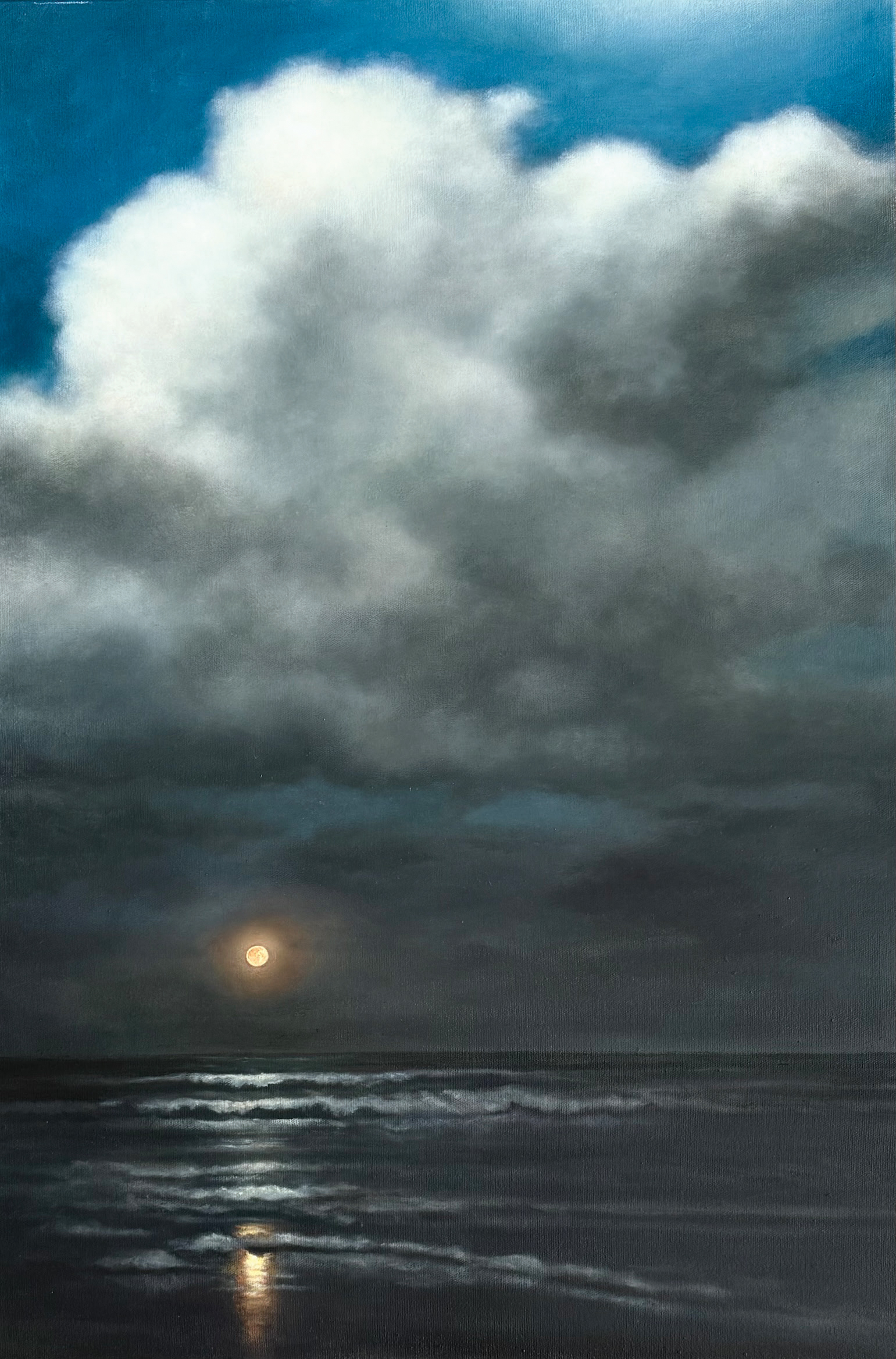
When I’m painting, I often challenge myself with the question: “What if?” It’s this curiosity that drives me to explore unknown territory — to seek out new, sometimes mysterious places in my work and imagination.
I moved to St. Augustine, Florida, where the sight of the ocean for the first time in 45 years unexpectedly sparked a number of new and exciting “what ifs.” Inspired by Winslow Homer (American, 1836–1910) and Hiroshige (Japanese, 1797–1858), I became intrigued by the idea of painting the ocean at night. That interest only deepened in late summer 2024, when I witnessed both a blue moon and a supermoon lighting up the Atlantic.
Despite its name, a blue moon doesn’t actually turn blue; it’s simply the second full moon to occur within a single month. This rare alignment of lunar and calendar cycles happens every two to three years, which is why the phrase “once in a blue moon” came to describe something uncommon, but not entirely unexpected.
A supermoon, on the other hand, is a full moon that coincides with the celestial body’s closest approach to Earth — known as perigee. During a supermoon, the lunar disk can appear up to 14 percent larger and 30 percent brighter than at its farthest point.
From my spot on the coast, I’ve watched the ocean’s colors shift with the seasons. As the Earth’s axis turns toward or away from the sun, the water transforms in mood and character — summer brings warm ultramarine blues and yellow-greens, while winter ushers in cooler tones: rich Prussian blues and steely cobalt blue ultramarine.
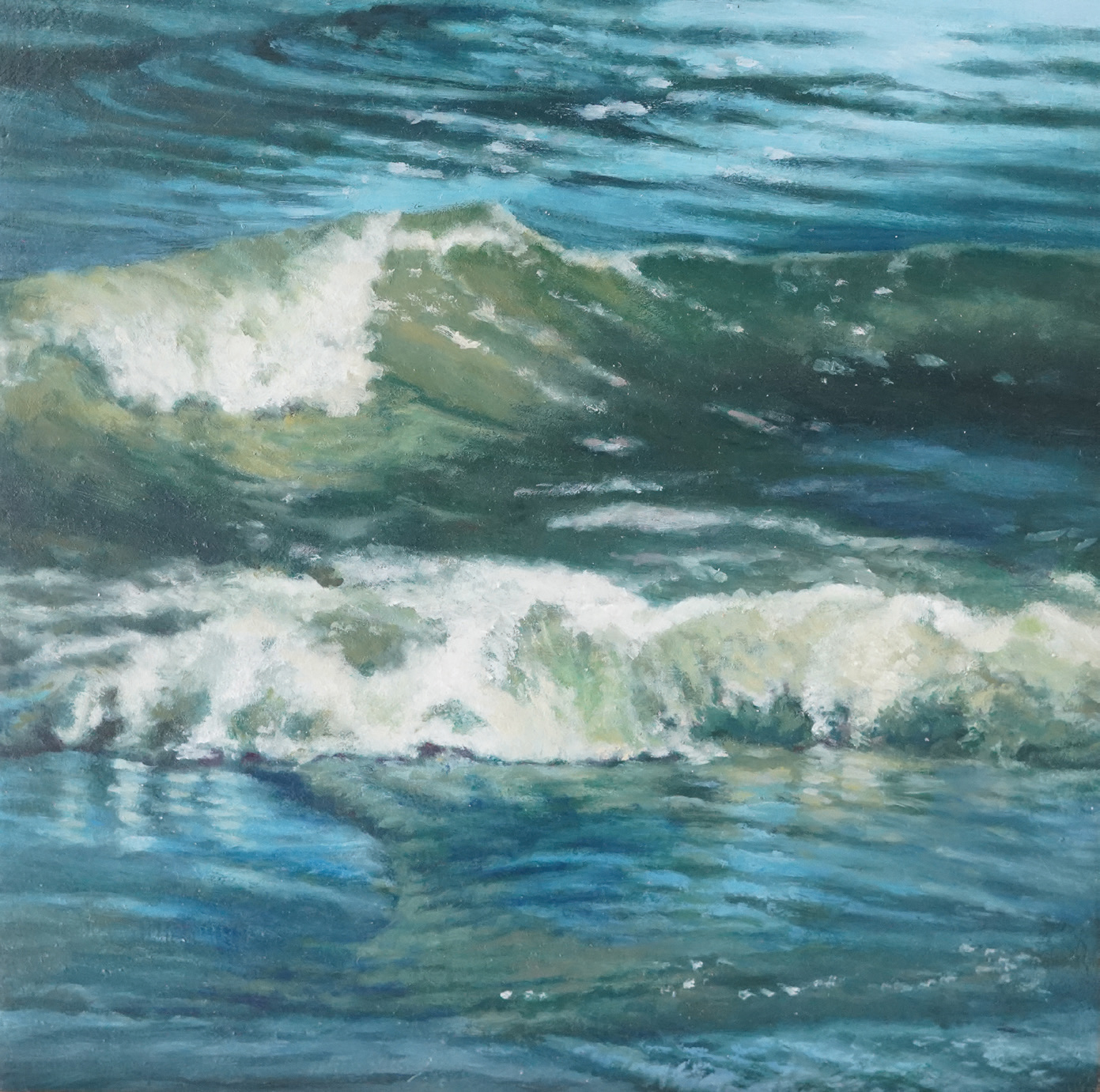
The moon’s gravitational pull also reshapes the ocean daily. To capture its effects, I first tried taking photographs, but they didn’t suffice in conveying the true essence of what I was seeing. I then turned to making color notations in my sketchbook — or right on my Daniel Smith Scott Stevenson Palette dot cards, observing the ocean intently during different daytime tide cycles. From those color notes, I made a series of daylight ocean studies, including “Wave Reflection I.”
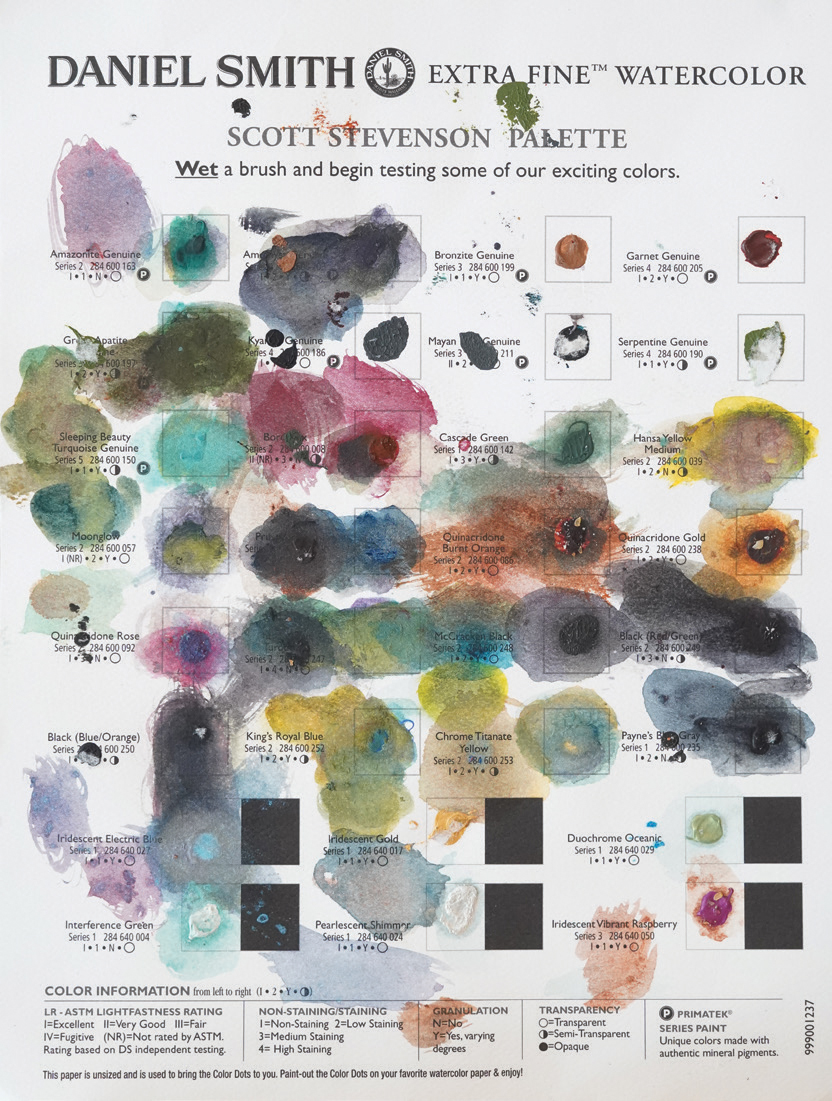
As my confidence in capturing sunlit ocean hues grew, I began nighttime excursions — watching the moon rise over the sea while making color notations under shifting lunar light. These experiences, especially during rare celestial events like the blue moon and supermoon, deepened my fascination with moonlight’s effects on perception.
Read the full article in PleinAir Magazine, October/November 2025
Transform your skills at the next Plein Air Live online art conference! Plein Air Live gives you invaluable insights and live demonstrations from some of the world’s best plein air artists. Learn more at PleinAirLive.com.
Browse more free articles here at OutdoorPainter.com
Story prepared for the web by Cherie Dawn Haas, Editor of Plein Air Today