

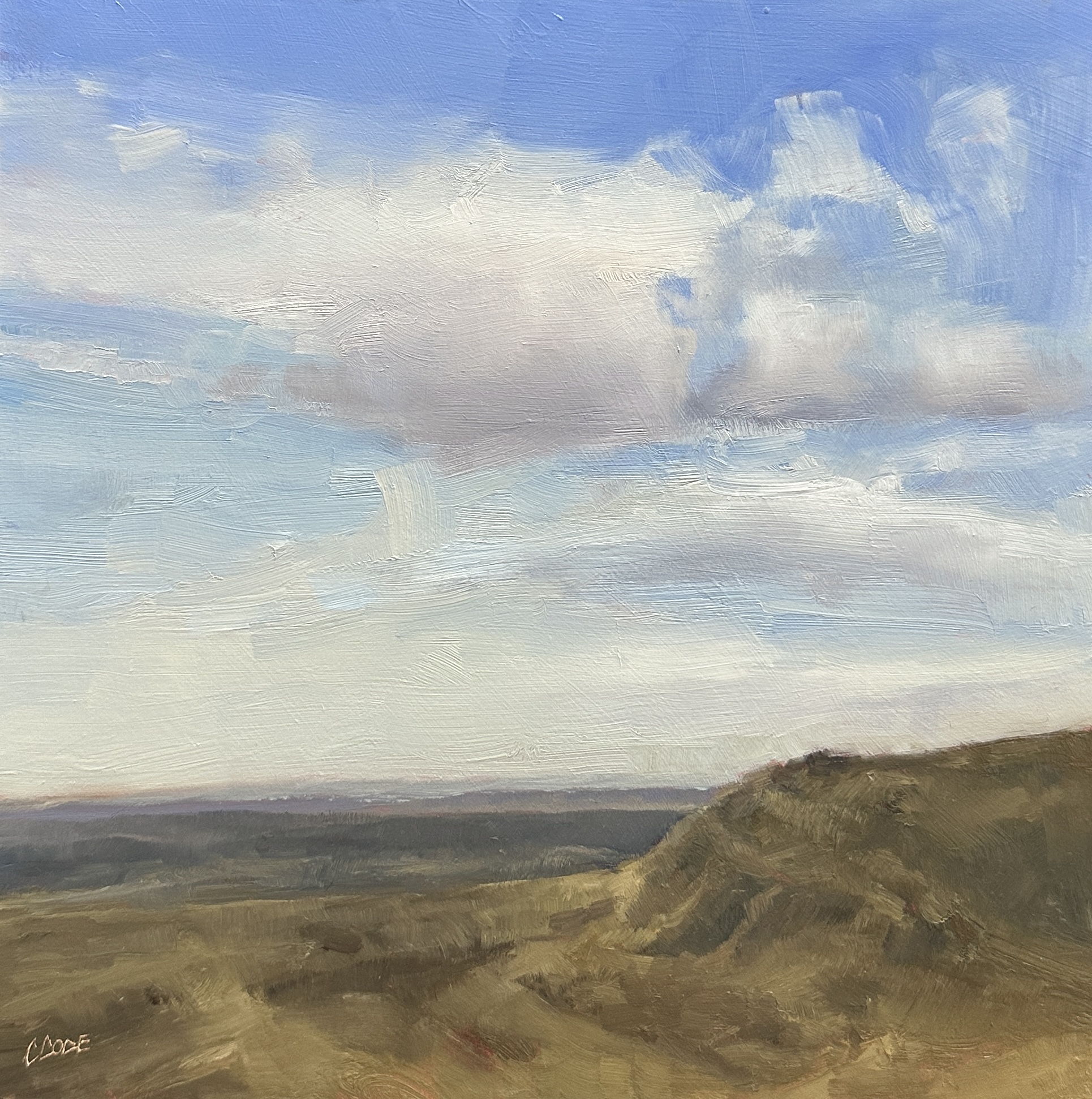
Plein air painter Christine Code shares her approach to painting clouds and skies, and how she “found a sweet spot between chasing and sticking to a composition.”
How to Paint Clouds: My Approach and 3 Tips ☁️☁️☁️
By Christine Code
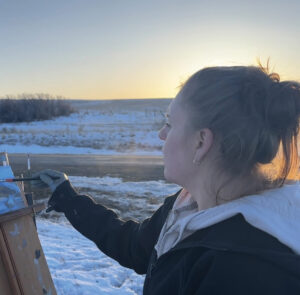
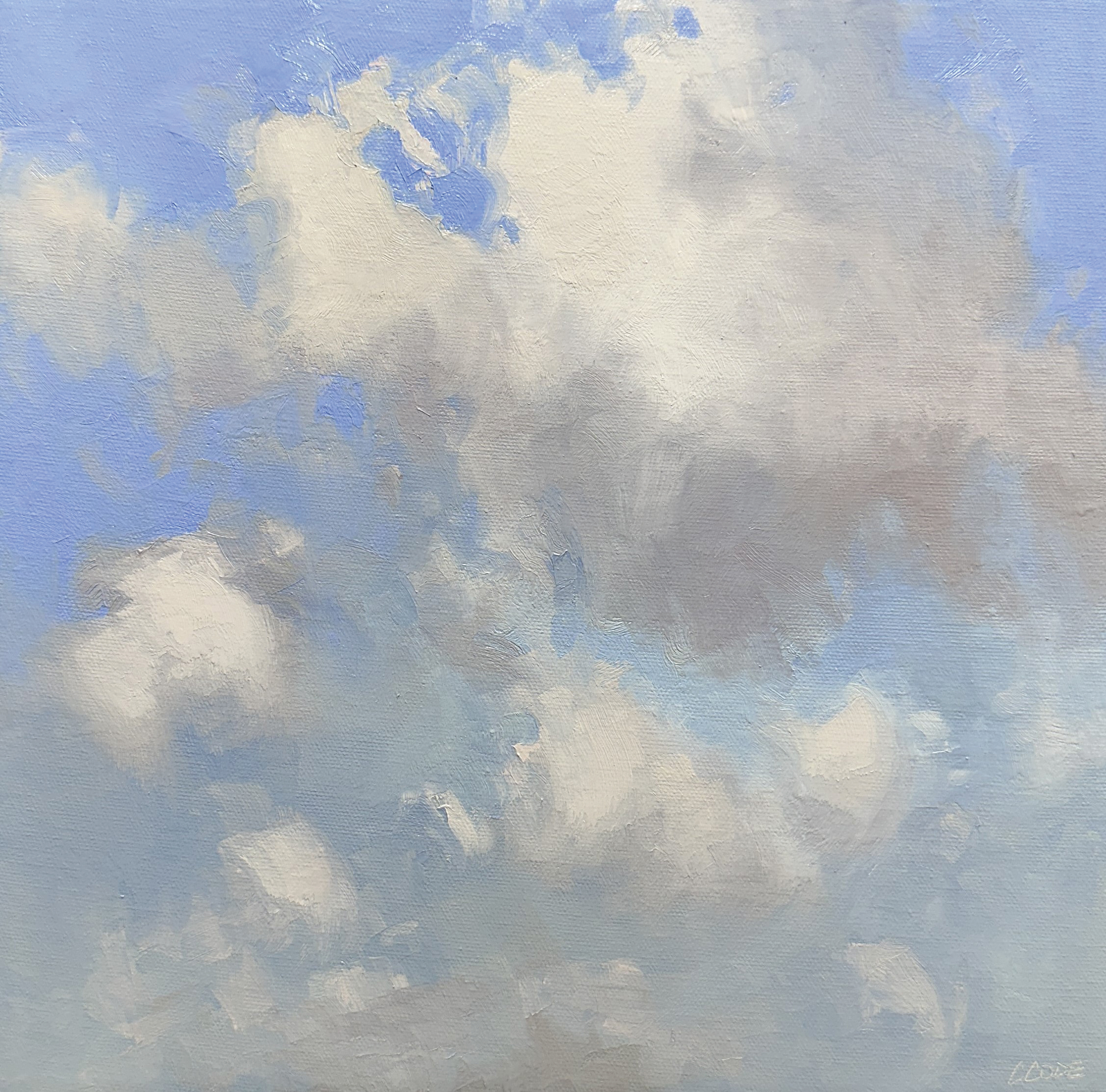
I live in the prairies, with mostly flat farmland all around. Because the sky dominates my local landscape, it tends to dominate my paintings as well. Whenever I step outside for a plein air excursion, I first look up to the sky. If I see glorious, puffy cumulus clouds, I know they will be the focus of my work. Like still life, the form of this particular cloud type offers the opportunity to describe light, shadow, and mid-tone.
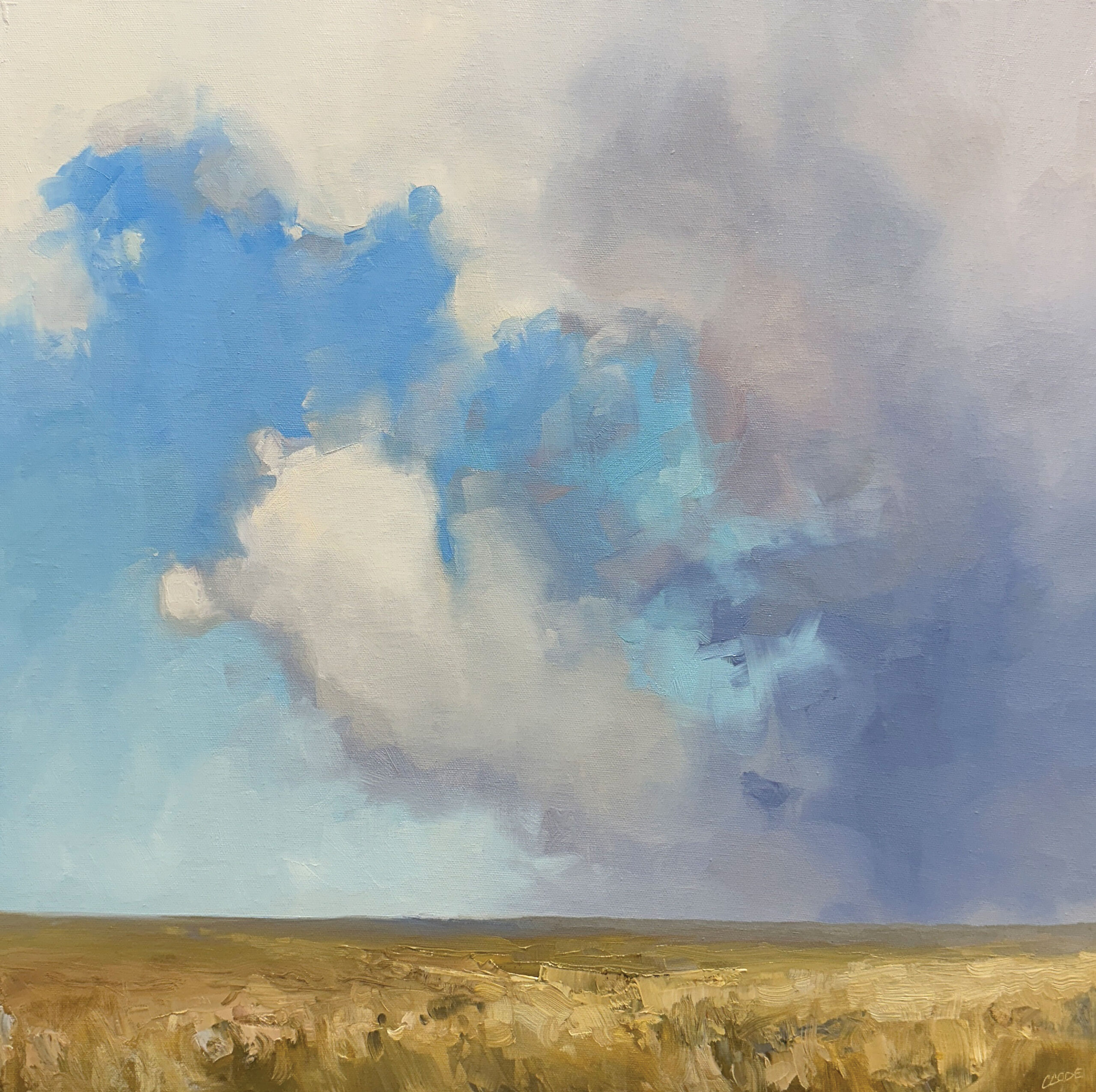
In general, the sky determines the overall light and mood in your landscape. If the sky is gray and overcast, you’ll find that the scene appears more tonal. If it’s a bright sunny day, you’ll find more color and value contrast in the light and shadows.
Regardless, the sky is usually the lightest value in the landscape, and the values within that sky plane are closer than they might appear. If you squint at some big puffy clouds, you’ll find very little value difference between the clouds and the sky. For that reason, I treat the sky as a series of color shifts while keeping the value shifts subtle.
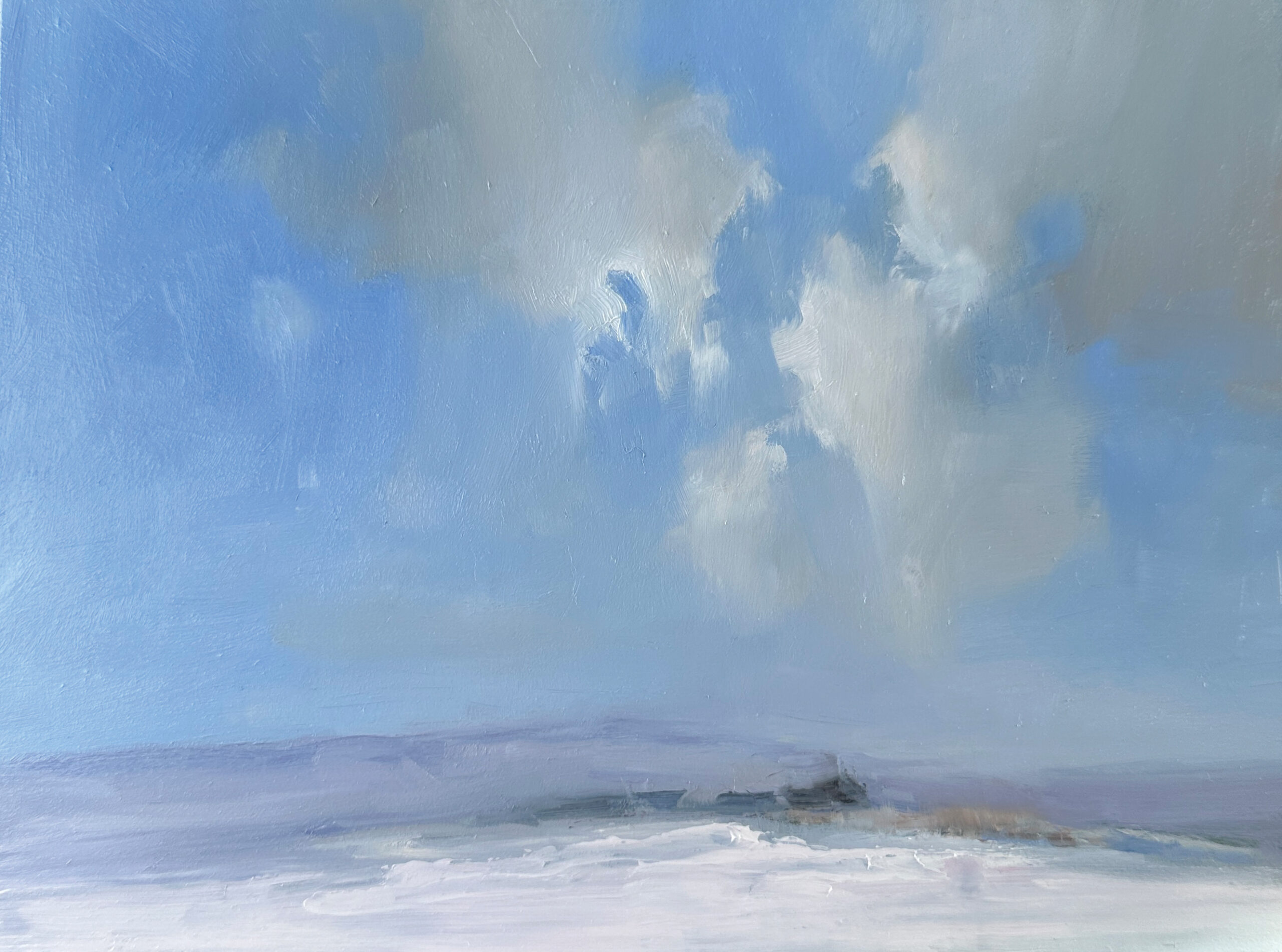
For the cloud shapes, I start with a small, flat, natural-bristle brush to draw an initial outline with thinned-out paint. Then I quickly apply the blue areas of the sky with a larger natural-bristle brush. Next, I work from dark to light to indicate the cloud shadows, then add the midtones to describe the form, followed by the light. At this point, with the sky area covered, I use a synthetic flat brush or palette knife to push and pull the cloud shape into the sky in places, and the sky into the cloud in other places to add atmosphere and create natural feathery edges. I may dab a sky hole here or there in a cloud to make the scene more dynamic and atmospheric.
Since clouds are transient, I manipulate them to support my foreground and use them to direct the viewer’s eye toward my focal point. Sometimes I even organize clouds to mimic or balance out shapes in the landscape or vice versa. For example, in “Plus 3 Celsius” (below), I used sweeping brushstrokes in the landscape to mirror the horizontal early-evening clouds.
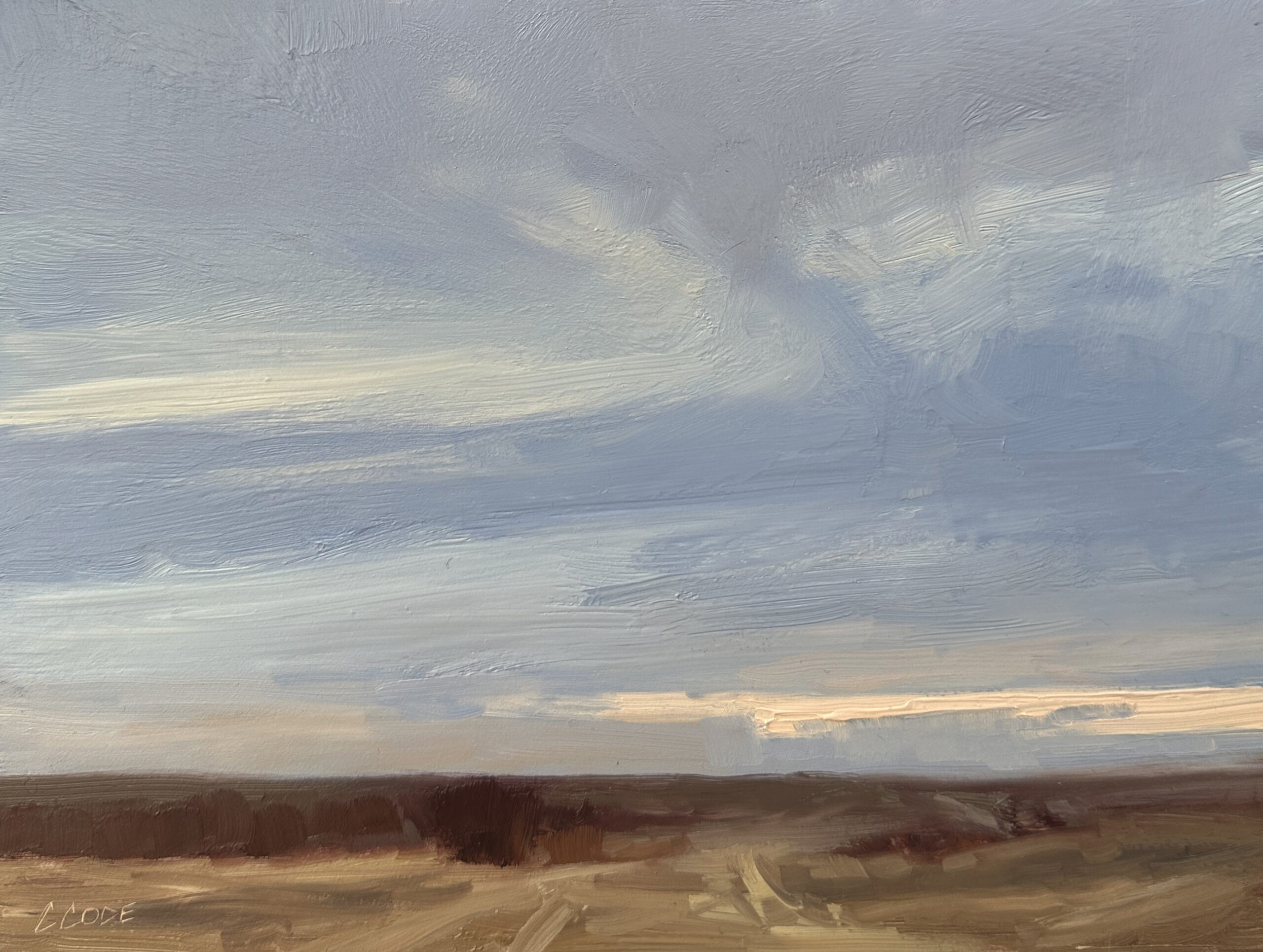
To further harmonize the sky with the land, I also incorporate some of the sky colors into the foreground, whether by adding them into the earth tone mixes or by applying the blue sky mix directly for some broken color accents.
Since the sky shifts rapidly, painting clouds en plein air requires a number of quick decisions. Conventional wisdom dictates sticking to one composition and not chasing the clouds. I have to admit, however, that I do chase them a little, and I believe that in doing so I achieve more atmosphere with every small change.
That said, I’ve definitely found a sweet spot between chasing and sticking to a composition. I would say I lock in my composition at about 75 percent, and spend the remaining 25 percent adding in the fun atmospheric bits as the clouds shift and offer me new shapes to consider. In this way, I capture the essence of the clouds that were present through the duration of my plein air session rather than one specific instance in time.
3 Tips for Painting Clouds
- Select the clouds you like and move them into your scene. Sometimes the best clouds are at great heights, while the sky above the landscape within your viewfinder lies empty. Just remember that the clouds will gradually have less value contrast and become more horizontal toward the horizon. As long as you have that natural gradation, your clouds will read as natural even though you moved them.
- Don’t attempt to fit the vastness of the sky in one painting. Instead, focus on one small area of the sky and exaggerate the size of one to three main clouds.
- Remain open to what nature presents you. Adapting to the constantly changing sky will create a more dynamic painting. Be on the lookout for a cloud floating into your view that might help your composition.
Connect with the artist at www.christinecode.com.
Don’t miss your opportunity to create lifetime memories at the Plein Air Convention & Expo! All training sessions are indoors on giant, high-def screens, with plein air paint-outs in the afternoons. Beginners and pros feel right at home, so register at PleinAirConvention.com to join us.
Browse more free articles here at OutdoorPainter.com
Blog post prepared for the web by Cherie Dawn Haas, Editor of Plein Air Today




Great article Christine. I appreciate you sharing with us.
Great article! Fabulous tips on how you achieve your glorious atmospheric big blue skies oh ‘Queen of Clouds’!