On Plein Air Painting in Winter >
Popsicle Painting Part 2: From the backpack to shoes, the “day pack” makes all of the difference for plein air painters, including this one, who loves to combine skiing with his brush time.
By Jack McGowan, PAPNM, OPA
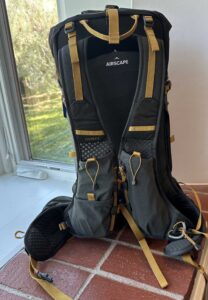
When I started painting on location, I used my Swiss Army pack for warm weather hikes. It was designed for carrying a laptop, etc.; not ideal for a paint kit. I had shoulder and neck pain less than a half mile into my hike, so I started to research and interviewed other hikers and plein air painters. The first thing I learned is that experts recommend an integrated hip belt with your pack for weight distribution, if you plan to carry 15 pounds or more. The Osprey pack I chose was designed that way, and is used for all sorts of outdoor activities.
I loaded up my kit, and used it first for hiking and then for snowshoeing, and the difference was amazing. (With snowshoe painting trips, I usually keep less than a mile round trip.) The pack has a mesh covered, breathable back panel with a frame of aluminum rods, and is adjustable for height to ensure comfort. Tightening the hip belt distributes the weight off your shoulders to create the best ergonomic fit.
So, the kit is secure in your pack and you’re ready to go, but a bit more prep is required. Footwear is a critical need; I use waterproof snow boots with Vibram soles to ensure good footing when I am out of my snowshoes. Research the ideal boots for snowshoeing, and even hiking where trails have been groomed solid by cross country skiers or snowshoers. It is also helpful to consider disposable toe/insole warmers or heated socks for extra warmth.
On the subject of warmers: I cut the fingertips off an old pair of ski glove liners, and they have a pocket on the back for hand warmers, which can also enhance comfort. Pick good snowshoes and ski poles, based on where you plan to go, noting that snowshoes are generally designed for flat, rolling or mountain terrain.
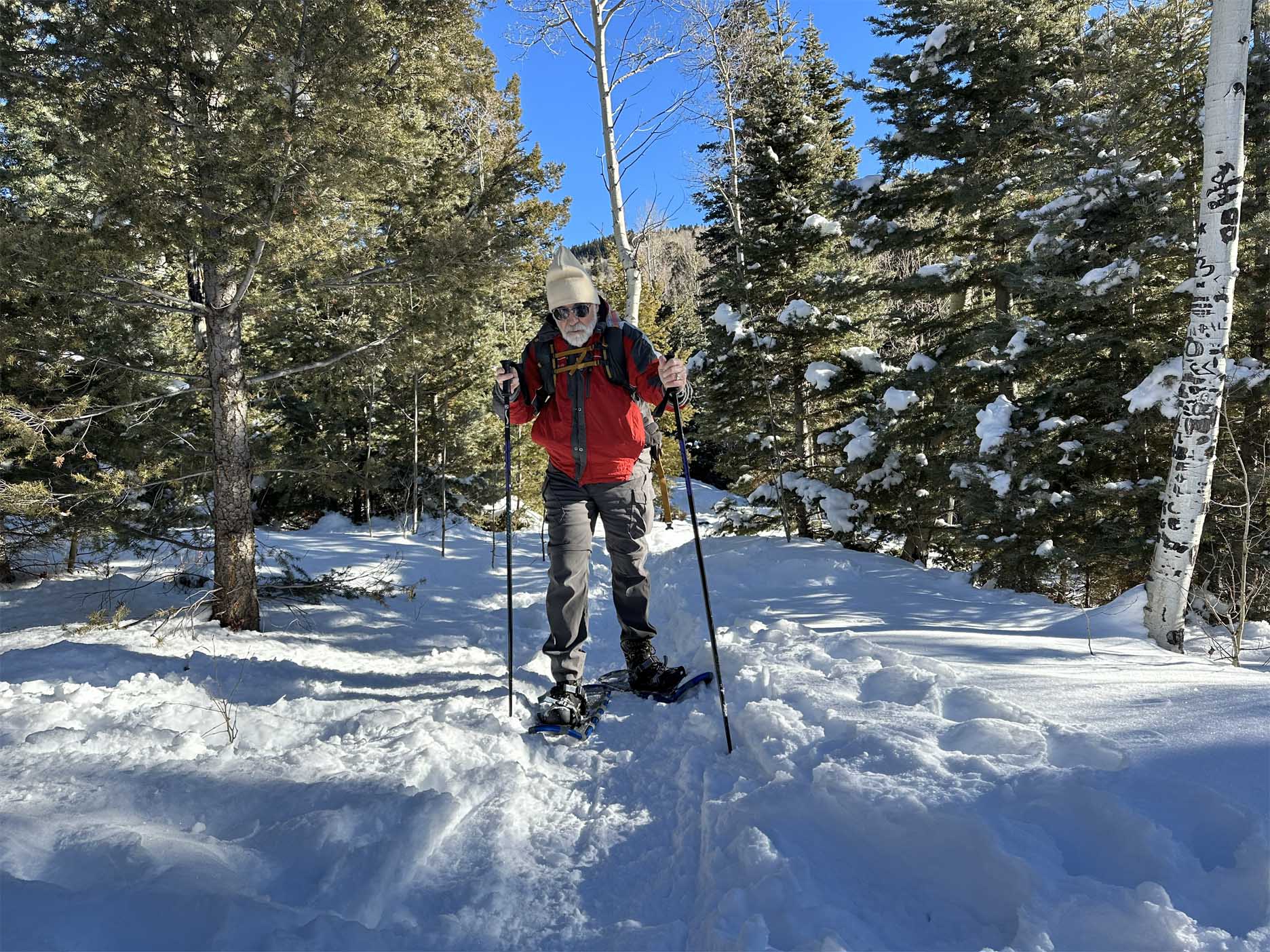
Also note that snowshoes are sized for weight, and that includes your weight and the weight of your pack. Experts advise that you choose a larger size for dry, fluffy snow (powder). There will be times that you are on a hard-packed snowshoe trail and could use a smaller size, but my recommendation is that you pick a pair you’re comfortable with, and that are a bit larger for when you are in fresh snow.
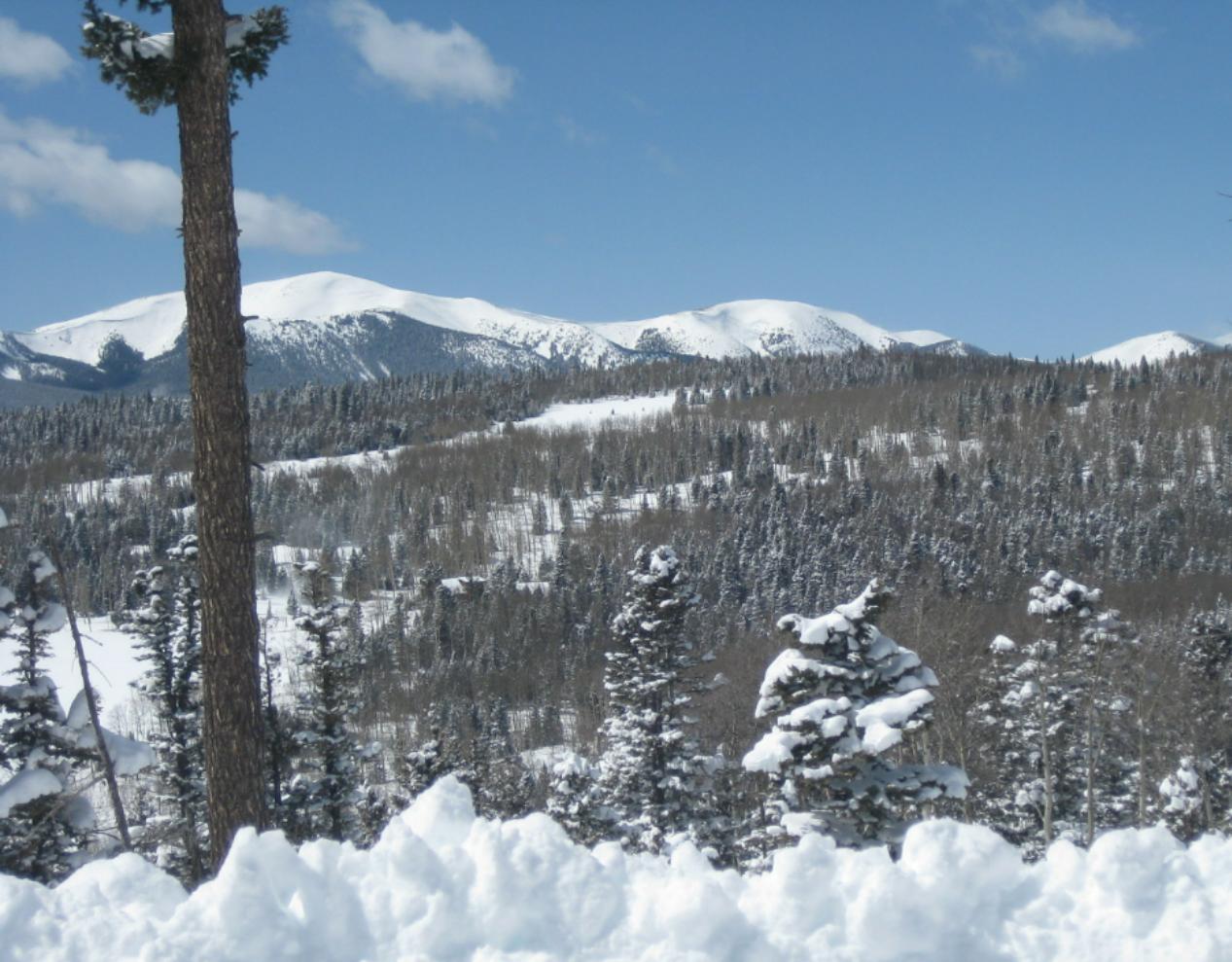
Seek out trails that are ideal for catching tree breaks with great mountain vistas, such as those shown here. It is also fascinating to look for signs of activity. For example, one day I saw the tracks of a deer that had pranced through the snow, and then noticed that a set of bobcat tracks followed. It was a bit alarming, but forest life continues even in these snowy, quiet times.
Warm and comfortable clothing is also key. Plan on layers to allow for temperature changes through the day and a warm hat. Put sunscreen, Chapstick, and an extra hand warmer in your pack. You should add any other (lightweight) essentials for your comfort. For plein air painting from the ski lift, all the recommendations above apply, but a key consideration is safety.
With snowshoeing you can set up nearly anywhere, but you should never set up on an active ski run. When I arrive at the mountain, I let the Ski Patrol know what I am planning to do. On a weekend, they will most likely say no because it is too busy and dangerous. That said, most ski areas have a restaurant at midway or on top where you can safely and easily set up. At the top of a chair lift is also an option. High speed quad lifts are common now, and there is usually a larger staging area where you can meet up with friends. It is often possible to set up safely off to the side and paint.
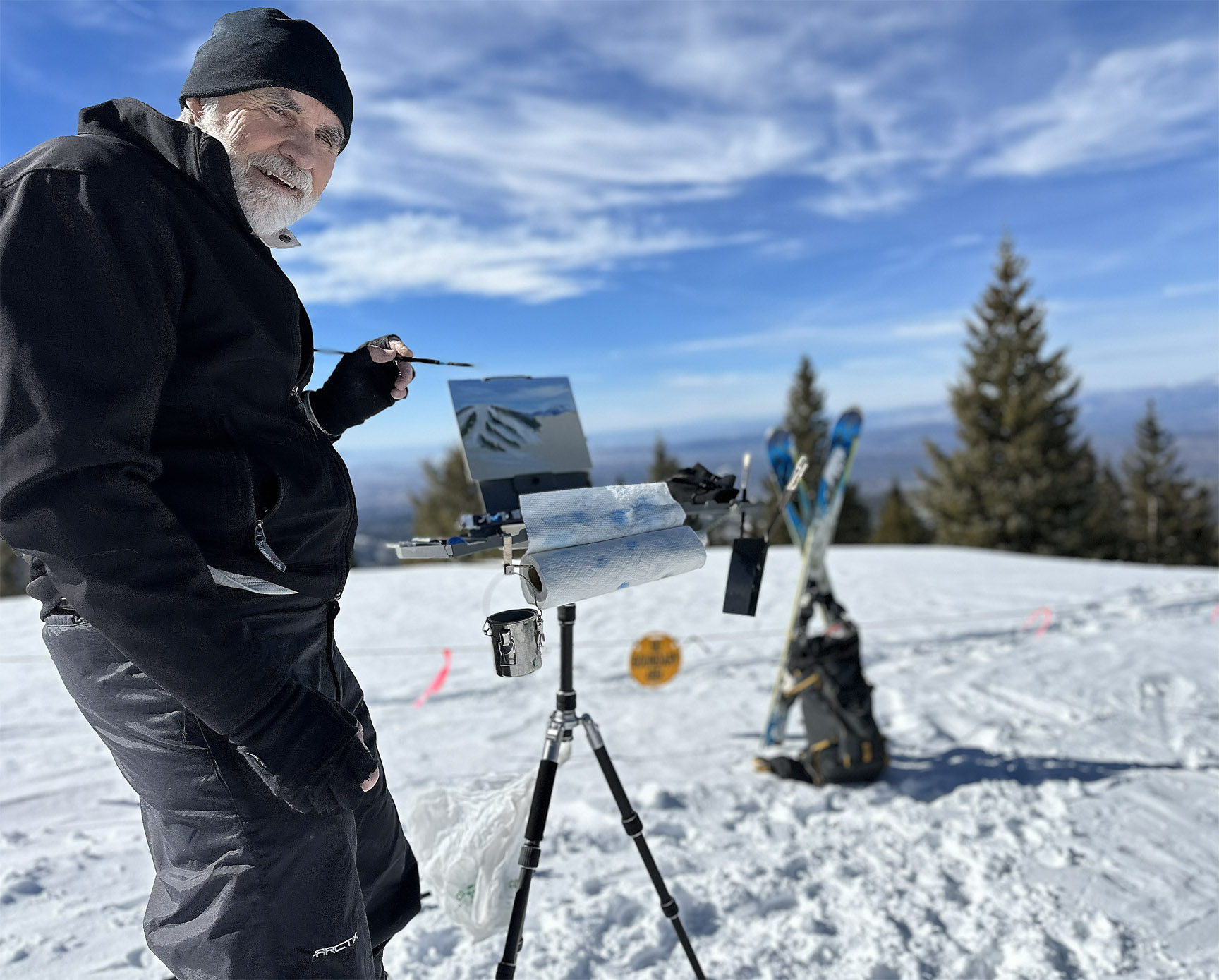
As seen in the picture at the top, I am painting at the top of the chair lift. To the right of me, you can see my skis crossed and planted in the snow with my plein air day pack leaning on them. Now the major question many may have is, are you nuts? Full day lift passes these days start at around $150, why would you waste skiing time to paint? Well, one benefit of age is that some areas still offer free ski passes if you’re over age 70 or so. Ski Santa Fe, which is near my house, used to be free at 72 and up, but in recent years they changed it to $20 for a full day pass. So, I can do two or three runs, stop and paint for an hour or two, have lunch and still get in a few runs before heading home. That seems perfectly reasonable to me, and the access to high country terrain and fabulous vistas from the ski area are well worth it.
Here are a few last notes that may be helpful. First, I have become a huge fan of the All Trails App. You can use this on your phone or tablet, and it will tell you everything you need to know about the trail before you go, including distance, degree of difficulty and a map preview, along with pictures.
Another point of interest is my blog, Hike To A Painting™ or Roadmap To A Painting™. If you read the blog post on Morphy Lake and snowshoeing into this wonderful spot in Northern New Mexico, you will get more info on my process, and you can also enter Morphy Lake in the All Trails App for trail options. Always research before you go to have the best day. If you have a mind to try out “popsicle painting,” I wish the best of adventures and a new take on plein air painting.
About Jack McGowan
Jack is President of the Plein Air Painters of New Mexico and is represented by Legends of the West Fine Art in Santa Fe, is a member of the Bettina Steinke Group led by Master Painter Bill Gallen, and won the 2021 Enchanted Sky Award at the Plein Air Painters of New Mexico, Paint the Enchanted Circle Invitational in Taos. He has been juried into shows throughout the Western United States. www.jackmcgowan-artist.com
Related Article on Plein Air Painting in Winter: Popsicle Plein Air Painting
Don’t miss your opportunity to create lifetime memories at the Plein Air Convention & Expo! All training sessions are indoors on giant, high-def screens, with plein air paint-outs in the afternoons. Beginners and pros feel right at home, so register at PleinAirConvention.com to join us.
Browse more free articles here at OutdoorPainter.com
Blog post prepared for the web by Cherie Dawn Haas, Editor of Plein Air Today