Insights on the private gardens that inspired Claude Monet of the French Impressionists and those who followed in their footsteps.
Once a strictly agricultural or aristocratic endeavor, gardening grew in popularity among the middle class around the 19th century. Average people poured their newfound leisure time and resources into designing and tending their own gardens simply for the pleasure they provided. Among artists, gardens were especially popular with the Impressionists, whose vivid color sense, broad brushstrokes, and appreciation of nature paired perfectly with the garden as a subject. Of this group, Claude Monet (French, 1840–1926) and his beloved garden in Giverny come most often to mind.
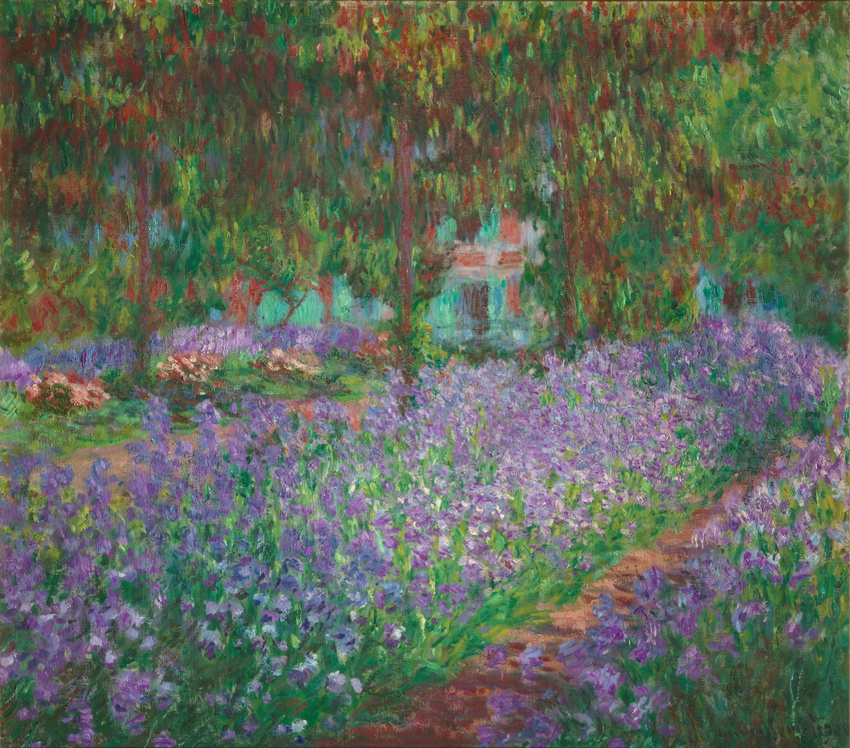
Much to the bewilderment of his new neighbors, the artist began work on his flower garden immediately upon moving to the village in May of 1883. Starting on the area nearest to his rented home, Monet planted some of his favorite annuals — poppies, sunflowers, and nasturtiums. As he continued to convert the former farming plot to a flowering garden, he would often trade seeds and cuttings with his friend and fellow Impressionist Gustave Caillebotte. In this way, poppies replaced cabbages, and irises and marigolds filled the onion beds.
When he was finally able to purchase the house and land several years later, Monet took a more ambitious approach to the garden, hiring full-time gardeners and building a large greenhouse to begin introducing a more extravagant range of species — irises, peonies, delphiniums, Oriental poppies, and asters.
Carefully curated through the eyes of the artist, the packed garden offered up a steady stream of inspiration. Just as some flowers began to wither, others would begin to bud. “Bare earth was anathema to him,” wrote Claire Joyes, author of Claude Monet at Giverny — A Tour and History of the House and Garden. “He avoided dark flowers; conversely, he could never get enough of blue … he abhorred single flowers, permitting double blooms only in roses and herbaceous peonies; and he loathed variegated foliage.”
“I perhaps owe having become a painter to flowers,” the artist famously said. Indeed, in the last 26 years of his life, three quarters of the paintings Monet made were of his garden.
Stay tuned for upcoming installments on this series of “secret spaces” and now-famous painting locations.
Editor’s Note: Join us for the 6th Annual Plein Air Live online art conference, featuring Kathleen Hudson, Kevin Macpherson, Kami Mendlik, and many more! The event takes place November 6-8, 2025, with an Essential Techniques Day on November 5. Learn more at PleinAirLive.com.
Browse more free articles here at OutdoorPainter.com