

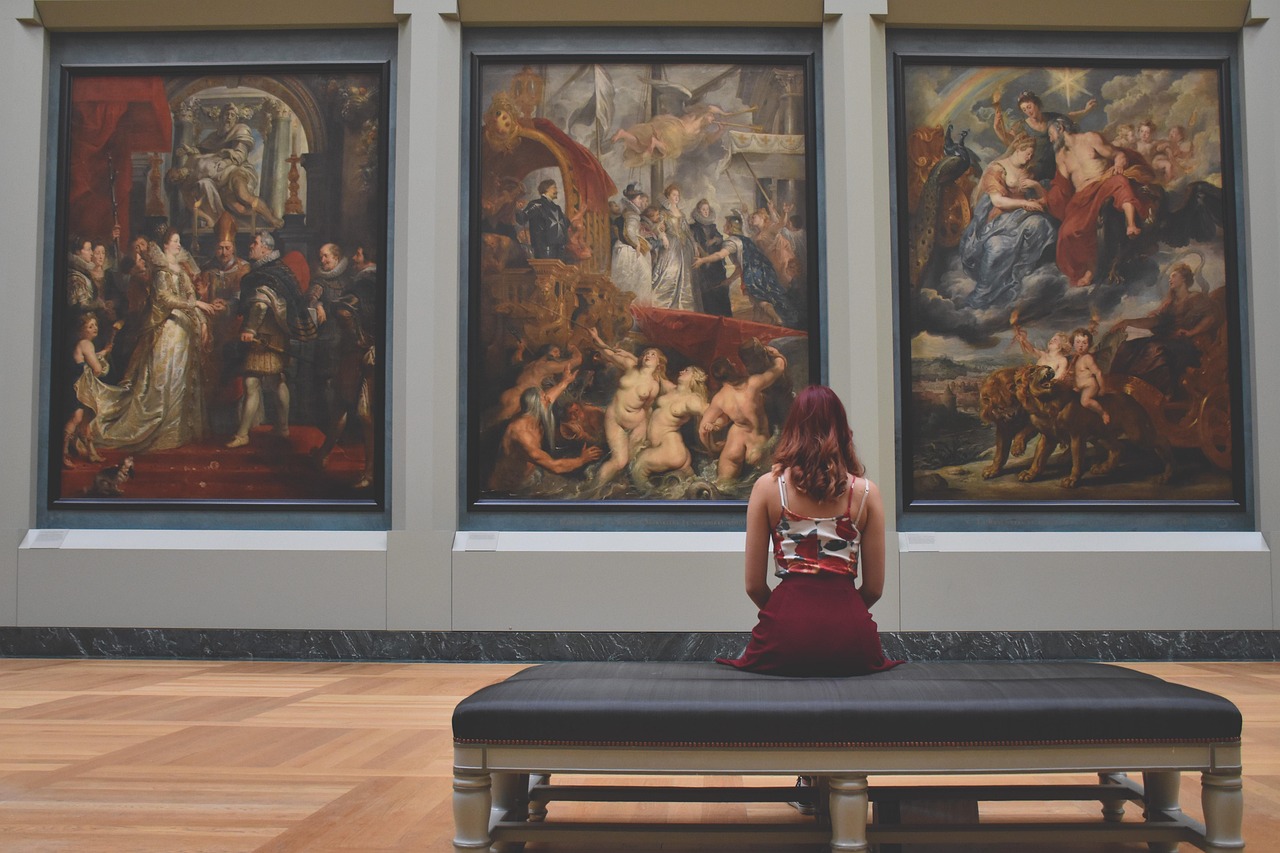
After a lively discussion with my college painting class recently, I decided this would be a good time to clear the air on some etiquette involved with making master copies in art museums, as well as related issues.
First, this is a tried-and-true method for painting students to learn their craft. I understand that the Louvre in Paris has been allowing this since its opening in 1793 and they even provide easels, but this must be arranged ahead of time.
While I have never done that while visiting Paris (just waiting in line to get into the Louvre is hard enough!), there are reputable museums in many cities that will accommodate artists in this way.
Where I live and teach in Utah, I regularly take my art class down to the Springville Museum of Art to copy from their excellent collection of Russian paintings, which was curated many years ago by Dr. Vern Swanson. This is always an awesome event, and we’ve had the good pleasure of hearing directly from Dr. Swanson on several of these occasions.
Learning by doing and seeing how others do it has always been a great way to gain practical knowledge, but some important etiquette must be adhered to. First and foremost, is to give credit where credit is due, and that is to the master artist you are copying from. We also should never sign the original artist’s name the way they signed it. What is permissible is to sign your name and then write (“after _______”) … (fill in the blank with the name of the master artist in your handwriting).
Another good practice is not to paint the piece the same size as the original for obvious reasons. Remember, you are there to learn and doing a portion of a painting is very instructive, as well as sketching paintings in charcoal or another medium.
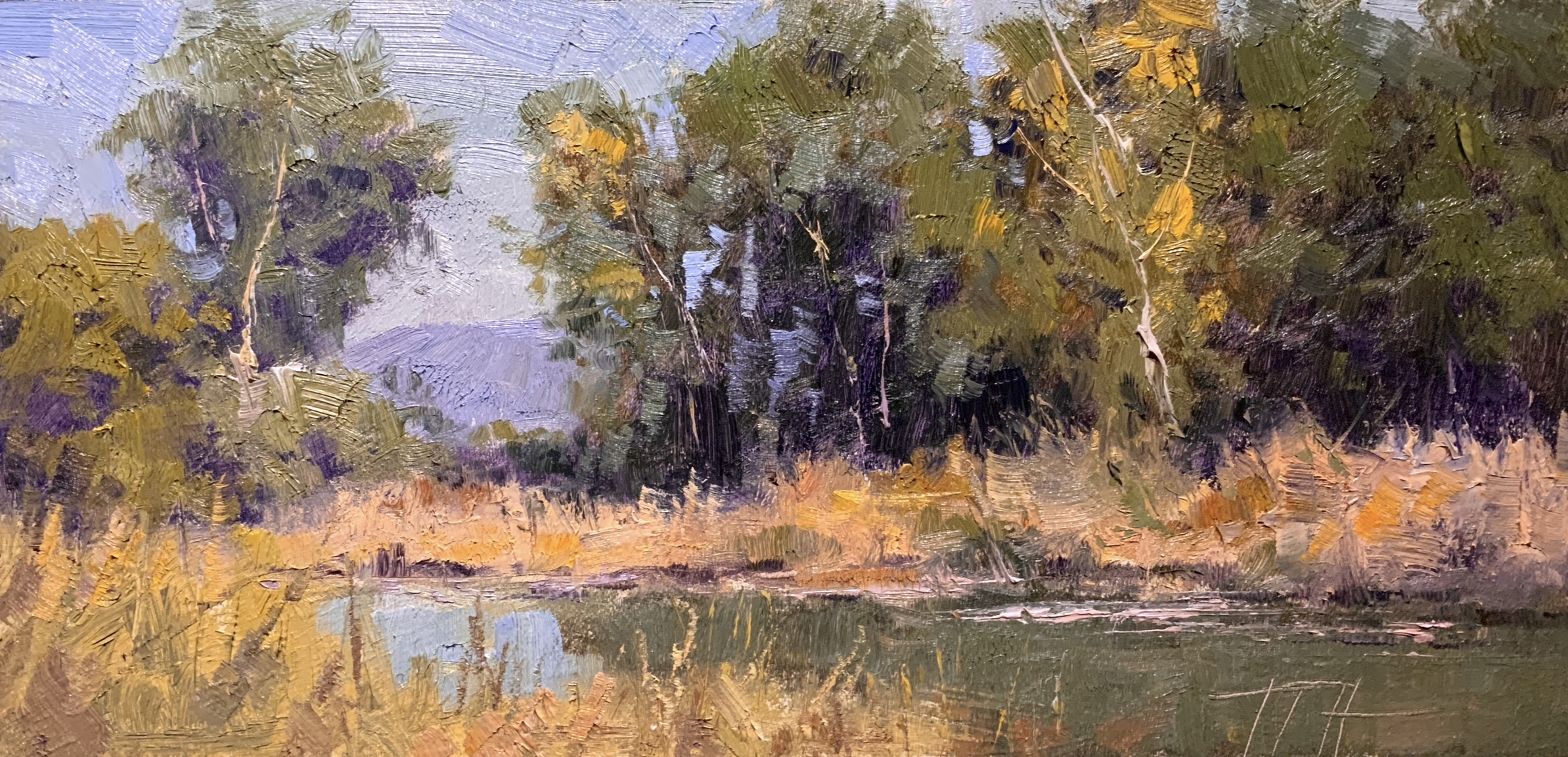
Those seem like no-brainers, but there are situations that I’ve personally witnessed, which makes me think that this is a worthy topic for this article. This involves a related subject… being overly influenced by other artists. Let me draw a distinction: being influenced is certainly natural and bound to happen, because just taking classes lends to it. Let’s face it, no art that has ever been produced on the planet has been created in a vacuum. Every artist who has ever lived, except maybe the ones who were painting on those cave walls a few years back, have been influenced by someone else who came before them! Ha!
This brings up the subject of how far artists should go with their influences. I remember walking into a professional show from a reputable art organization years ago and seeing several small paintings that were exact, or near exact duplicates of paintings I had seen in a Joaquin Sorolla exhibition in the San Diego Museum of Art. I still had the catalog and recognized these for what they were…copies! This was astonishing to me. I couldn’t believe that this behavior had passed muster and had been admitted into this high-profile show, which will go unnamed.
I had seen this type thing before, but not on that scale. I once walked into a local art show and was excitedly greeted by a student who had attended my workshop, where I had taught the group to follow along on a demonstration of one of my gallery pieces. She exclaimed that she had won an award for her painting, but I soon noticed that it was the copied painting from my workshop; talk about embarrassing, yikes!
Yes, I should have had a serious, but respectful conversation right then and there, but I remember just muttering something like… “Oh yeah, wow!” as I sheepishly slithered off to look at the other paintings while inwardly rolling my eyes as I thought to myself, “Gee, my painting won an award! Hey, where’s my ribbon?”
And this is why I’m writing this piece, because it just needs to be said and repeated from time to time. I think for artists who have been around for a while, we just assume that things like that are understood by the upcoming artists as well as older art students who should know better, but don’t.
Yes, we are all influenced by others, and often that influence shows in our work for many years before we reach a point of personal expression; but copying their paintings and calling it your own is clearly a don’t! Learning from others is a privilege, but trying to paint like others has its limits. Although understandable in the formative years of an artist, eventually one must find their own voice and give up trying to paint like another artist they admire. Art is an expression of the soul…your soul, not someone else’s.
When that realization fully sinks in, it becomes evident that being one’s own person in the world of art excludes us all from ever wanting to be anything but ourselves, and self-regulation becomes the standard practice of the initiated.
Until that happens though, take this for what it’s worth: your reputation as an artist, which means a lot, doesn’t it?
This leads into the subject of AI, so check out my last piece titled “AI, and the Invasion of the Art Snatchers” article right here in Outdoor Painter.
Until next time,
John
***
Prepared for the web by Cherie Dawn Haas, Editor of Plein Air Today


See you at SAM. CHC
I can’t imagine entering any show with a copy of someone else’s painting, living or not. Too bad when winning becomes more important than integrity.
Agreed.
I have to say you are absolutely right that there is always an influence. Those cave painters were influenced by ground drawings because they wanted to create something that wouldn’t get washed out! The ground artists were inspired by the dancers around the fire and the foot prints they see, and the dancers were inspired by the singers! And so on, and so on. lol
Just checking if I got it right:
• Call ahead to the museum and make arrangements to work in a medium that they allow.
• Choose a different format size for the work you’re copying.
• Do not sign the copy as the artist you are studying.
• Be respectful; if they don’t want you working where you want, move on and try again next year. Staff change, policies evolve, and we all want to help create the next artist who will make the next masterpiece that inspires future artists trying to get into the museum to learn.
While I wholly agree to proper citation (after ____) from another’s painting, I wonder where you would draw the line on painting from photos, AI images, magazine illustrations, or unsigned street art. As to the eager student who proudly showed you the painting she made after your demonstration, I think you did the right thing by not calling her out on it. As a teacher myself, I take pride in knowing I motivated someone to express herself. No one paints exactly with your skill, brush stroke or color mix, and it is an ultimate form of flattery for them to try to do so.
Totally agree on being up front on master copies. I spent a month in November doing copies of Wolf Kahn’s work I felt like I was taking a a workshop from him. It is too early still to tell how that months work is influencing my own but I would never submit that MC work to a show.
An adjacent topic is submitting work to a juried exhibit made in a workshop. Small town or big time, this has to be broadcasted to artists and regional curators of local exhibits. Most prospectuses are carrying a a restriction that work from a teacher or workshop should not be submitted but it still happens.
Thanks for talking about these subjects.
this statement sums it up so nicely, “being one’s own person in the world of art excludes us all from ever wanting to be anything but ourselves, and self-regulation becomes the standard practice of the initiated”.
Great article, and I have only done a few master copies and it was so beneficial, its been awhile, thanks for the nudge and the how to sign it.
I had the experience of someone copying my work and winning an award in college-i told the professor about it and he said something to the effect. “We knew that but she needed encouragement but you didn’t” I remember feeling that was unjust- he had no idea of my poverty and struggles at that time to make that assessment. I think no matter how skilled one becomes they should still get recognition and we shouldn’t assume they don’t deserve appreciation