

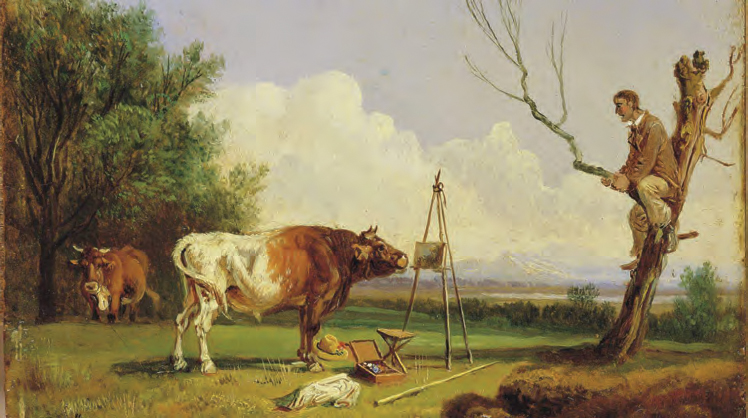
Whether you are seasoned at outdoor painting or a novice, it is often daunting to tackle new terrain. To make your experience more enjoyable, we’ve compiled this go-to guide for your next plein air excursion!
We’ve solicited advice from seasoned plein air artists to ensure a successful plein air experience. Having weathered steep terrain, windy conditions, sudden unexpected rains, and even bear encounters, these artists have seen it all.
The artists have given useful, supply-related suggestions such as the best brush and palette choices for plein air work. And as any plein air painter knows, the environment and knowledge of the local terrain plays a large part in your experience. This guide contains useful tips on how to deal with various weather conditions and other environmental challenges including insects and predators.
There is surely something you can learn from this survey. The artists were generous with their advice and eager to share their ideas and anecdotes. Learn from their experiences, follow their tips, get inspired, and whet your appetite for adventure with this comprehensive guide.
Editor’s Note: Join us for the 6th Annual Plein Air Live online art conference, featuring Kathleen Hudson, Kevin Macpherson, Kami Mendlik, and many more! The event takes place November 6-8, 2025, with an Essential Techniques Day on November 5. Learn more at PleinAirLive.com.
Outdoor Painting Tips From the Top
By Katherine Jennings
What art supply item do you bring plein air painting that is indispensable to you?
Bryan Mark Taylor: A Strada easel, the size of which depends on how far I’m traveling. I use the Mid for car painting, the Mini for short trips, and the Micro Plus overseas.
Calvin Liang: I will bring a plein air easel, tripod, and umbrella.
Carl Judson: A Guerrilla box (or French easel) with a small brush washer that is enclosed in the box, so I can carry everything I really need in one hand.
Carole Belliveau: I bring a palette knife, silicone catalyst, and Gamblin solvent-free gel; a panel prepared with a background color; and paints already arrayed in my pochade box.
Fen Rascoe: I try not leave home without a fast-drying titanium white. I love Gamblin’s Fast Matte. This allows my first pass to set up much quicker.
Jeff Steiner: Misting water bottle. Painting watercolors in various humidities is challenging. The mister allows me to control the wetness of the pigment to keep the painting alive during the process.
Joe Gyurcsak: Viewfinder and red value finder.
Katie Dobson-Cundiff: A sketchbook and set of Tombow brush/pen grayscale markers for making thumbnail notans and preliminary drawings of the scene.
Sara Beth Fair: Paper towels for my brushes and baby wipes for me.
Stephanie Amato: An umbrella is a must. The sun can wash out your palette and alter how colors appear on your canvas, creating a dull and dark painting when brought indoors.
Anne Blair Brown: The ValueComp from Artwork Essentials. I look through it to see the scene desaturated. You see values only and no color.
Susan Kuznitsky: That’s a hard question because everything I bring is intentional. Hugely important is a sturdy tripod and pastel or oil painting box. It is the foundation.
Jill Stefani Wagner: My favorite plein air setup: Coulter 12 x 16-inch palette/easel. Plenty of room for mixing, and it has two fold-out wings that create extra space for other brushes and supplies.
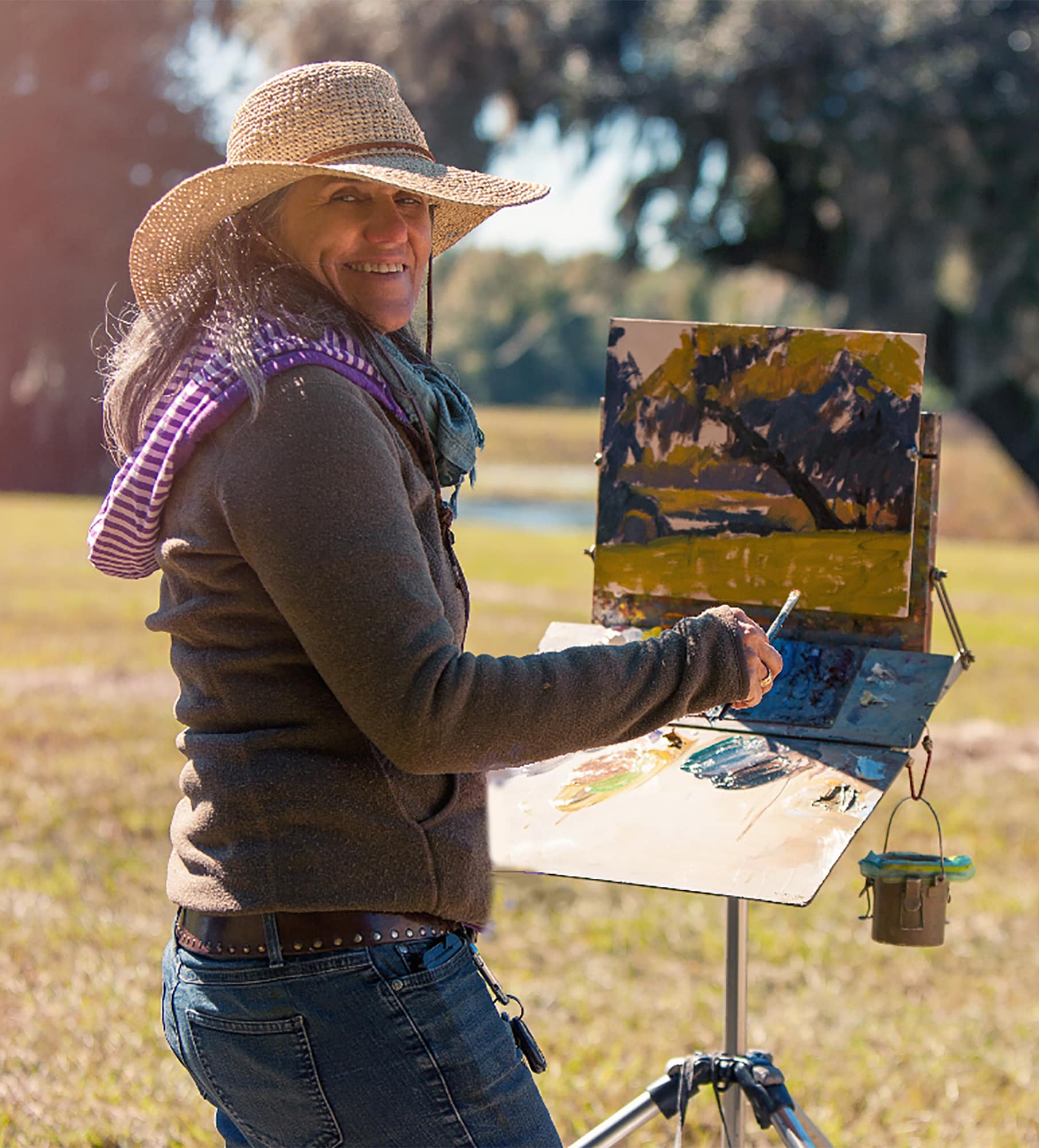
What is your advice if you are approached by an animal while painting?
Bryan Mark Taylor: Run faster than your painting buddy.
Carl Judson: Try to sit still, enjoy the moment, and learn as much as you can.
Carole Belliveau: In the wilds of New Mexico, having a painting buddy and making loud noise usually works. I always carry mace for coyotes, plus written instructions in case of snake bite.
Fen Rascoe: Include it in the painting! Ha ha! Don’t panic or show fear. More often than not, the animal is more afraid of you than you are of it and will retreat.
Joe Gyurcsak: Stay calm, assess the situation, and always err on the side of caution.
Katie Dobson-Cundiff: Stay calm and don’t make any sudden movements. If it is a large animal, try not to make eye contact and move back and away slowly.
Sara Beth Fair: I try to paint next to my car or where people are going to be, I have bear spray in my apron, and I don’t have any food with me.
Anne Blair Brown: I’ve only been approached by dogs, cats, cows, horses, and donkeys, which I immediately pet and hug.
Susan Kuznitsky: Well, other than people walking their dogs, I have not had the situation come up! Unless bees count.
Jill Stefani Wagner: Pet if friendly … escape if not!
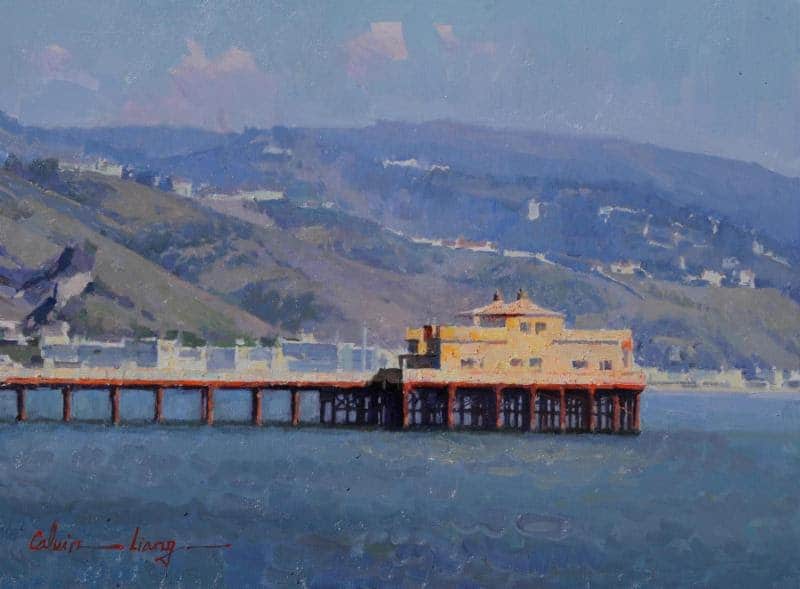
How do you prepare for changing weather?
Bryan Mark Taylor: If the weather keeps changing, it’s best to do small studies to capture the various light effects. I spend 15 – 30 minutes max on these pieces.
Calvin Liang: If there’s rain and wind, I will cancel the outdoor plein air.
Carl Judson: Watch the weather report to be prepared. Set up in a protected spot if possible. Painting in my car is often my bad-weather fallback.
Carole Belliveau: My car is my closet, stocked with different hats, socks, boots, and layers of cold- and hot-weather gear.
Fen Rascoe: Always look at the forecast and wind speed before going out. I always keep clothing and gear for all weather in my truck as well. I keep a lighter on hand.
Jeff Steiner: If the weather looks iffy, I paint close to my car. I also scope out overhangs and awnings before I set up. Actually, wind is my greatest challenge.
Joe Gyurcsak: Be equipped for weather changes, always try to get the main value structure blocked in the first 15 to 20 minutes, sketch, take notes, visually remember.
Katie Dobson-Cundiff: I always check the forecast before venturing out and plan accordingly with additional layers, rain gear, or umbrella for rain or shine!
Sara Beth Fair: I keep a bag of paint clothes in my car: black hat, straw hat, baseball hat, down coat, long-sleeved shirt, a weatherproof jacket, and I wear waterproof shoes.
Anne Blair Brown: Layers and raincoat.
Susan Kuznitsky: I don’t go out if looks iffy — although there are times where it changes suddenly. Bring a piece of plastic you can quickly put over your easel.
Jill Stefani Wagner: I always carry umbrellas, boots, slicker, and extra sweatshirts and coats to layer as needed.
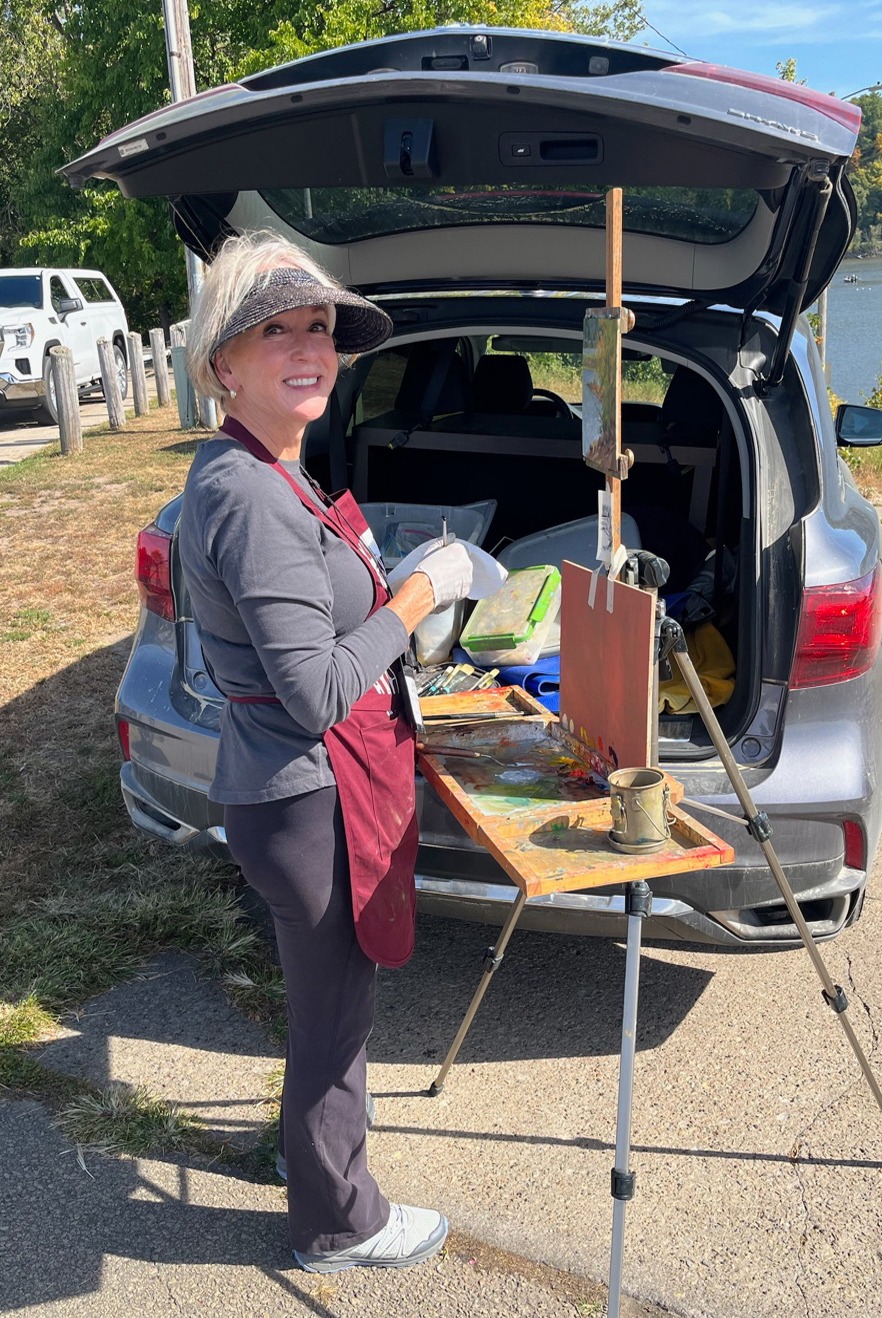
How many brushes do you bring, and what sizes and shapes do you use on location?
Bryan Mark Taylor: Typically, they are size 8 and under Golden Taklon flats. I bring about 6-8 brushes max.
Calvin Liang: I bring a lot of different sizes of brushes.
Carl Judson: Usually two or three brushes. One or two No. 1 or 2 round bristle brush(es) and a smaller sable round or flat — plus a Q-tip and a kabob skewer.
Carole Belliveau: I only bring two knives, two sizes of silicone brushes, and one silicone catalyst for a rudimentary compositional drawing and to soften paint effects.
Fen Rascoe: I like to stick with about five long flats ranging from size 4 to size 10. I like to have at least one rigger and filbert brush too.
Jeff Steiner: I bring a set of brushes identical to my studio brushes. Ten in total, all pointed round. I do 90 percent of my painting with my largest brush.
Joe Gyurcsak: Two rounds, No. 2 and No. 8 synthetic; No. 4 filbert and No. 10 filbert; 1-inch and 2-inch chip brushes
Katie Dobson-Cundiff: My favorite brush is a No. 8 filbert. I’ll pack a 2, 4, 6, and 10 depending on the size panel. Palette knife, rigger, and fan brush are also included.
Sara Beth Fair: I bring two each of a small, medium, and large so I can have a separate one for lights and darks, a rigger, and a few extra for clean color.
Stephanie Amato: I have five brushes from sizes 1-10, keeping each for a specific color group. One is for reapplying dark transparent colors, allowing me to add depth and richness without muddying the painting.
Anne Blair Brown: I bring about eight brushes and use four while painting. I love egberts, long flats, flats, and filberts.
Susan Kuznitsky: I take about five or six filberts in a variety of sizes. With pastels, I have a box with a good variety of colors and values of darks. medium, lights.
Jill Stefani Wagner: I usually bring around 10 -15 brushes, mostly flats and filberts in sizes from ½ -1 ½ inches. I always have painting knives and scrapers available too!

How do you deal with people talking to you while you paint?
Bryan Mark Taylor: I enjoy talking and meeting new people, so it doesn’t bother me most of the time.
Calvin Liang: I will talk a little; most of the time I am listening.
Carl Judson: I don’t mind talking to people if they’re around, but I usually prefer to paint in seclusion if that’s an option.
Carole Belliveau: I embrace the experience, give a little tutorial of how I work, and hand out my business card. I allow kids to make a mark with their favorite color.
Fen Rascoe: Usually I don’t mind talking to people interested in my work, but I’ve found putting on earphones and pretending to listen to music will keep them walking by.
Jeff Steiner: I paint in busy areas, so I’m used to talking while painting. Although I’ve thought of designing a T-shirt with answers on the back to the most commonly asked questions.
Joe Gyurcsak: I don’t mind. I politely tell them I can’t speak right now, I remain focused, and I am not opposed to them watching as long as they stop asking questions.
Anne Blair Brown: I engage for a while, then when I need to get back to painting. I tell them, “Nice meeting you!” and hope they take the hint.
Katie Dobson-Cundiff: I will engage with people and children who take the time to stop and look. I actually find it helpful to my painting process answering their questions!
Sara Beth Fair: I treat it like a break, which I usually need to take to look at my work clearly, and I write down the funny things they say to me.
Stephanie Amato: I find it distracts me. I will smile but continue to paint. Usually I set up away from crowds or near another painter who is happy to carry the conversations.
Susan Kuznitsky: For the most part I enjoy onlookers. Most people are polite and curious, and I enjoy interacting with them. I always have business cards to hand out for those interested.
Jill Stefani Wagner: It used to make me nervous, but now I really enjoy it. I love explaining plein air and how we work. It gives me a chance to engage future collectors!
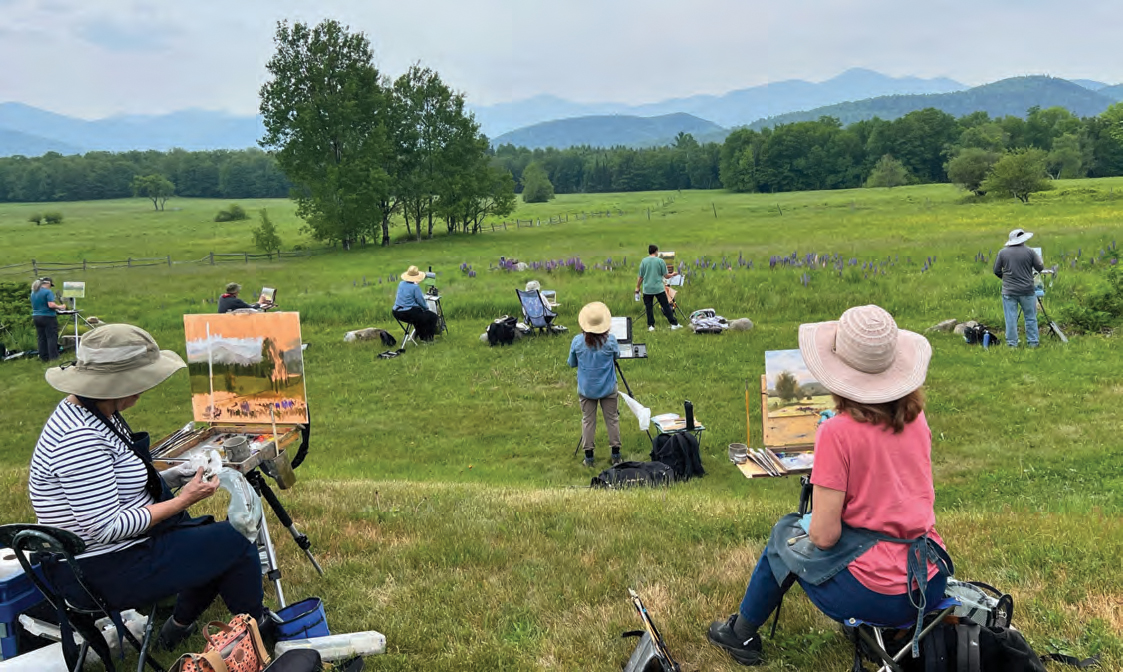
What is the value of painting with a plein air group, rather than alone?
Bryan Mark Taylor: The most significant benefit is the camaraderie, as is seeing how other artists interpret the values, shapes, and colors.
Calvin Liang: I like to paint outdoor with friends to painting alone — more fun.
Carl Judson: For me, a group is entirely social, which is fine. However, ideally, painting is a very personal and meditative affair for me, so I prefer to paint alone if possible.
Carole Belliveau: Art is a solitary pursuit, so getting out twice a week with fellow artists allows me to share art talk on the way there and back, but not while painting.
Fen Rascoe: The biggest value is personal safety. Secondly, seeing others pick out different subjects or compositions within the same painting area is very helpful, with critiques afterwards.
Jeff Steiner: It forces me to paint subject matter that I might not normally paint in order to hang with the group.
Joe Gyurcsak: You get to see other artists’ ideas and problem-solving, how they edit, how they mix colors, how they interpret the scene.
Katie Dobson-Cundiff: There are so many advantages painting with a group. Seeing how other artists view a scene (differently than you), and their approach to painting, equipment, and supply choices are a few.
Sara Beth Fair: I didn’t have a group, so I started one, Plein Air North Alabama. I have met new artists in the area I didn’t know existed. We share tips and tools.
Anne Blair Brown: I think we feed off of each other as artists. We can support and learn from one another (and it’s really cool if someone brings beer).
Jill Stefani Wagner: Obviously, there is safety in painting with other artists. But there’s also wonderful camaraderie and the ability to see a scene through another painter’s eyes.
Susan Kuznitsky: Painting with others is very valuable, not to mention fun. It is safer with others around, whether you are painting an urban scene or out in nature.
NOW YOU TELL US! What’s your response to any of these questions? Tell us in the comments section!
Editor’s Note: Join us for the 6th Annual Plein Air Live online art conference, featuring Kathleen Hudson, Kevin Macpherson, Kami Mendlik, and many more! The event takes place November 6-8, 2025, with an Essential Techniques Day on November 5. Learn more at PleinAirLive.com.
Browse more free articles here at OutdoorPainter.com

Thank you for this article. In addition to these great suggestions, I would add that If you’re painting alone let a friend or family member know where you’re going to be and when you’re going to return. Cell phone reception in a field or mountain isn’t always reliable. Have a fully packed first aid kit in your car. Also take small packs of kleenex for wiping brushes,.baby wipes for paint on hands/equipment, a plastic trash bag, and 2 bottles of water to stay hydrated.