
Plein air oil painter Melanie Barash Levitt loves painting in winter. Here, she shares how oil painters in particular can make it a successful practice.
By Melanie Barash Levitt
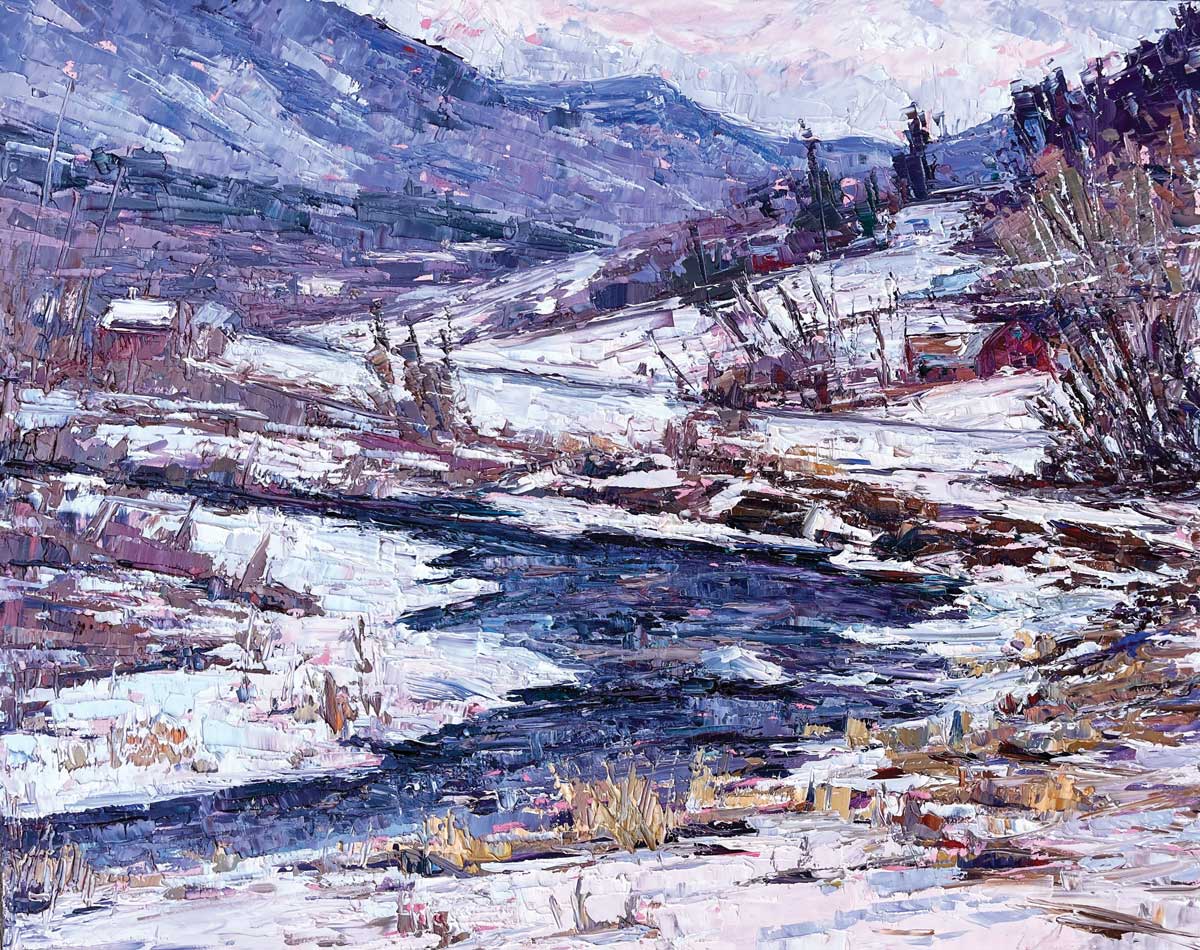
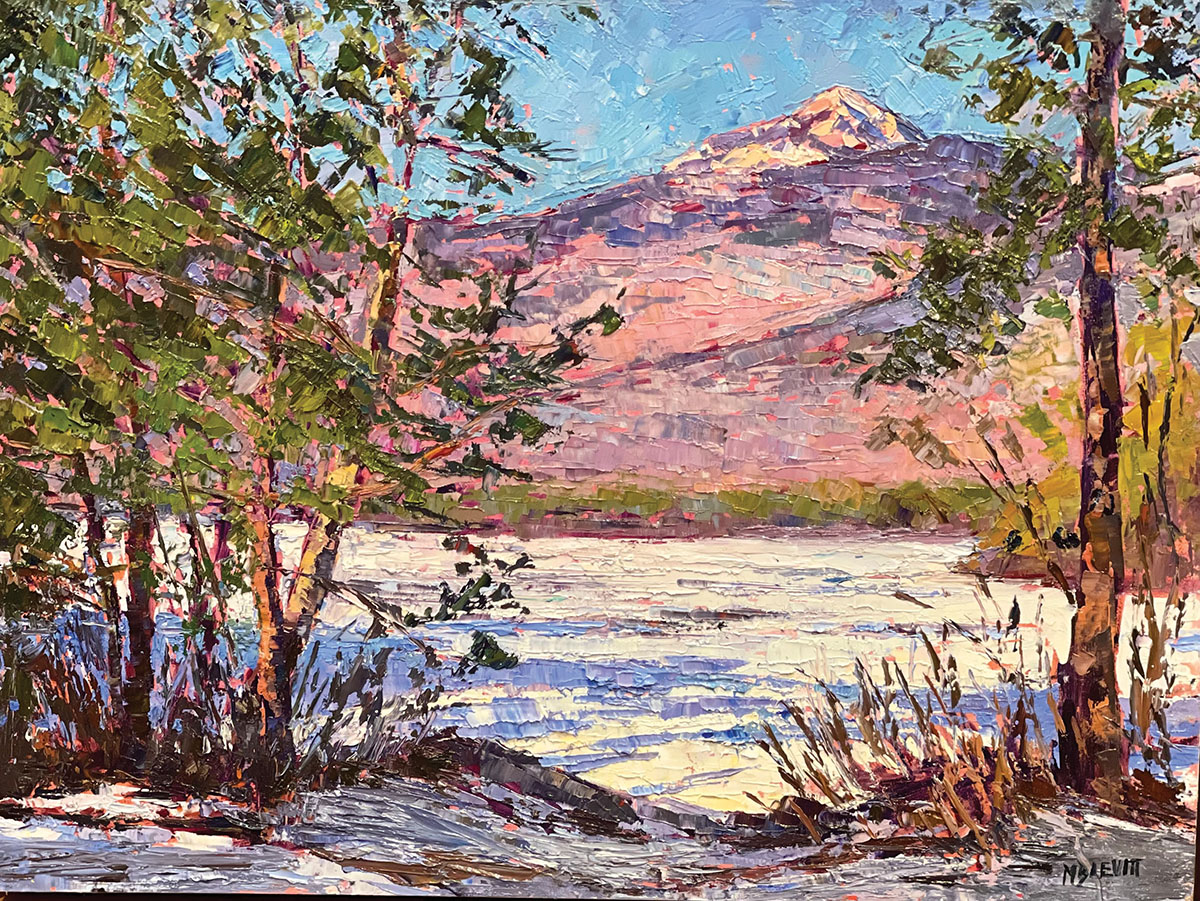
The most magical experiences I’ve had plein air painting have been in the winter, when snow covers the tree branches and all is quiet in the landscape. Shrouded in white, the terrain allows for direct observation of interesting light, shadow, and reflections of color.
On really cold days, when the temperature dips into the single digits, I stay in my car with the heat on and make small studies in the passenger seat. But whenever I can, I prefer to be out in the elements, painting the White Mountains of New Hampshire, where I live.

Overcoming the Challenges
1. Stay warm: Sunny winter days feel warmer than overcast ones, so opt for those when possible. In either case, dress appropriately, and in layers. I use a Canadian winter boot with a double liner so my feet stay warm at any temperature. For even more protection from the cold, I recently got a pair of rechargeable heated socks. I also keep multiple packs of foot, body, and hand warmers at the ready. In addition, I use a thin pair of gloves followed by a pair of wool fingerless gloves, placing the hand warmers in between.
When there’s snow on the ground, I bring a mat to stand on so that my feet stay dry and I don’t slip. In really cold temps I wear a balaclava that covers my head and chin under my hat. I also bring a thermos of hot tea. And if necessary, I take breaks in my car and turn the heat up.
2. Keep your oil paint from stiffening up: When it’s cold out, I leave a tube of titanium white in my coat pocket and sometimes even throw in a hand warmer so the paint doesn’t get too hard to extract. For the rest of my palette, I squeeze out the colors in advance when I’m inside and mix a little solvent-free gel with each color.
3. Block the sun: I almost always use an umbrella in the winter so that I don’t get sun blind and to avoid glare from all the white. I also position my easel so that bright light reflecting off the snow doesn’t hit the canvas. And, of course, I never forget sunscreen.
4. Work fast: I stain my canvases in advance and keep my supplies organized so that as soon as I get outside I’m ready to go. I then work quickly to capture the scene. I stick to small pieces, saving larger works for my studio, where I can use my studies and memories to paint the land-scape at a later time.
5. Paint with a palette knife: I find that using one tool and not having to clean brushes makes it so much easier to paint in the cold and makes cleanup a breeze.
Connect with the artist on Instagram at www.instagram.com/melanie_levitt.
Browse more free articles here at OutdoorPainter.com