
Watch plein air artist Scott Hamill paint ‘Winter Light, California Coast’ step-by-step — learn how he captures light, shadow, and coastal atmosphere in this free oil painting demo.

“It was a beautiful, calm winter day on the coast, with a nice swell,” Scott says. “The tide was going out, and that was good because I didn’t want to get washed off the rocks. I liked the cast shadow across the foam and the rich ochre colors of the sandstone rock. I also liked the warm and cool relationships, and the geometric shapes in the scene — and there was that S shape going out toward the ocean.”
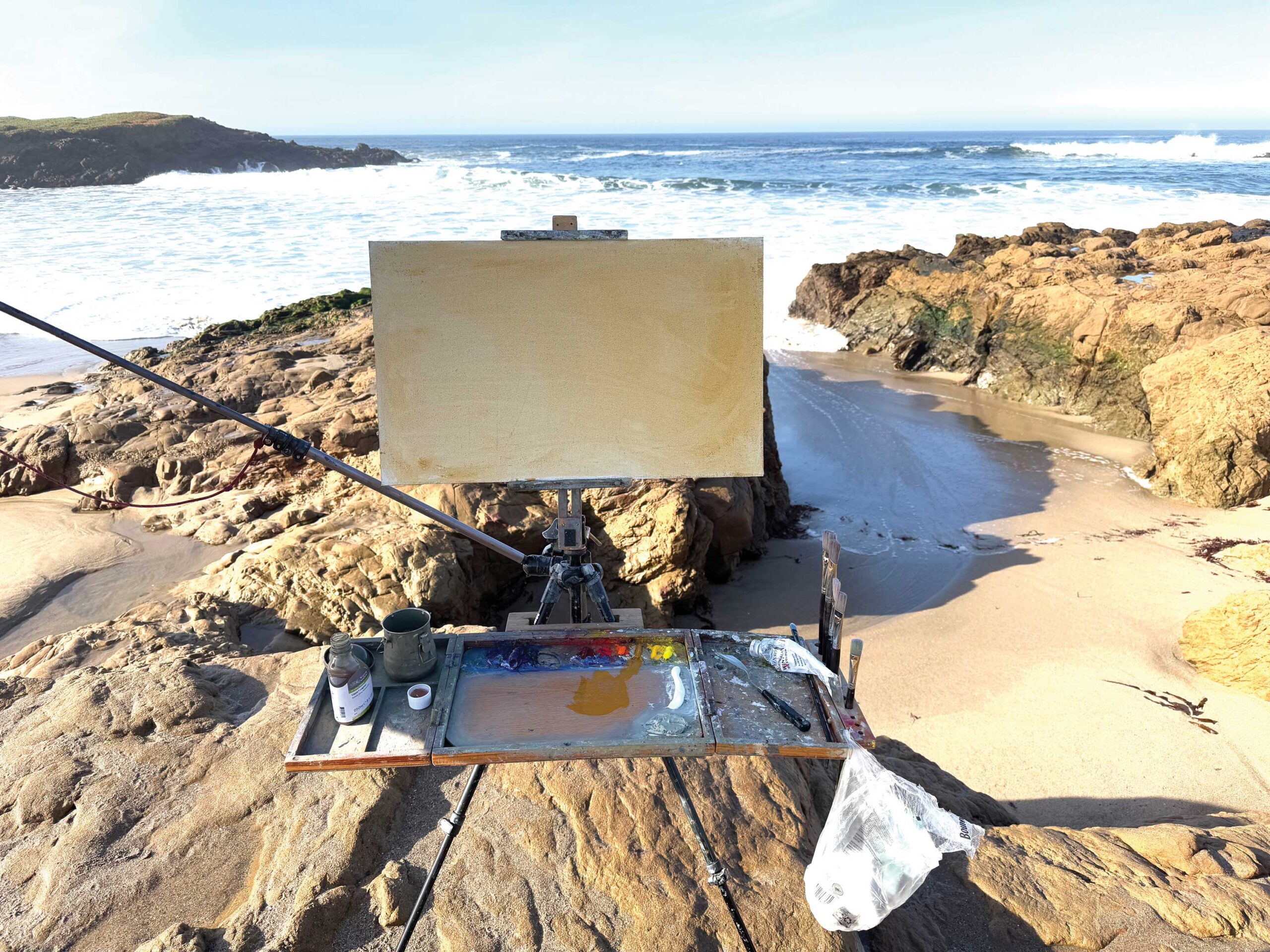
Step 1: On location, the artist toned his canvas with gold ochre thinned with mineral spirit.
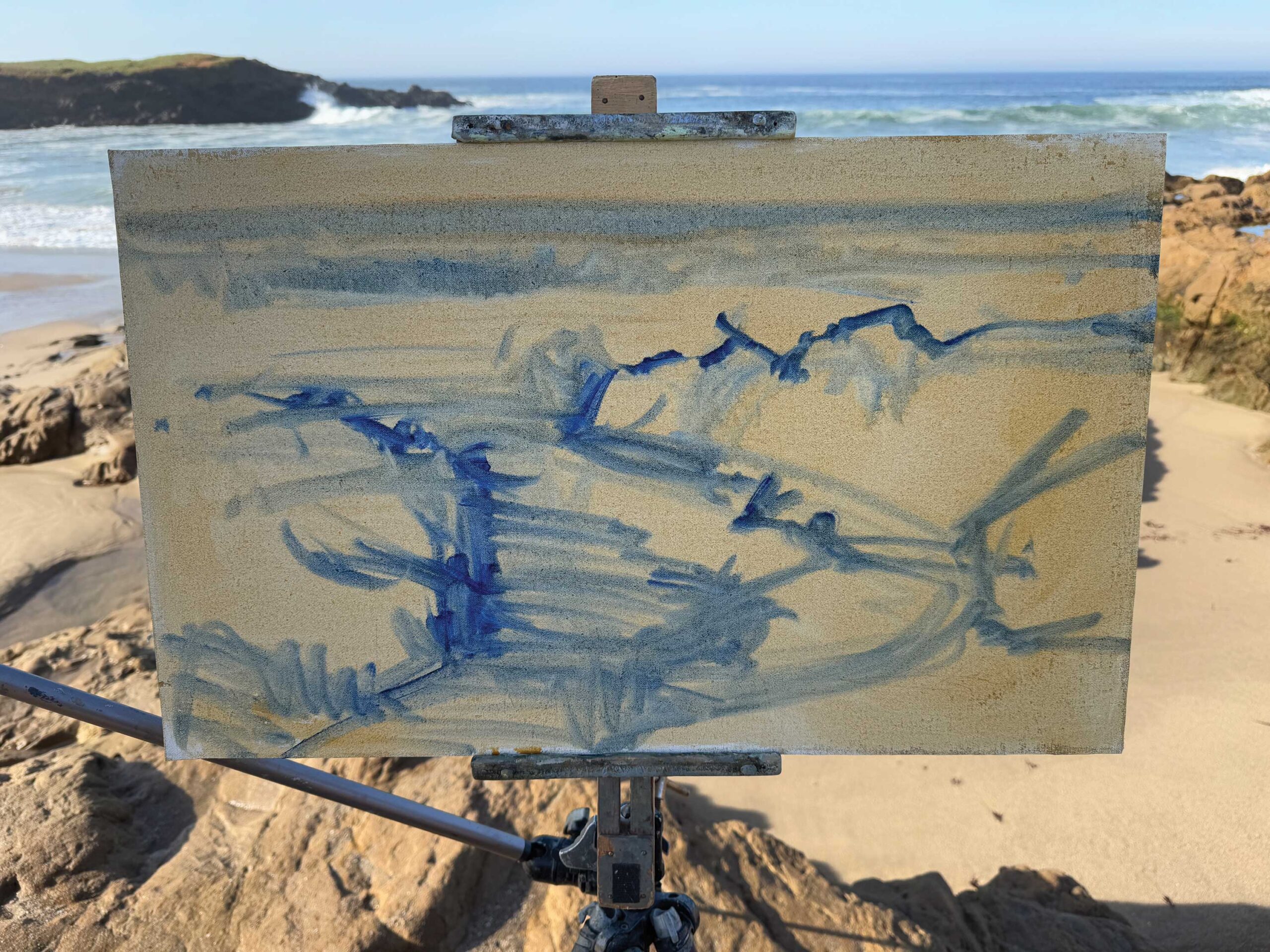
Step 2: He drew the composition with a thin brush held at the end, and quickly indicated some shading with crosshatching to establish the darks. “I look for variety in shape all the time,” says the artist. “When I set the darks enough that they’re evident, then I can step back and see if the drawing is catching my attention. Then I adjust until I feel like the piece is going to be fun to paint.”
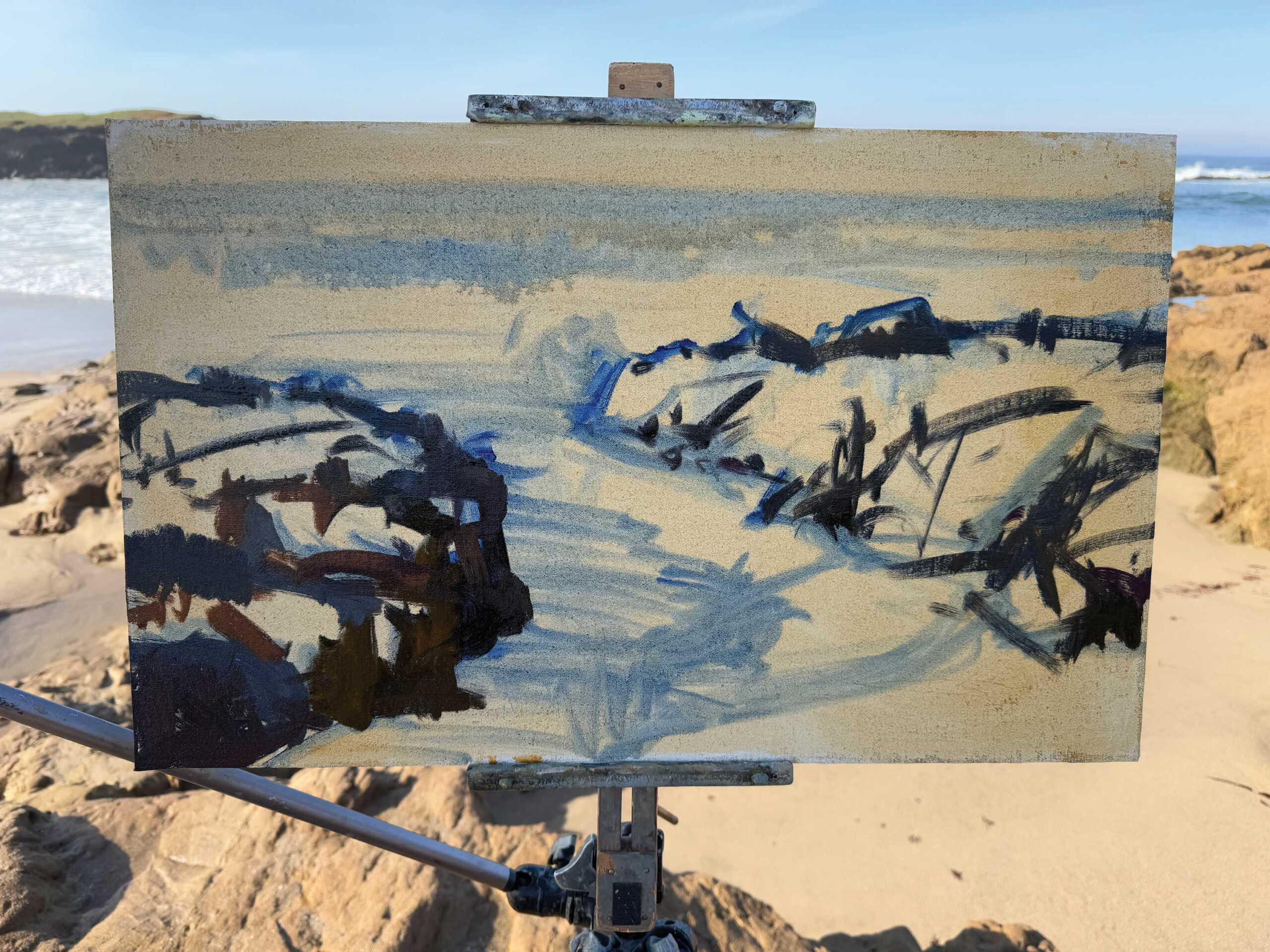
Step 3: Working from dark to light with a size 12 flat brush, Scott placed the cast shadows — the darkest darks in the scene. “The dark-light arrangement is usually what attracts me, so I don’t wait to establish that pattern,” he says. “If I get the darks in quickly, I don’t have to worry too much about the changing light.” He then turned his attention to the middle values.
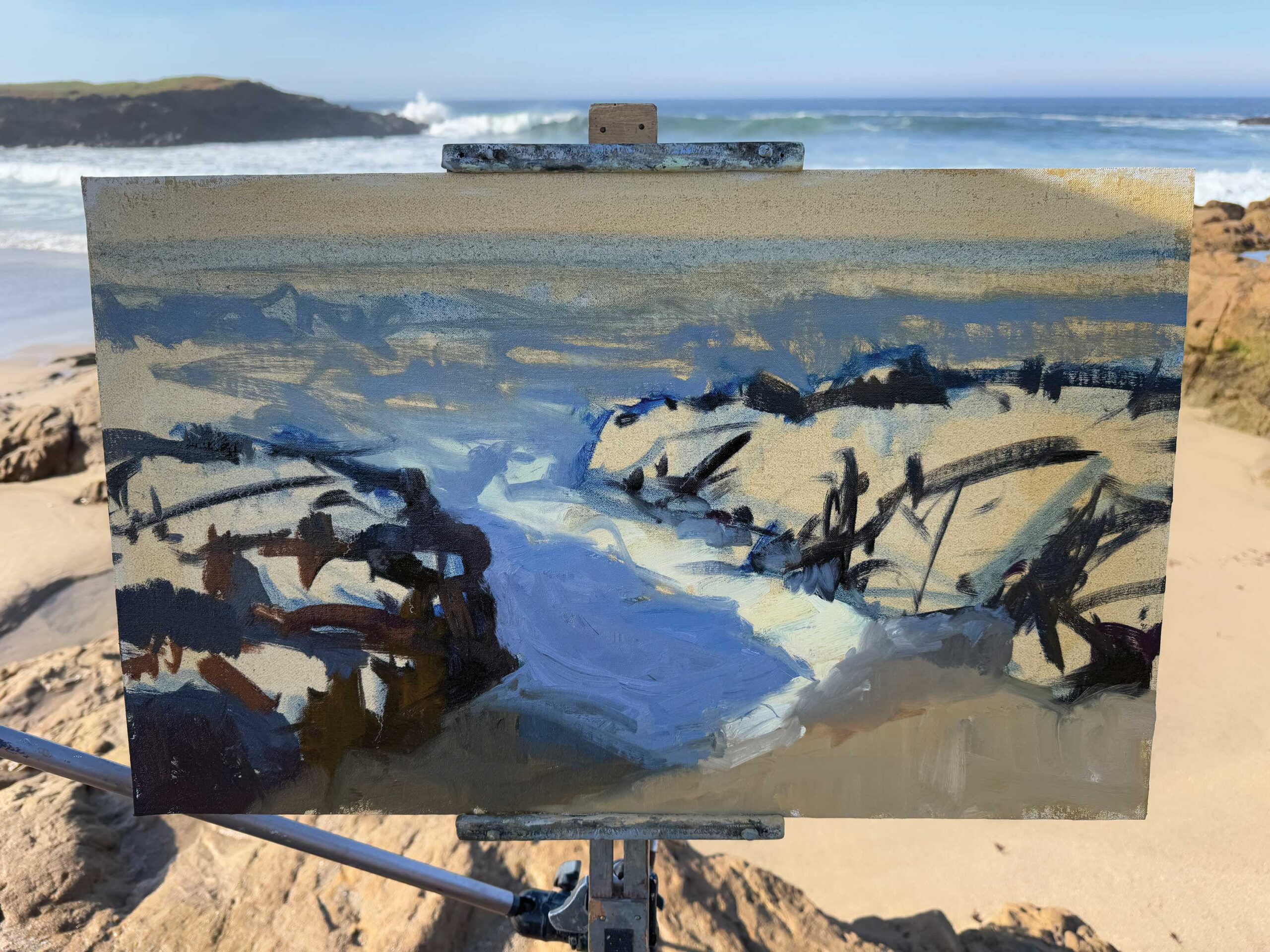
Step 4: The sunlit foam represented the lightest light in the scene, so when Scott put that in, he had his “whole value structure right there in that area of the canvas,” he says. “Now I ask myself, Is it working? If so, I proceed. If not, I adjust.”
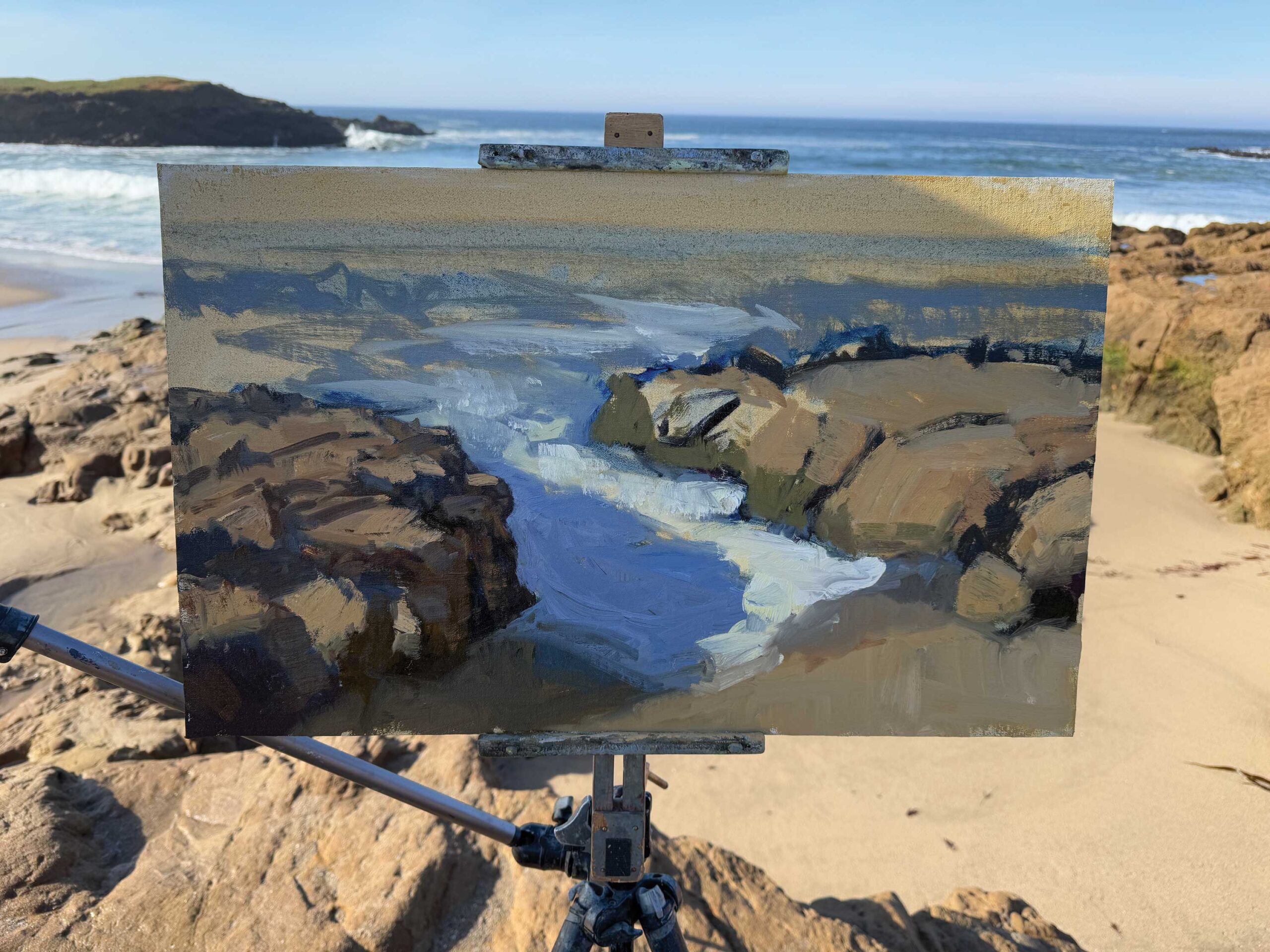
Step 5: Portraying the wet sand where the waves were washing in helped make the scene convincing. Note that the coastal fog on the distant horizon created a darker value in the sky.

Step 6: Scott put in the color of the sand in sunlight and tackled the planes of the rocks. This was no small challenge. “Some of the planes of the rock directly faced the sun. Some were facing the sky and getting sky light on them, making them both cooler and a bit darker,” he says. “That rock on the left had a lot of detail, and I had to tone that down and simplify it. It was distracting the eye almost like it was shattered glass. That was probably the hardest thing about this painting, settling down that rock.”

Step 7: “Once I have the canvas colored and I feel the values and design are correct, I’ll start cutting into it,” Scott says. “At this point, it’s about shape creation, trying to find variety and interest in shapes. That can demand some brainpower, and I find it really exciting when I find a shape that is interesting to me.”

Step 8: The artist next concentrated on keeping the focal point dominant in comparison to the supporting players in the design. That meant simplifying the shape of the rock on the left so it had enough heft to balance the rock on the right side. “Where does my eye go? I needed to make sure the eye moved around the canvas, but there should never be anything more interesting than the focal point,” Scott says.

Step 9: He developed the rock on the right a bit more, but his focus at this stage was the surf. “What is moving? The ocean is moving, so I needed to decide what I wanted to do in the distance,” says the artist. “There was some dramatic foam leading back to a breaking wave and from that, a simplified horizon. The breaking waves weren’t the focal point, so they didn’t need a lot of information. I used big, broad brushstrokes and very little modeling or rendering. The more brief and efficient I could make the waves, the more powerful they would be.”
Final Step: Scott finished the painting and signed it on site. “It had enough information and it conveyed the energy and light of the scene, as well as all the excitement I felt,” he says. “I’m sure I will look at this in two weeks and wish I’d done more, but it felt right at the time. I don’t want to lose the life that was there. I’ve had to develop the courage and confidence to leave a painting a bit unfinished. It might not be exactly what I want, but if I play with it too much, I’m going to lose that life.”
Connect with Scott Hamill at www.scotthamillart.com.
Looking for MORE ways to improve your skills?
Join us for the next Plein Air Live online art conference! Plein Air Live gives you invaluable insights and live demonstrations from some of the world’s best plein air artists. Over the course of 3-4 exciting days, they’ll reveal techniques to improve your use of color, light and shadow, giving you the confidence and skills to paint outdoors and create more amazing artwork than you ever have before. Learn more at PleinAirLive.com.
Browse more free articles here at OutdoorPainter.com
Blog post prepared for the web by Cherie Dawn Haas, Editor of Plein Air Today