


On Plein Air Painting in Winter >
By Shari Blaukopf
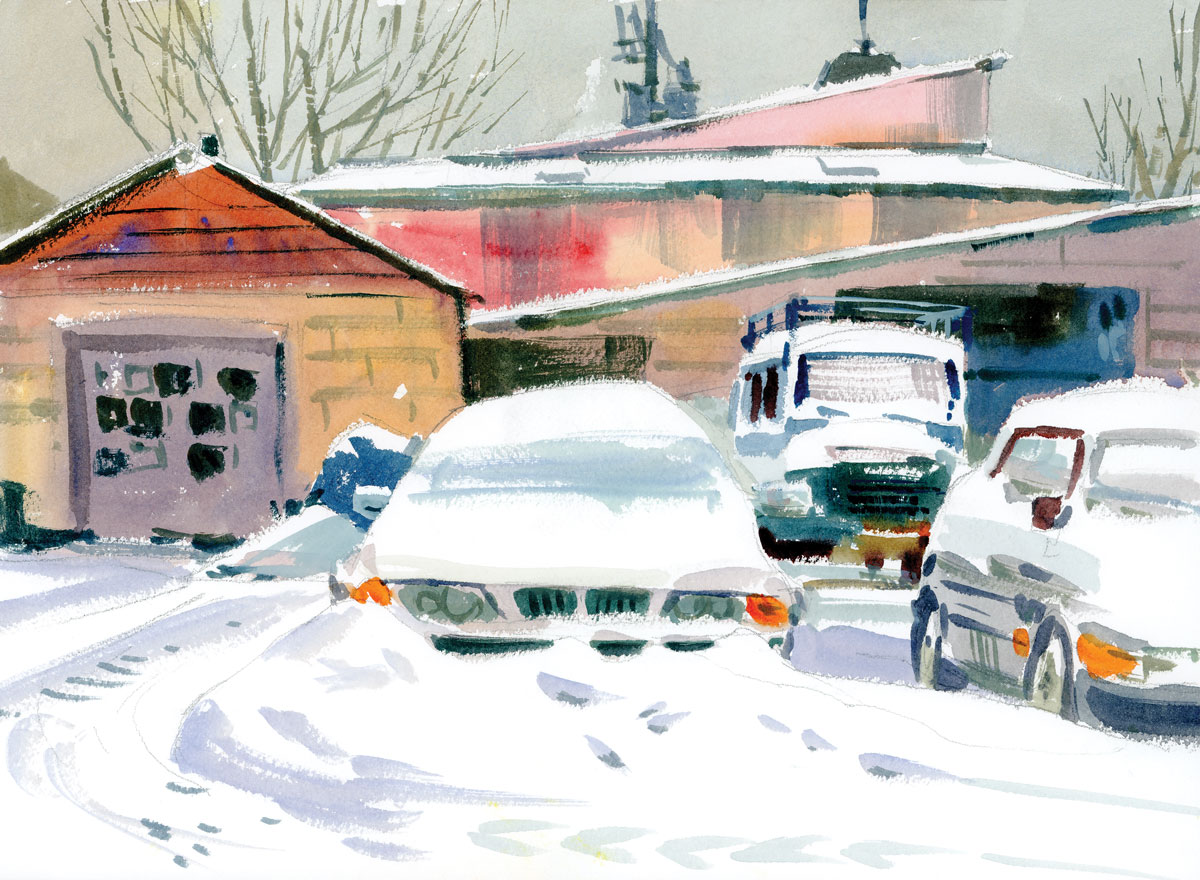
Painting snow scenes is particularly striking and beautiful in watercolor because you’re using the white of the paper to its best advantage. The snow simply looks fresher because the paper surface is untouched. You’re also using the texture of the paper, especially when trying to convey how snow falls on an object. You’ll never see a hard line where snow has drifted across a surface. Instead, there’s a transitional layer where a bit of the object — a car, for example — shows through the snow. To convey that effect in works such as Tuesday Garage, I typically drag a dry brush across the rough surface of the paper.
Although I still sometimes set up my easel in the snow in early spring, for the past 10 years I’ve increasingly painted wintry landscapes from my car. I’ve become so used to it that I can now work fairly large — as big as a quarter sheet of watercolor paper (11 x 15 inches). I simply lean my board on the steering wheel, put my water cup in the cup holder, and steady my palette on a towel on the passenger seat. It may seem awkward, but I’ve been doing this for so long that it’s actually become one of my favorite places to paint.
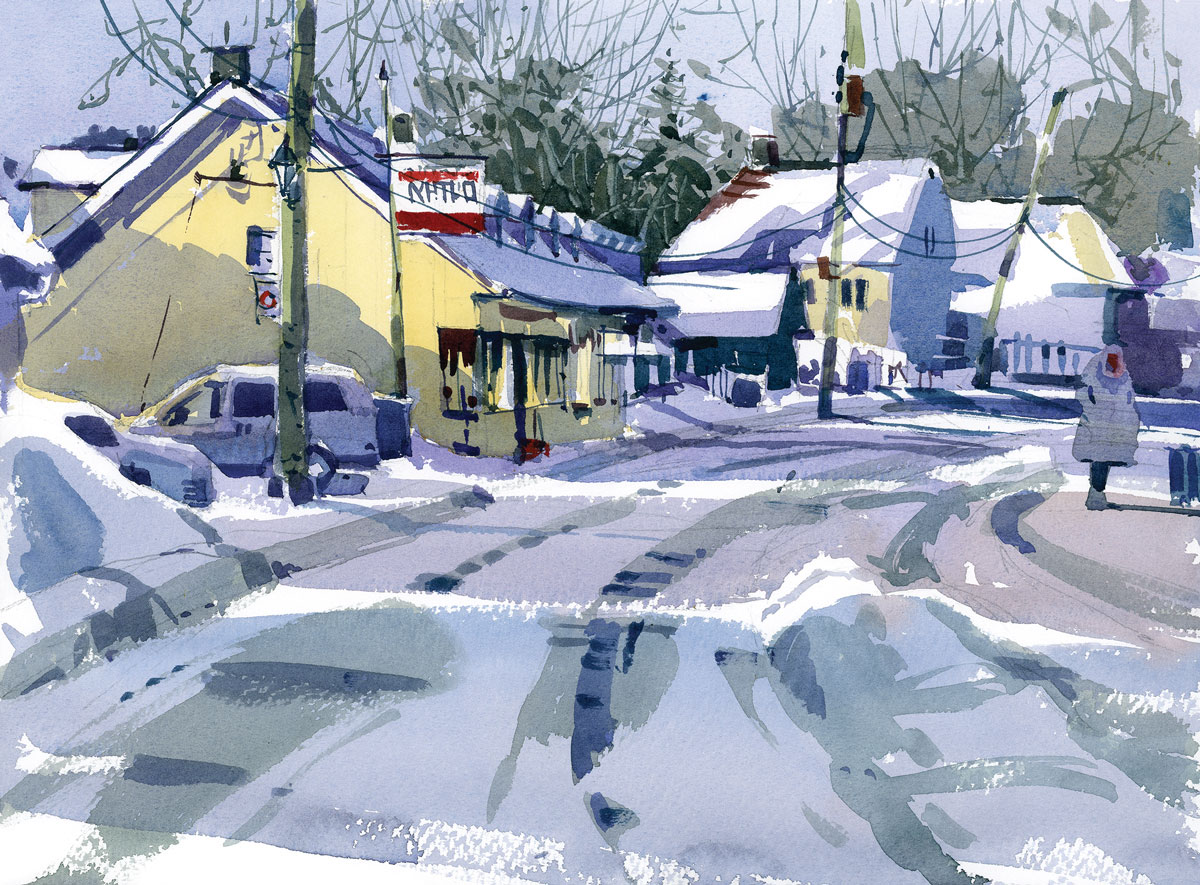
Staying Safe and Comfortable
I warm up the car before heading out, so that even on the coldest days I can paint for an hour or more. Since I always turn off the engine when I find a painting spot, there’s been the odd day when my washes turn to slush or even ice. At that point I take the hint and head home.
I dress quite warmly, but if I find that my feet are getting really cold, even with wool socks and heavy boots, I occasionally turn on the engine for a few minutes to warm up the car, using the hot air blower to dry my painting while I’m at it.
I try to find a parking spot where no one can block my view. Of course, I can’t paint when the snow is falling, as the windshield wipers would drain the battery. So I wait until just after a snowfall, then rush out when the white stuff is at its freshest.
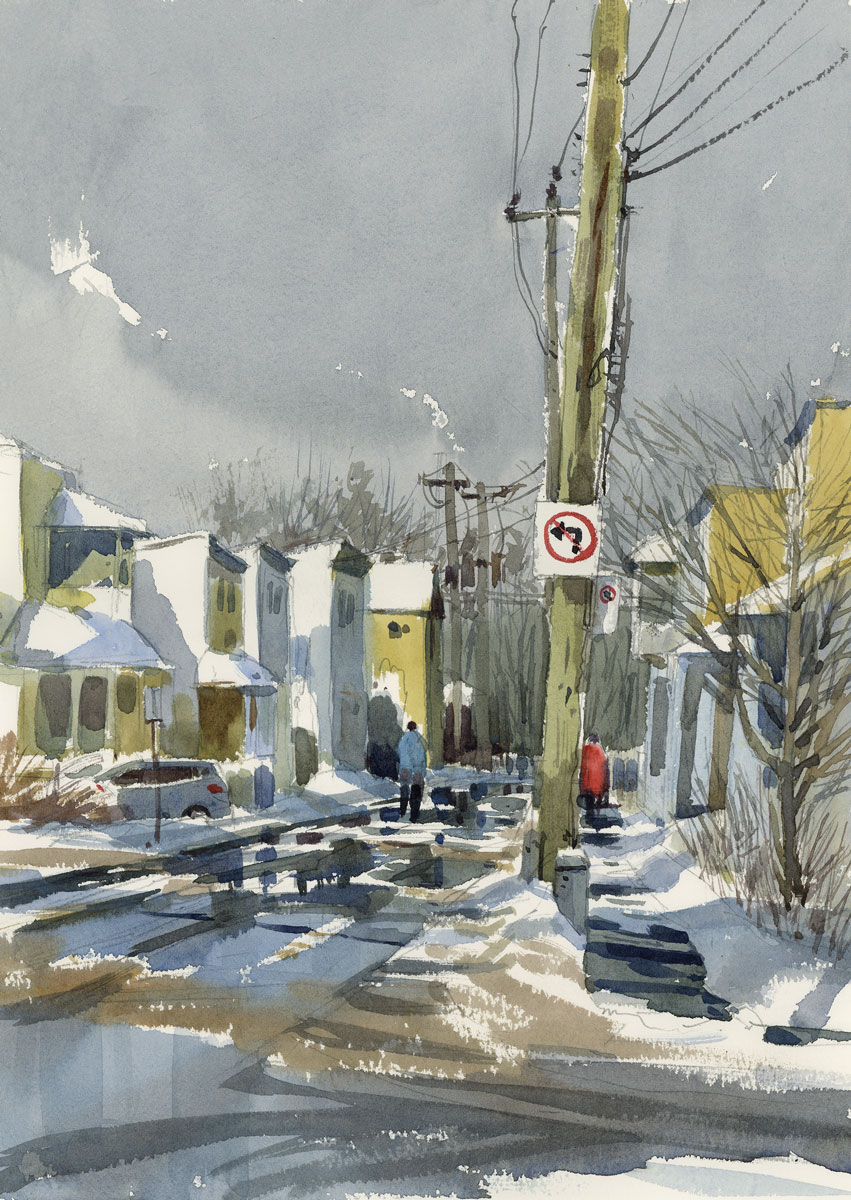
Worth the Effort
Compared to the winter paintings I do in my studio, the pieces from my car are a bit messy because they’re made with cold hands and because I can’t take a couple of steps back to see what I’ve done. But since my aim is to capture the essence of a scene and the light of a winter day, these in-car versions of plein air are always fresher and more bracing than the comparatively polished paintings I do in studio.
My favorite snow scenes are the ones with shadows in them. Although painting snow on an overcast day has its own subtle beauty, direct sunlight makes a winter scene come alive. After many years of painting winter scenes, I’ve come to understand how shadows can look different depending on the day. Sometimes there’s a warm cast on the snow in full sun, but I prefer to leave it starkly white and instead focus on the subtle changes in the color of the shadows. For years I used cobalt blue as my main shadow color, but more recently I’ve been mixing cerulean blue (Winsor & Newton) with a touch of carbazole violet (Daniel Smith), which creates some beautiful granulation, especially on rough paper. If I need to deepen the color, I just add a bit of cobalt blue.
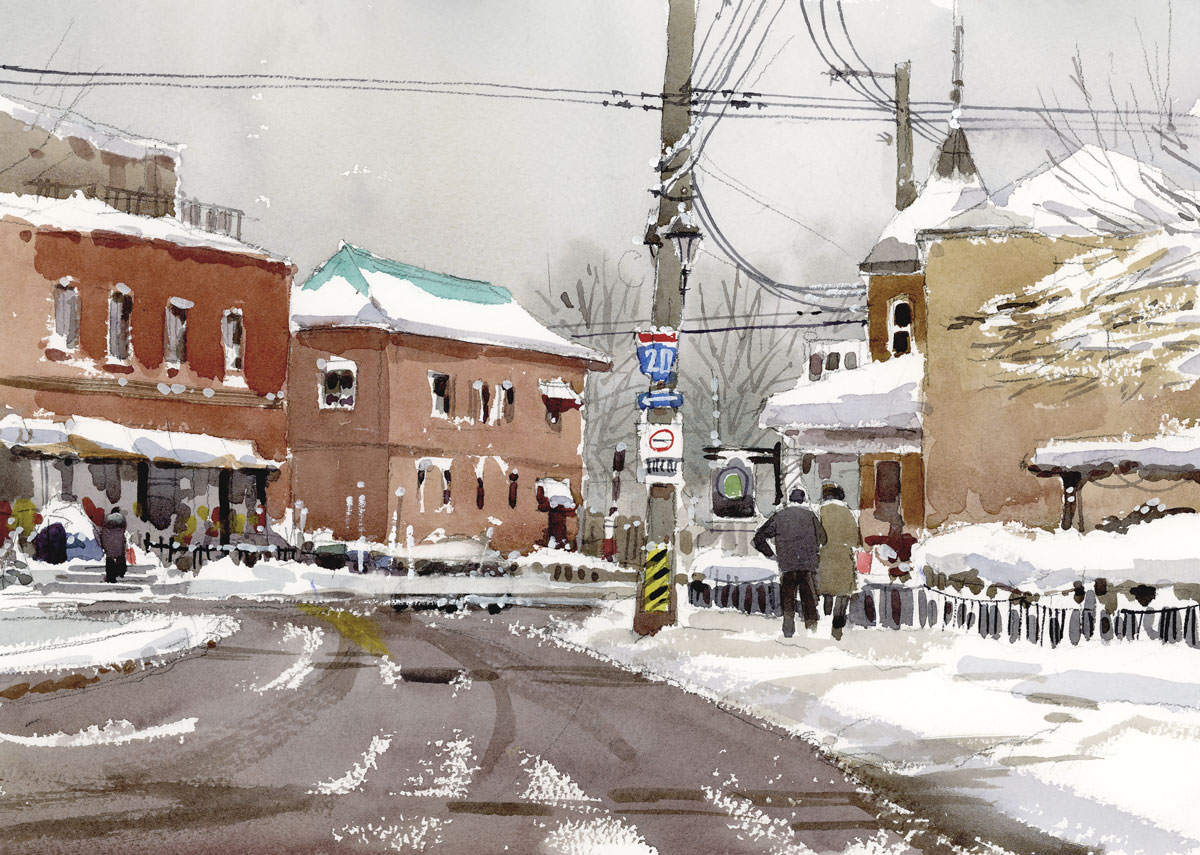
Advice for Plein Air Painting in Winter
Your ability to paint snow depends on the weather patterns where you live. In Montreal, I begin watching the weather app in early December for signs of the first snowfall. I get so excited about painting fresh snow that I sometimes can’t sleep in anticipation. I go out early in the morning because as the day warms up, the new snow can start to melt. By January and February, though, the snow is more likely to stay on the ground for a while, so I tend to go out later in the day when it’s warmed up a bit and I can stay out longer.
On location I always start by taking a photo of my subject in case I have to finish the painting in my studio. I then do a quick pencil drawing (most of these pencil lines will remain visible in the finished work). When it comes to painting, I tend to use a dryer brush than I would in the summer, when watercolor washes dry faster. To hasten the drying time between washes, I use my car heater.
What adjustments do you make when it comes to plein air painting in winter? Share them with us in the comments below!
Connect with the artist at blaukopfwatercolours.com.

For cold feet in the car, might I suggest hand warmers inside your boots?
Shari Blaukopf! I recognized her work right away! I know her from her excellent blog that I’ve been following since about 5 years. To me, she is the best of Montreal and surrounding areas watercolor painters. Her books are amazing. She paints what and where she loves and it shows. A wink to Alice.(her dog)
My solution to the challenges of painting in cold weather was moving to Florida. We don’t have to shovel sunshine down here!
Sheri
A wonderful report on how you work! “Bus Stop” is a great piece! You have a lot to share.
All the best,
Wendy Hoffmann CSPWC
I am astonished, delighted, and mesmerized by these snow paintings! I find myself going back to study her range of values that allows Shari to portray the brightness of a snowy day. Yellow is always a problem color for me to deal with shadows and I’m particularly impressed by the believable shadows Shari combines with her yellow buildings. Also I love the simplified yet accurate rendering of all the street signs, it’s such a great detail, sort of an elevated and beautified “Ashcan” aesthetic. I will definitely be looking up her blog.