
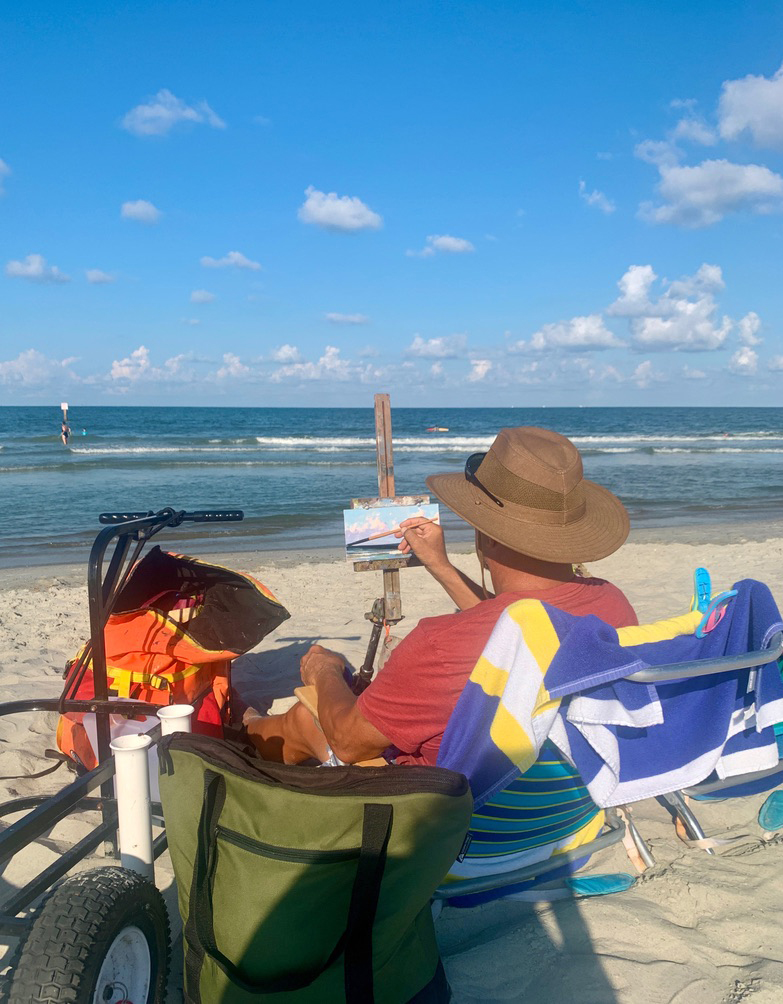
By Marc Hanson
I jokingly tell my workshop students that the main reason I like using acrylic en plein air is that I can drink the solvent — water! My second favorite reason is that I can paint on anything from acrylic-primed paper, canvas, board, aluminum sheet, or any other acid-free surface, to any unprimed paper or board — illustration board, mat board, or pastel board — that is acid-free or 100 percent rag-based.
If it’s too hot, dry, and windy, or too cold, below about 52 degrees, I won’t go out with acrylics. They dry too fast for my taste in the former conditions, too slow in the latter. In fact, manufacturers don’t recommend using acrylics below around 48 to 53 degrees because at that temperature range, the binder in the paint won’t set up properly. When I do take acrylics outside, I prefer to paint where I won’t have interruptions from onlookers. The drying time of acrylics means I need to stay focused.
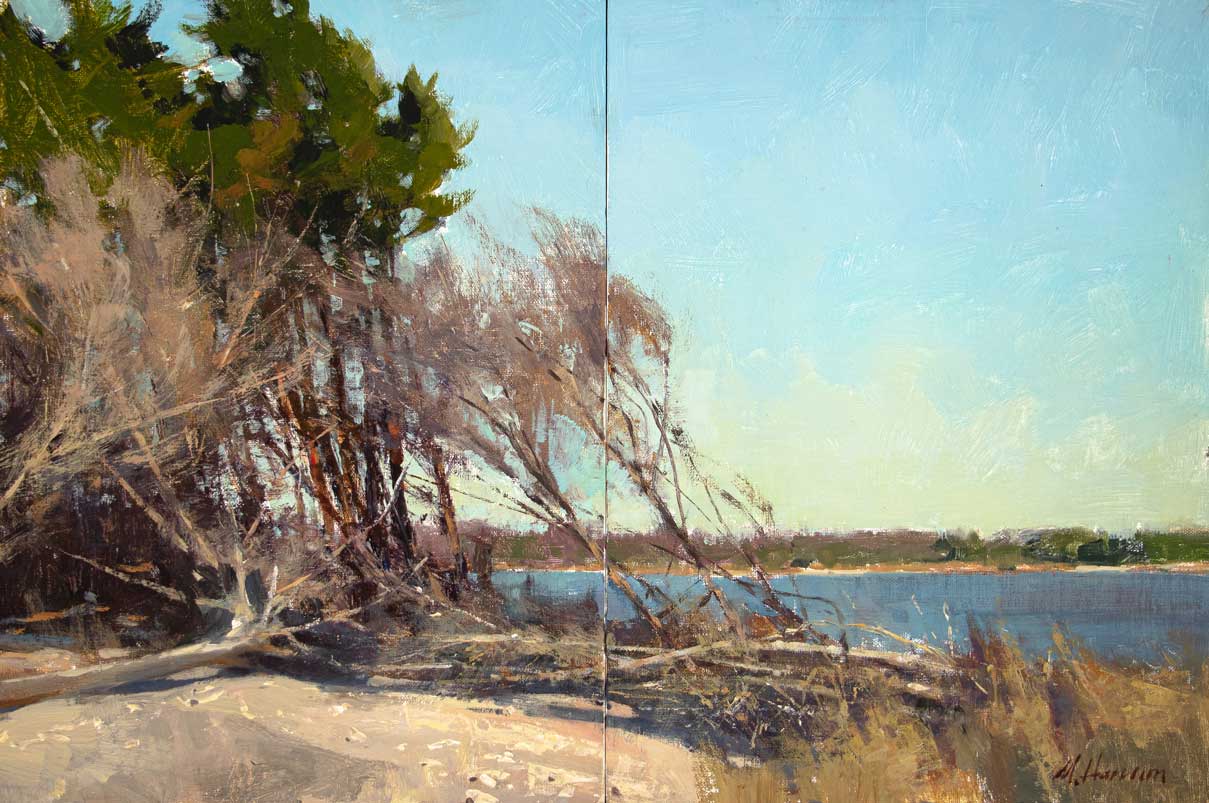
I prefer Golden Open Acrylics for painting outdoors because they have little to no value or color shift as they dry, plus they dry slower. And they can be re-wet up to about 12 hours after they’ve been applied, according to Golden.
Starting with black-and-white value studies is a great way to learn how fast acrylics dry, and how they act compared to oils — especially in terms of working the wet and dry edges. I recommend using Open Acrylics in the beginning, and then as you get comfortable with them, add some of the faster-drying heavy body acrylics. Just be sure to use the same brand; different brands don’t always mix well together due to proprietary ingredients in the paints.
One thing I want people to know is that acrylics are not “plastic paint”; they’re a polymer medium-based paint that contains the same pigments as oils, pastels, gouache, and watercolor. Because it’s one of the first paints we give children, acrylic has a reputation for being a “practice medium.” It’s the new kid on the block, so it’s had a hard time being taken seriously.
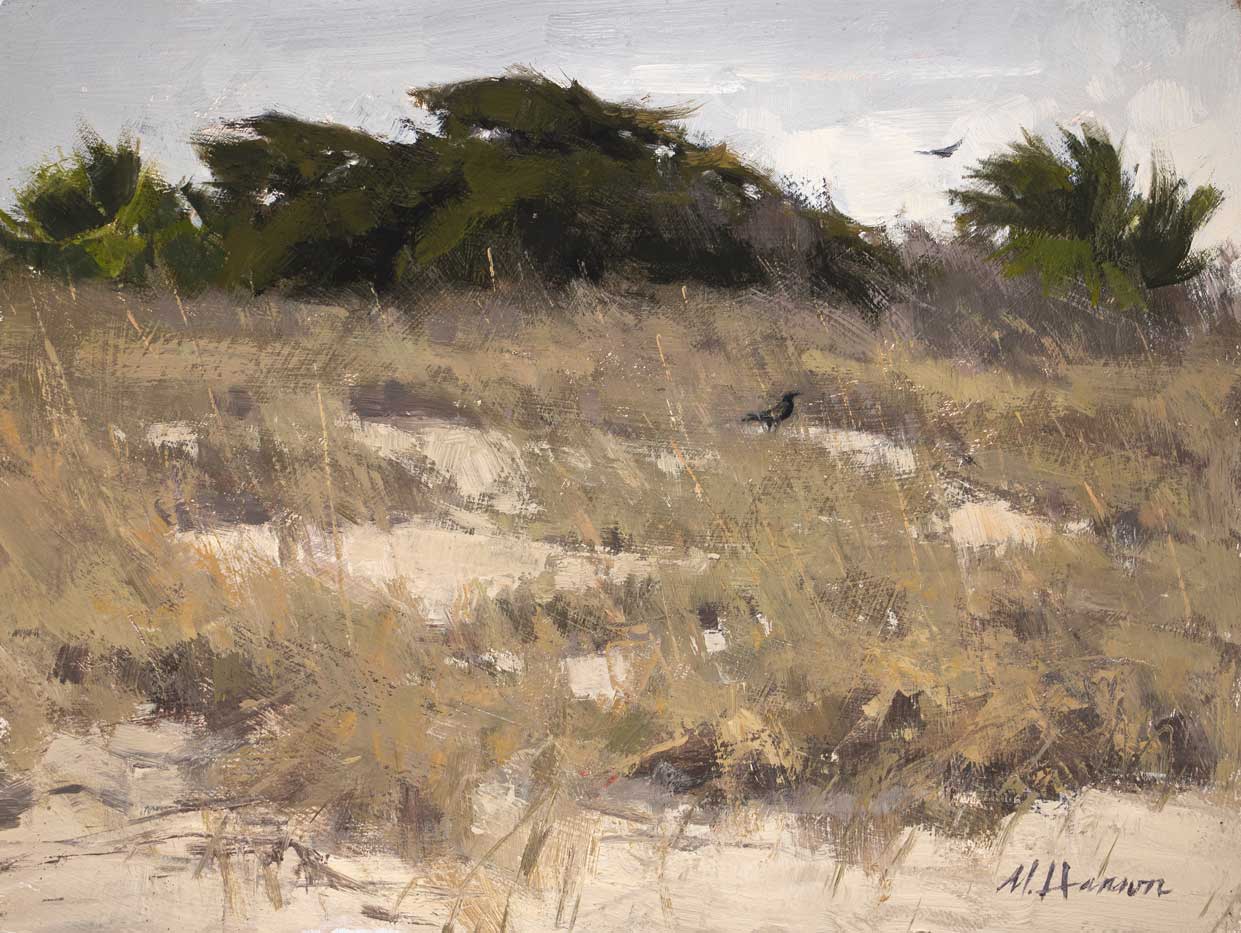
In some cases, though, I believe art collectors don’t even know that what they’re looking at is not oil paint. As for longevity, the jury is still out (acrylics were only first marketed by Sam Golden in the 1950s). But when it comes to the main conservation issues with paintings — cracking and surface delamination — acrylics will probably outlast oil paints. Reason being that acrylics remain flexible longer than oils, which begin to become brittle in a relatively short period of time. A collector need only be concerned if they like the painting, no matter the medium, not what type of paint was used to make it.
Editor’s Note: Join us for the 6th Annual Plein Air Live online art conference, featuring Kathleen Hudson, Kevin Macpherson, Kami Mendlik, and many more! The event takes place November 6-8, 2025, with an Essential Techniques Day on November 5. Learn more at PleinAirLive.com.
Browse more free articles here at OutdoorPainter.com