This New Jersey artist draws on the inspiration of Tonalists and Luminists to create atmosphere and light in his unique approach to pastel painting.
Pastelists are often thought of as colorists — artists who rely on color to make their artistic statements — but often it’s just the vibrancy of the medium that makes it seem so. Despite the fact that one can blend the pigment of two different pastel sticks on the paper, and although muted colors are certainly available to pastel artists, by its nature pastel wants to show its strong chroma. It can be surprising, then, when a pastel painter like Stan Sperlak demonstrates how a small, strategic line or color can enliven an entire painting.
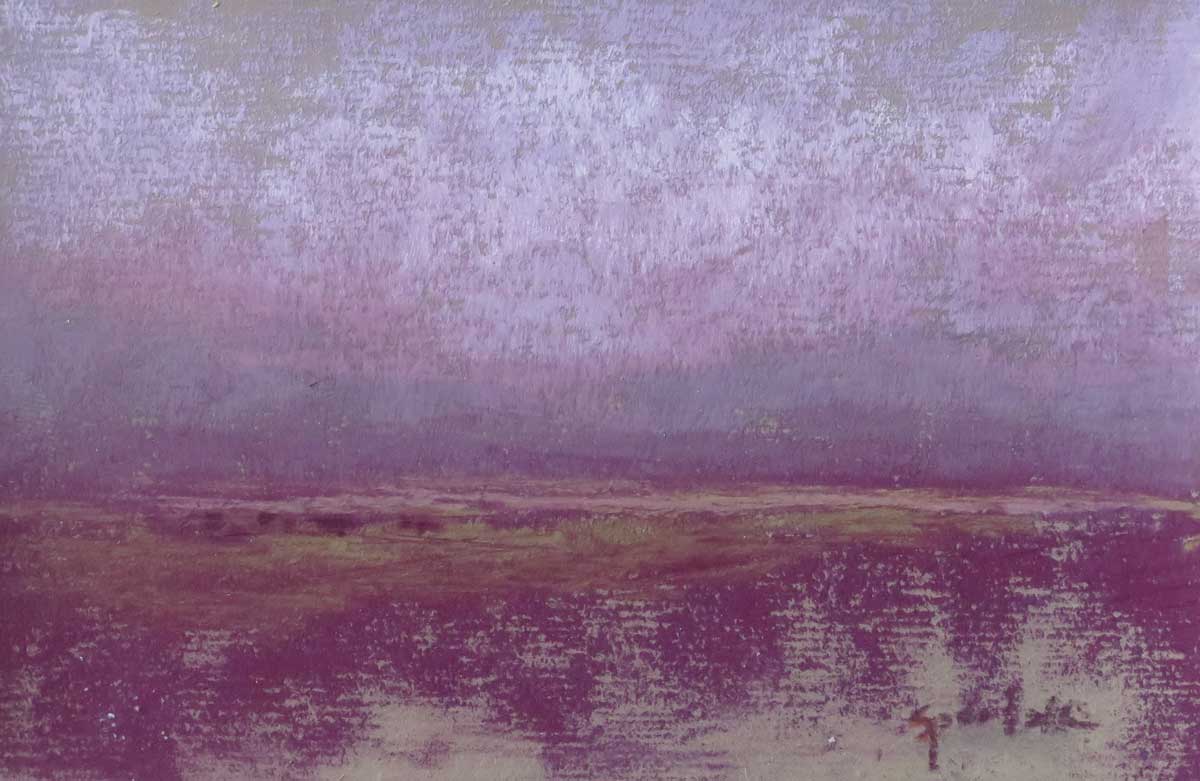
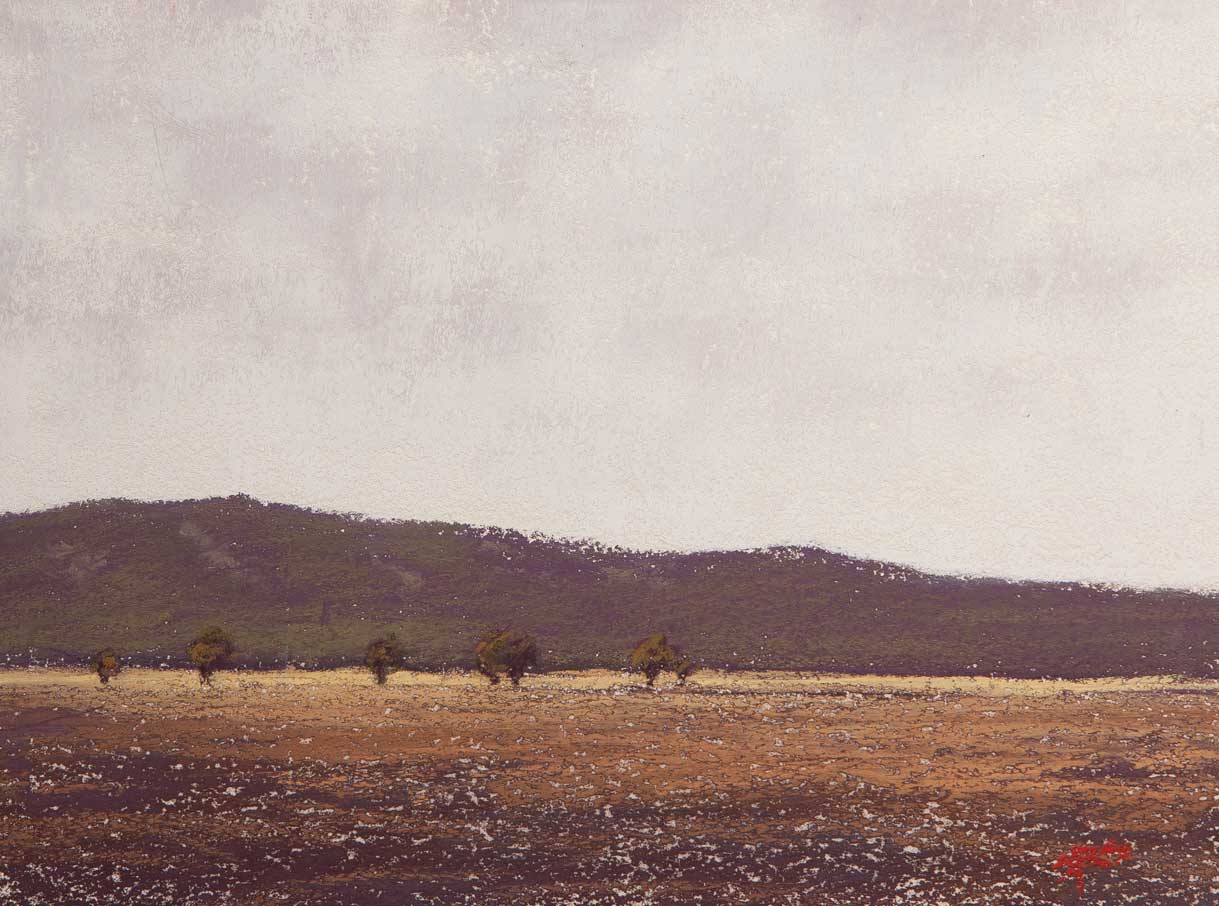
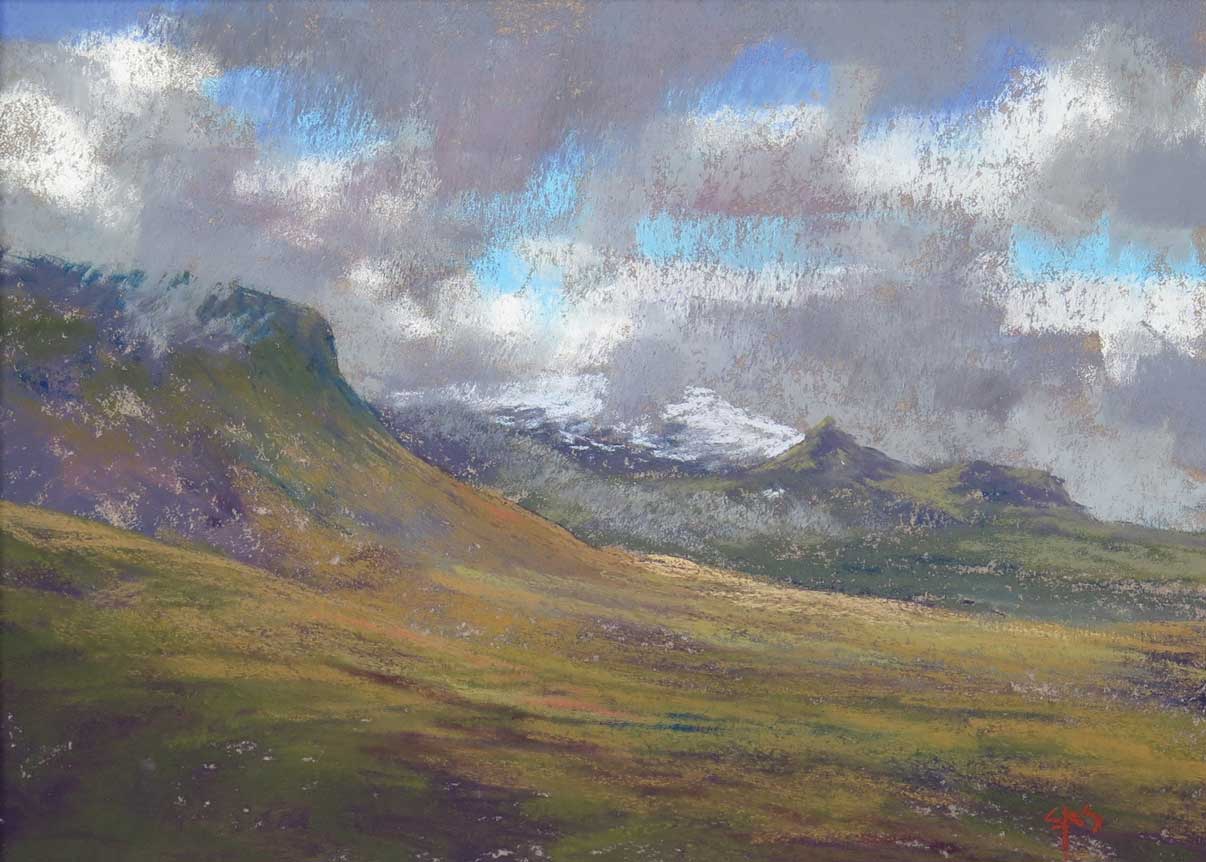
“Subtlety is suggestion,” Sperlak says. “It has to be simple to be special.” The artist points to the road scratched into the quick plein air sketch of his ‘Icelandic Horses in the Distance’. The concept is even more pronounced in ‘Snaefellsnesjokull’, in which a thin, dark line completes the composition as it runs along the ridgeline of the foothill in middle ground. “Cover it up with your finger, and you will see how important that line is,” he says.
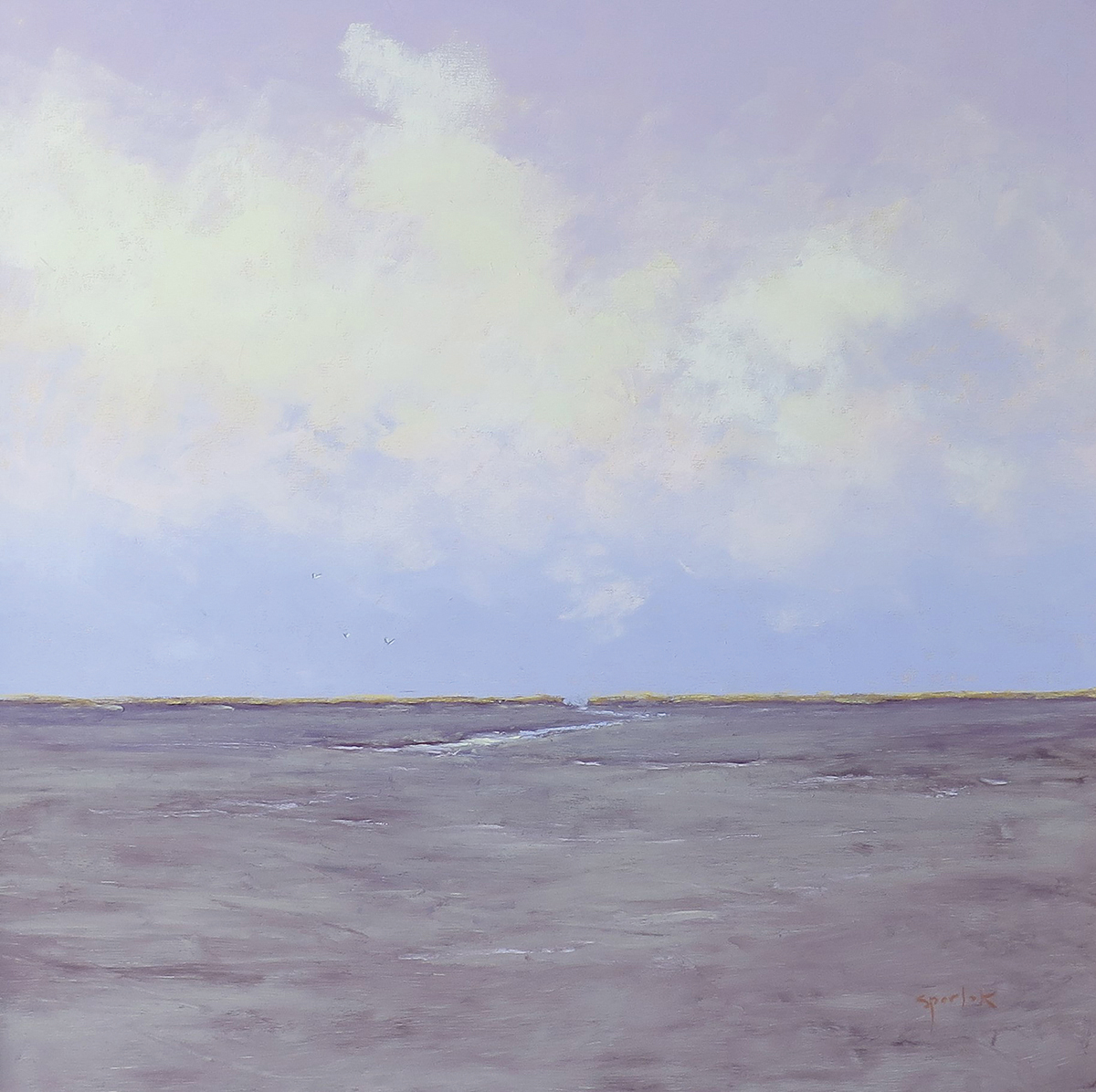
Although he’s often heard people call him a colorist, Sperlak doesn’t see it. He’s more concerned with atmosphere — especially in depicting the sky — and if he identifies with any subgenre, it’s tonalism. “I don’t paint with a limited palette,” he says. “I’m very aware of the order of colors that need to be in the sky to create a believable atmosphere. [George] Inness is a big influence. I also love Sanford Gifford and the Luminists. I am ripping those guys off left and right. When I was at PAFA [Pennsylvania Academy of the Fine Arts] in the mid-90s, I studied this piece by John Henry Twachtman that feels like it was done 10 years ago, not 110 years ago.” A look at Sperlak’s “Cape May, Tidal Flats” shows the influence of those past masters.
Pastel Painting & Paths to Inspiration
When it comes to his approach to color and tone, he may have been nudged by the landscape around his home. Sperlak owns quite a few acres where he lives, and it backs up to an expansive marsh. It’s a tonalist’s dream. But even with all that inspiration in his own backyard, he loves to travel. Australia might not offer a lot of atmospheric perspective, but Iceland does. And Hawaii can offer both atmosphere and blazing light and color. Whatever conditions he encounters, he’s ready … although his preference is clear. Mist and haze make a fun playground for him. But this artist can find a way to make the viewer feel a location even with colors that are there only marginally, if at all.
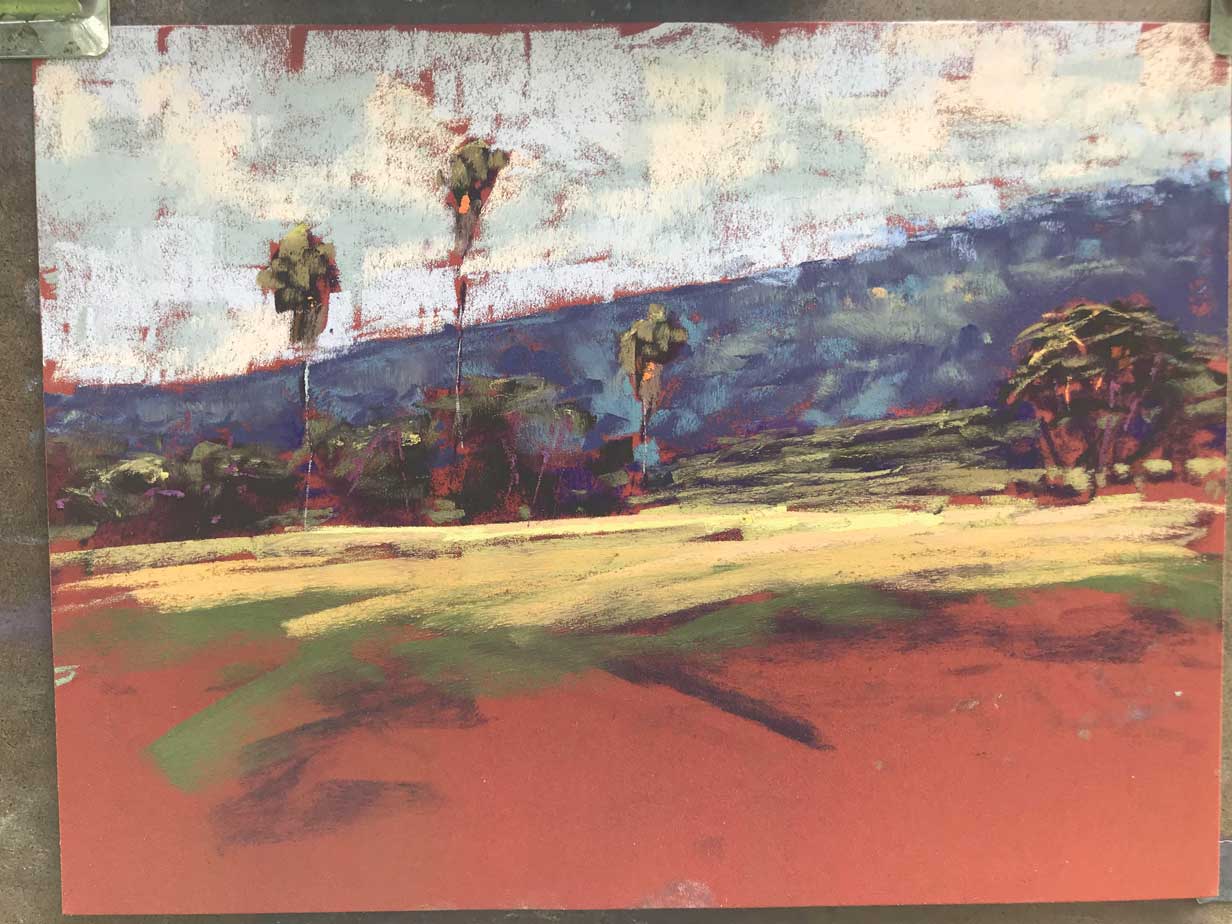
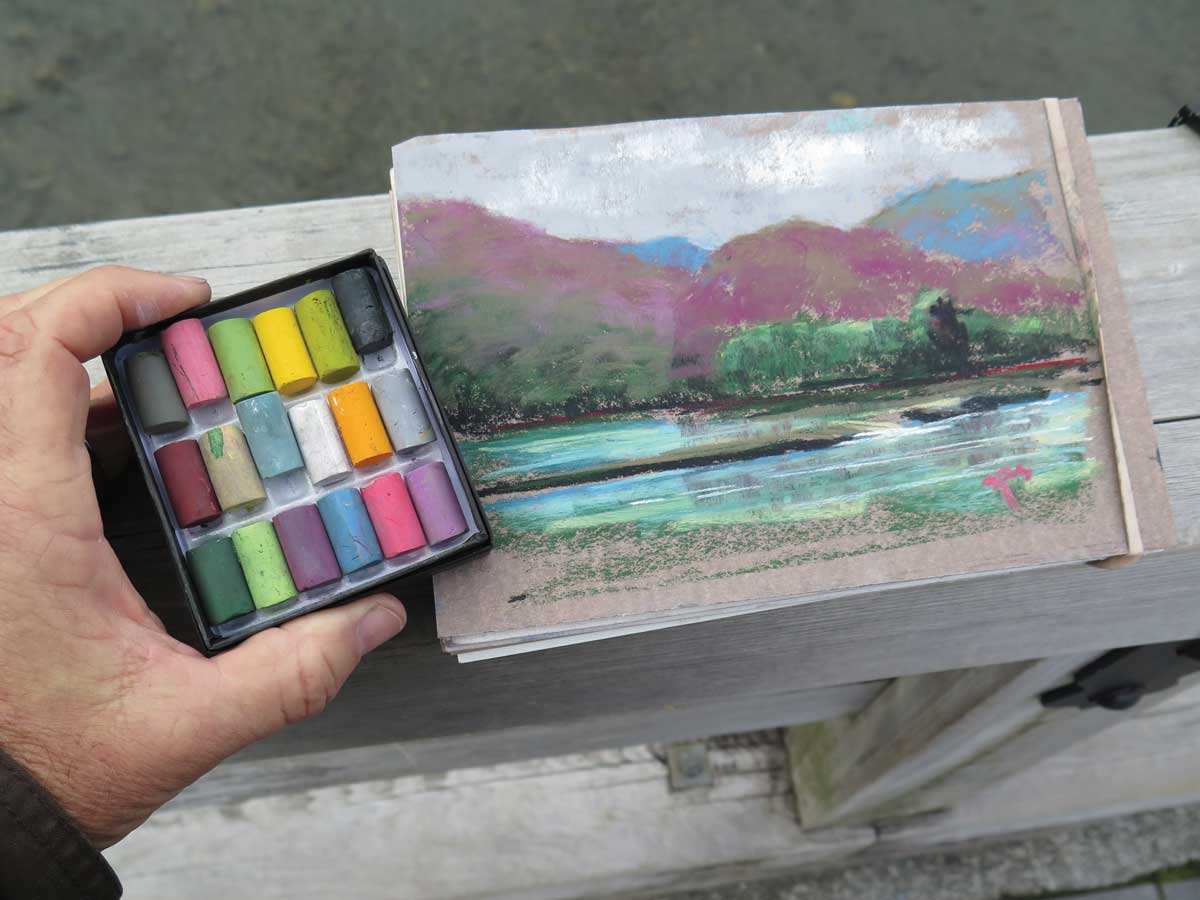
Consider the painting he made with the tiny pastel kit of 18 sticks given to him during a trip to Japan. “The mountains weren’t that color; the river wasn’t that color,” he says. “That’s part of my logic in teaching: give yourself an opportunity to pick a color that means something to you, and then make a painting around it. In that way, it becomes more artful than literal. Today, humans see so many images of everything, including AI images. Of course, you want to give viewers something that’s truly there, to some extent, but many plein air painters want to depict what is out there as accurately as they can. I am among the two percent who don’t. I will make the sky orange, yellow, or pink, and then I will solve that.”
Continue reading in PleinAir Magazine, December/January 2025
BOB BAHR has written about visual art for various books and publications for 18 years. He lives and works in the Kansas City area.
STAN SPERLAK maintains a working farm, studio, nature sanctuary, and sculpture garden where the forest and fields meet the marsh on the Crow Creek, in Goshen, New Jersey.
thesperlakgallery.com
Editor’s Note: Join us for the 6th Annual Plein Air Live online art conference, featuring Kathleen Hudson, Kevin Macpherson, Kami Mendlik, and many more! The event takes place November 6-8, 2025, with an Essential Techniques Day on November 5. Learn more at PleinAirLive.com.
Browse more free articles here at OutdoorPainter.com