Explore artist Kyle Buckland’s approach to impressionist oil painting techniques, focusing on expressive brushstrokes, texture, and his unique process for creating captivating landscape paintings.
By Kristin Hoerth
Kyle Buckland grew up in a row house in the inner city of Wilmington, Delaware — an environment he recalls as a “concrete jungle.” Every year, the family escaped for a week and traveled to the southern Appalachian Mountains, where Buckland’s father had grown up. They’d leave in the middle of the night and drive through the Shenandoah Valley.
“My parents would wake me up at dawn when we got to Skyline Drive on the Blue Ridge Parkway,” Buckland says. “I would look out over the Shenandoah and see the mountains, and it was like being in a fairy tale. I’m sure that’s why I have this preoccupation with the landscape. It’s always had a profound effect on me.”
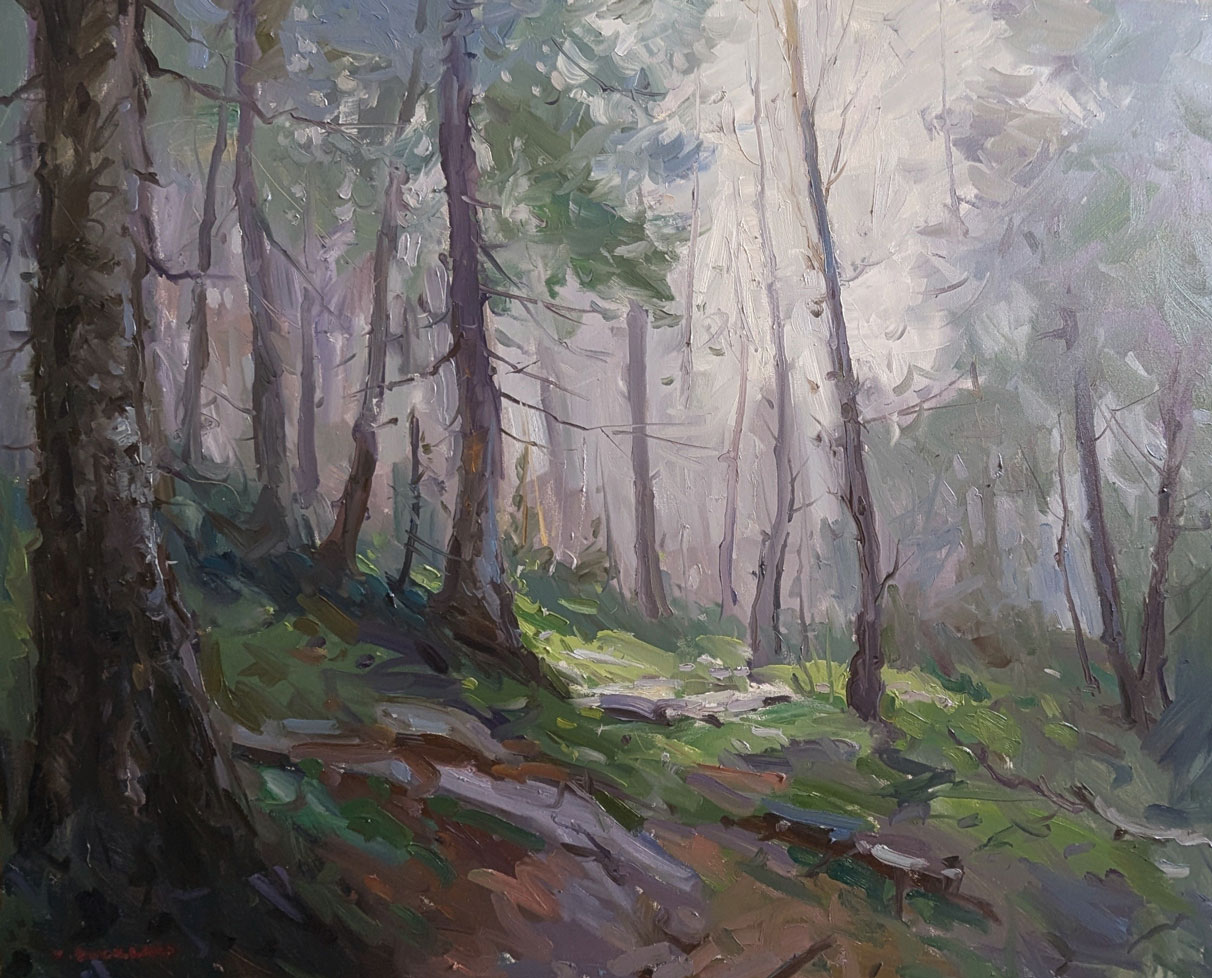
The works of the French Impressionist painters had an equally pronounced effect on young Kyle. When he was about 9 years old, his father — who was himself an artist, creating abstract expressionist and conceptual paintings — began working at New York City’s Adelson Galleries, which dealt in work by artists such as John Singer Sargent and Mary Cassatt.
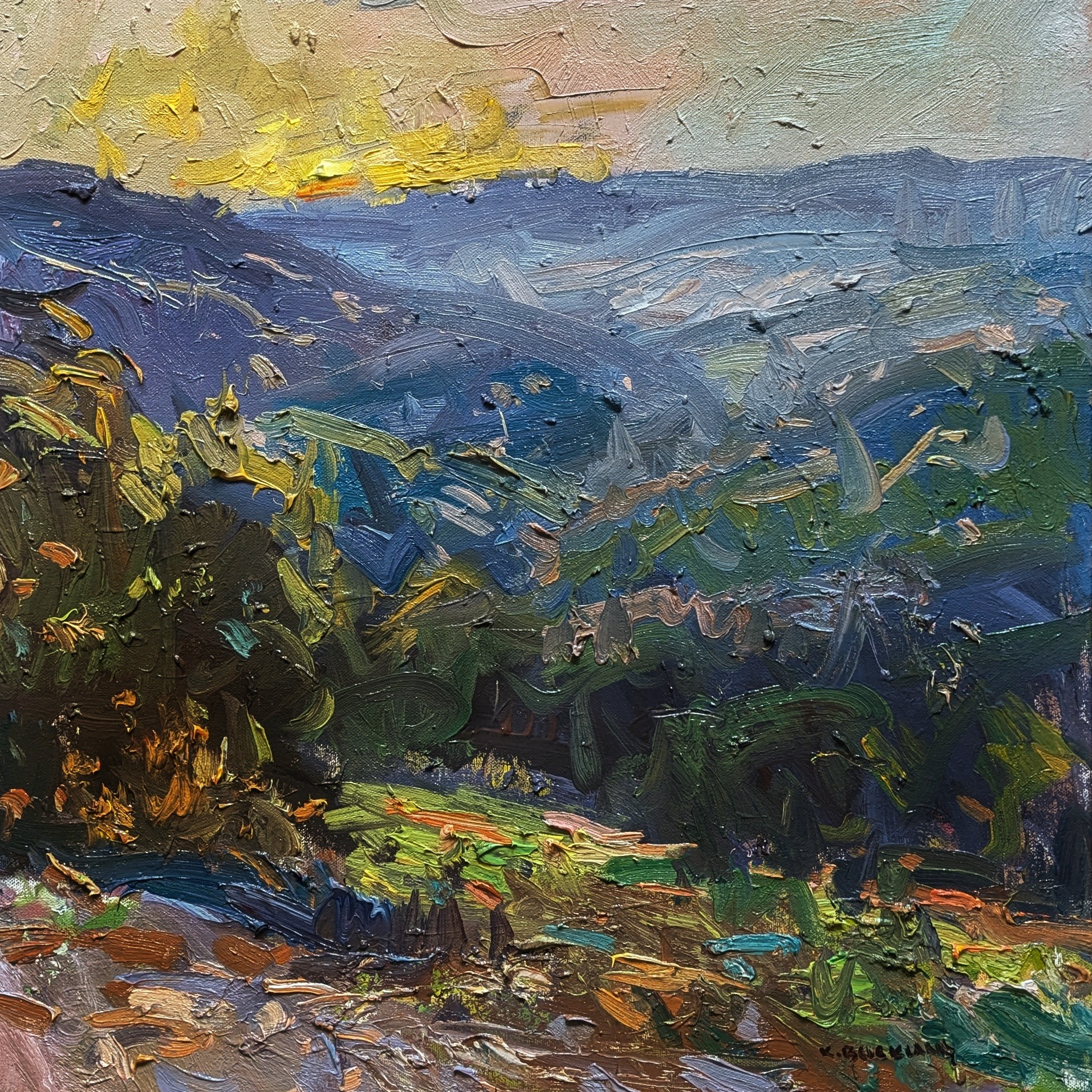
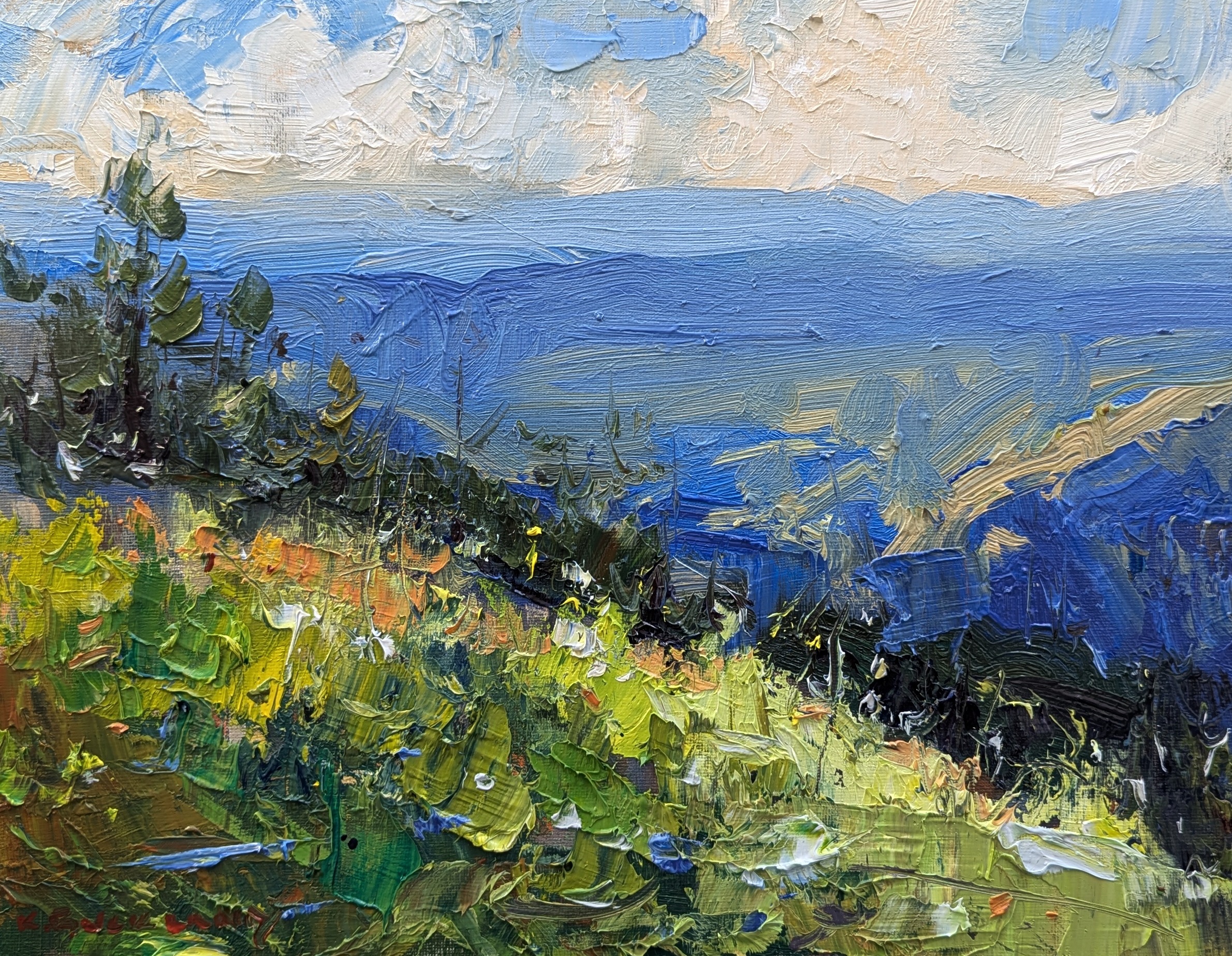
One of the things that has always appealed to Kyle Buckland about impressionism is its expressive brushstrokes.
“We would go to museums when I was a kid, and I would stand in front of paintings by Monet for hours,” he says. “I felt like they looked more real than reality — it was like a magic trick. It moved me in a way that other art didn’t.”
Buckland also loves the texture inherent in impressionism. “I love everything about thick, juicy oil paint,” he says. “I love the smell and the feel of it, and I love using texture to suggest something in the landscape.” In fact, suggestion is an important goal for Buckland. “When I use an impressionistic approach, I’m giving the viewer just enough information for them to fill in the gaps with their own experience,” he says. “It becomes a collaboration between artist and viewer, and each viewer is going to see the same painting a little differently.”
Indeed, Buckland has learned over the years how to home in on his own particular way of seeing things. “There are many different approaches, many ways to arrange things, many color combinations that painters can use,” he says. “Painting is a way to tell my personal story about how I see the world. I feel that art is a universal language, and I think it was put here so that we could record the human experience in all its complexity. I think that artists are here as the record-keepers.”
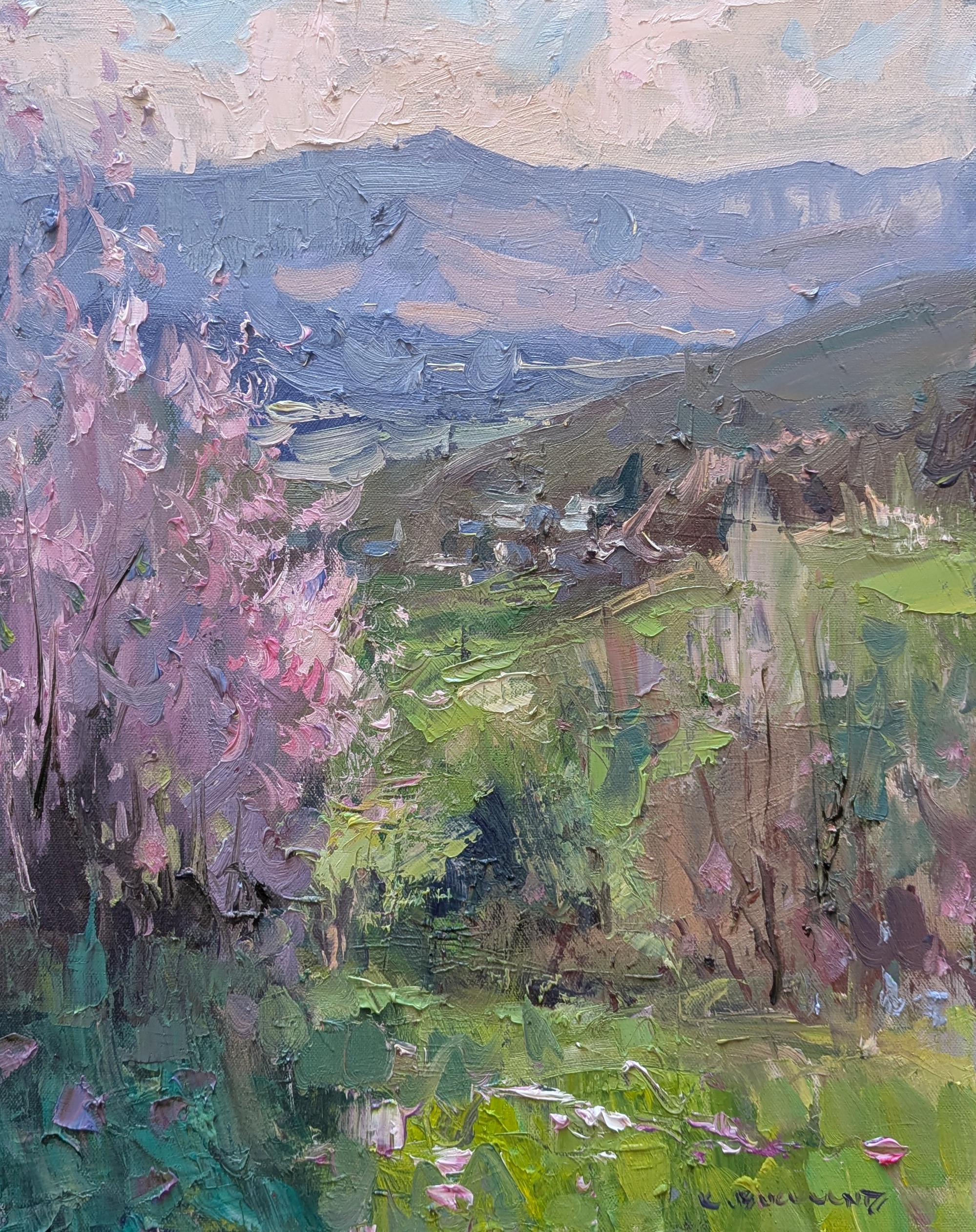
With this in mind, Buckland says one of the first things he asks himself when he goes out to paint is, “What am I drawn to? What moves me? What is my story going to be?” He adds, “Artists get to a location, and we see the beauty in everything — the barn, the fence, the road, the clouds. But if I try to paint all those elements in one painting, there will be no order or hierarchy. I have to ask myself, What is this painting about? That tells me what the center of interest needs to be.”
Once Buckland has made that decision, he eschews thumbnail sketches and instead creates a quick underpainting directly on his canvas. “If I do enough forethought about my composition before I begin, then I don’t have to spend time doing charcoal sketches — the light could change during that time,” Buckland says. “The underpainting is very quick, and I can adjust things pretty easily just by wiping out an area.” He uses a thin mixture of burnt sienna and ultramarine blue, adding more of the former for warm darks and more of the latter for cool darks. “I tend to be bold and fast in the beginning,” he adds. “I want a lot of energy in my brushstrokes.”
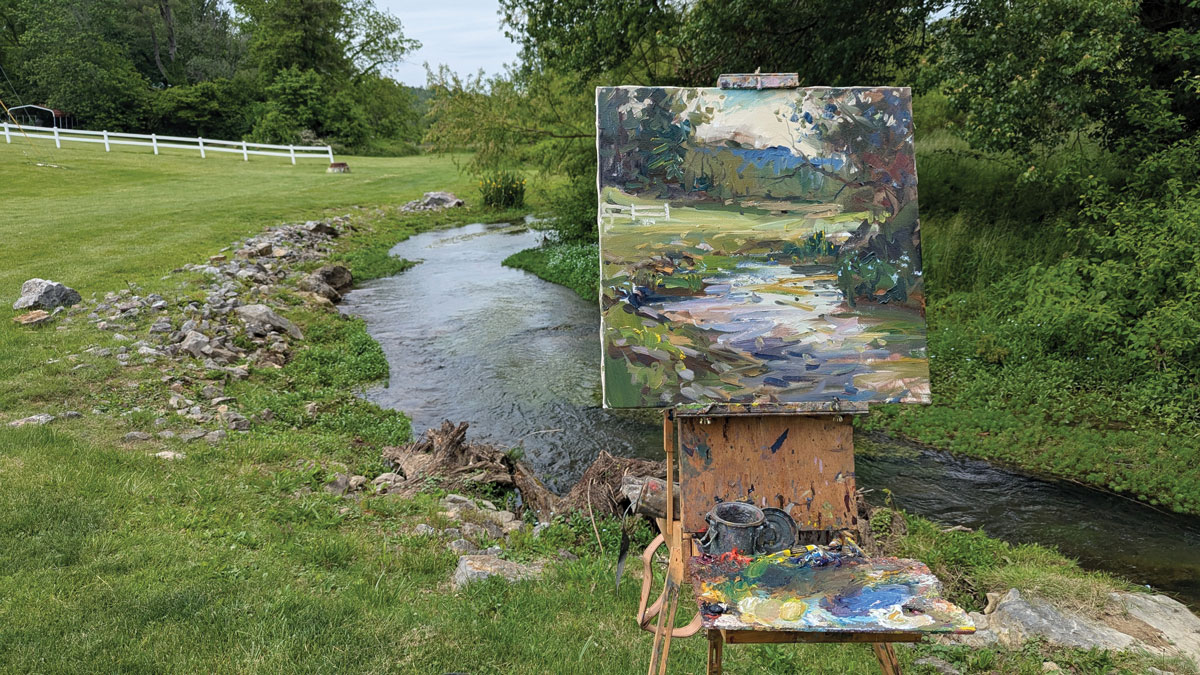
Buckland’s next step, he says, is “to fill in these big shapes as quickly as possible with an approximation of the general color of the area. I try to look at the medium values and save the highlights and accents for later in the painting.” At this point, Buckland’s paint is getting thicker as he uses less medium.
Then it’s time to go back and restate the center of interest. “I won’t know how much I want to finish the rest of the painting until I get the center of interest defined,” he says. “So I go back and start addressing that area — not finishing it, but getting it one step closer to being finished than the rest of the painting.”
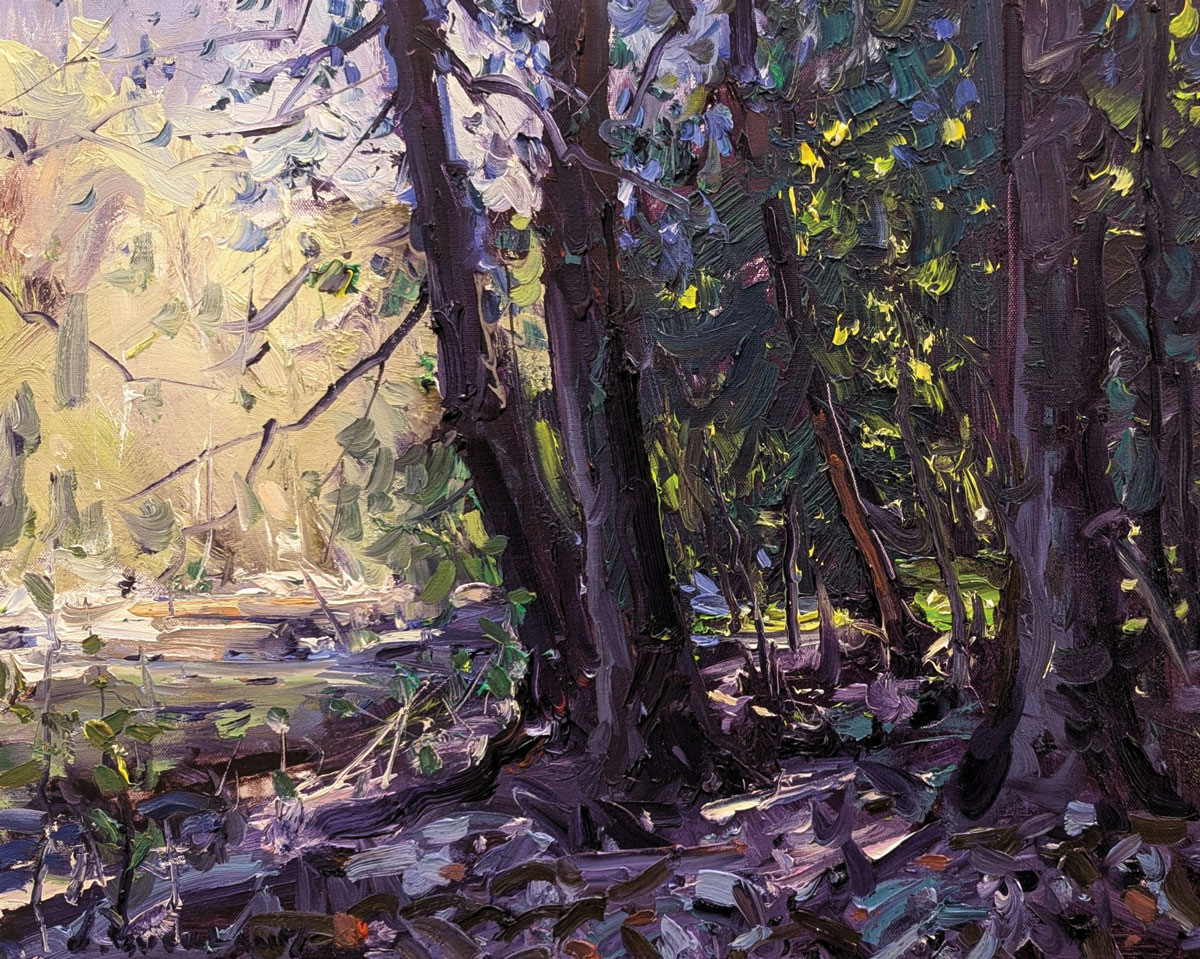
The final step leads Buckland into “the realm of intuition,” he says. “Finishing a painting is a very subtle process.” He asks himself questions like, Does everything feel balanced? Where do I feel a sense of uneasiness? “I start to slow down at this stage, taking time between each stroke. Eventually there comes a point where I put on that last stroke, and I don’t feel any uneasiness anymore. That’s when I know my painting is finished. But I want to tiptoe up to that line carefully.”
Connect with the artist at kylebuckland.com.
Read the full article in PleinAir Magazine (August/September 2025).
Prepared for the web by Cherie Dawn Haas, Editor of Plein Air Today