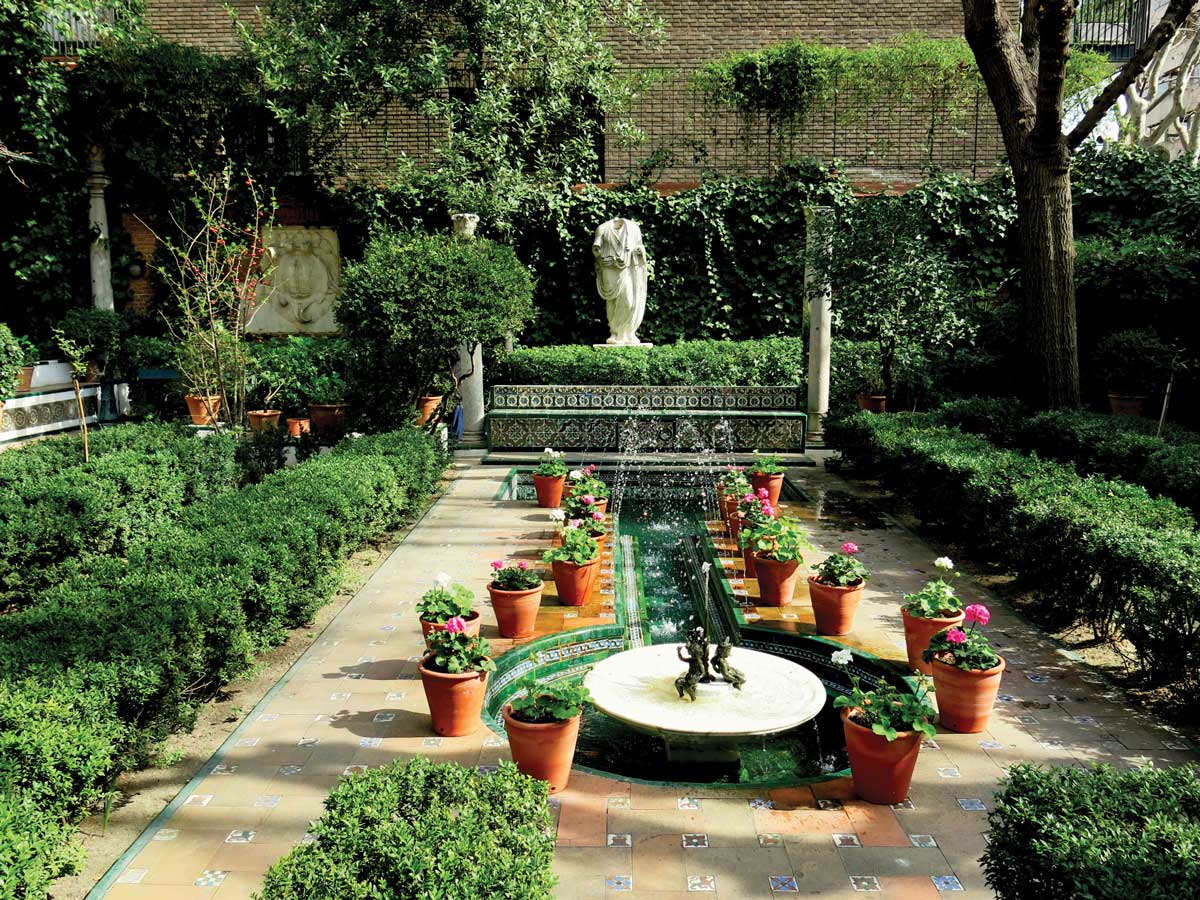
Like many of his fellow Impressionists in France, Spanish artist Joaquín Sorolla (1863–1923) designed extensive gardens around his home and studio in Madrid (now the Sorolla Museum) as a reflection of his own creativity and works of art in themselves. Inspired by the intimate spaces of the Arabic-style gardens surrounding the Alcázar and Alhambra in Granada, he combined the sinewy curves of Art Nouveau sculpture with classical columns and bold Moorish tilework to create a garden that was at once contemporary, European, and Mediterranean. In a series of engaging spaces, bubbling fountains provided the background music for the stars of the show — the play of light filtering through the plants and the explosion of color, which reflected the palette of the painter himself.
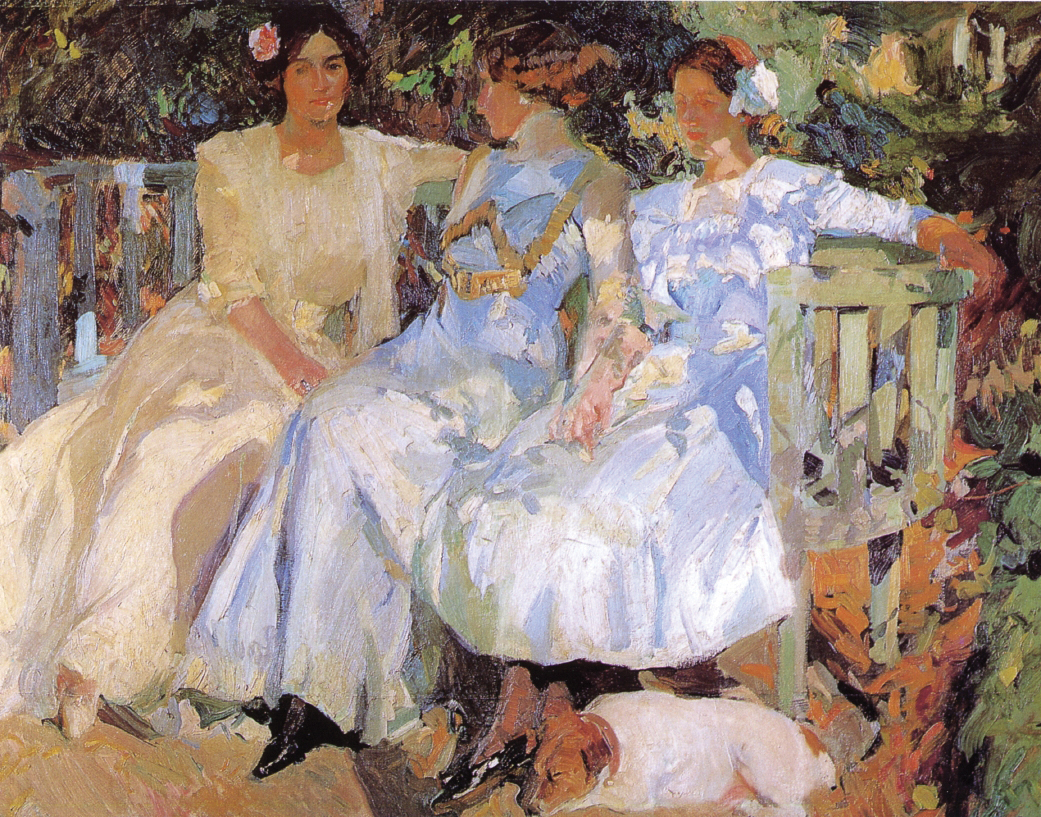
Painting at a low point in Spain’s history — nearly bankrupt and seized with social unrest after the loss of the Spanish-American War — Sorolla set out to create a new image for his country. Eschewing the traditional notion of Spain as dark, exotic, and mysterious, he chose instead to celebrate contemporary life, presenting an optimistic picture of vibrant youths, dazzling beaches, dramatic landscapes, and, of course, his own quiet garden.
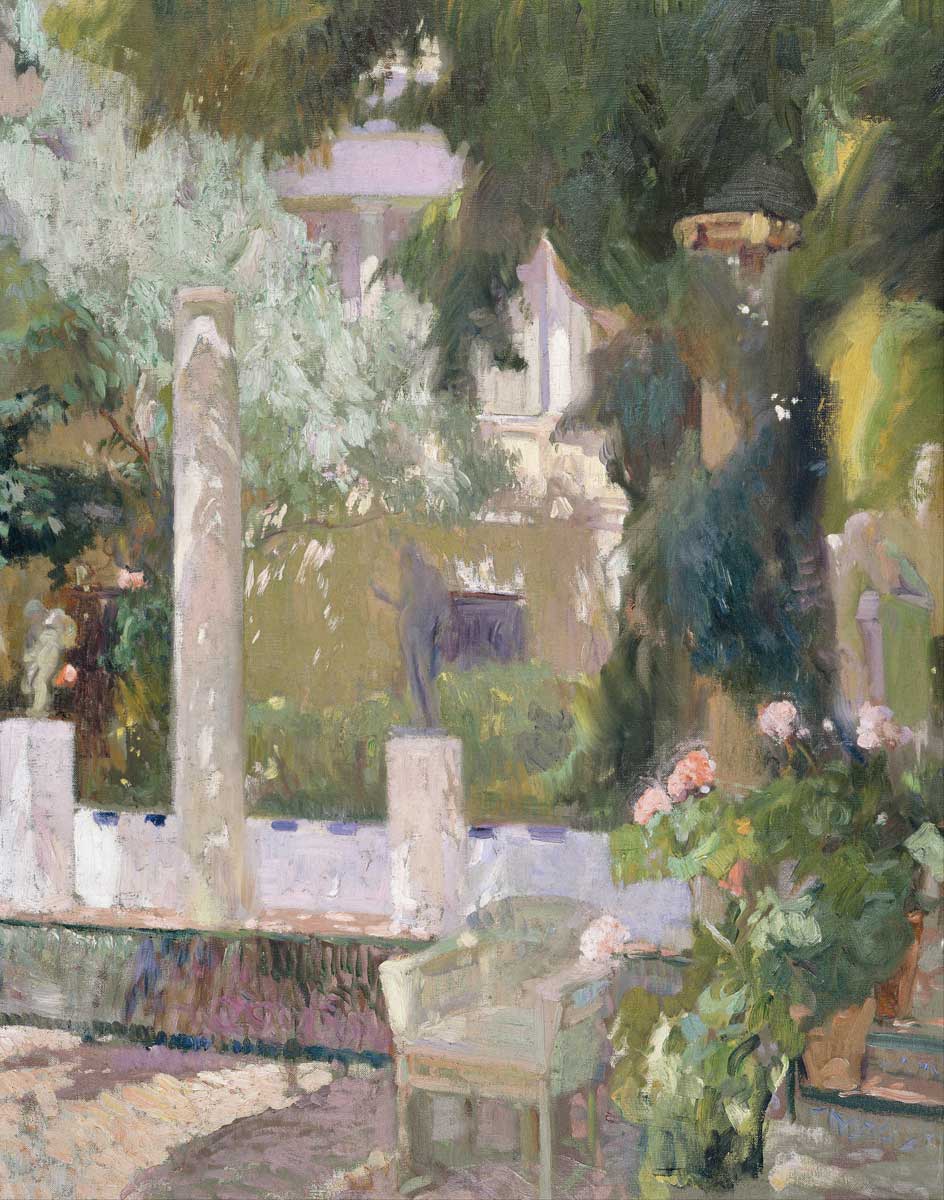
The many paintings the artist created of the subject, with different moods and in a variety of styles, attest to the importance he placed on the space. One of his final works, “Garden of the Sorolla House,” depicts the empty wicker chair where Sorolla used to sit and paint. While painting in his garden in June 1920, he suffered a massive stroke from which he never recovered.
The editorial above is part of a series that spotlights the work of an accomplished artist featured in PleinAir magazine.
Published bi-monthly, PleinAir magazine is focused on landscape paintings by historical and contemporary artists, art collections, events, and the process of creating plein air paintings. Beautifully designed with rich reproductions on high-quality paper, PleinAir features the top artists and artworks from around the world. Start your subscription here.
Story prepared for the web by Cherie Dawn Haas, Editor of Plein Air Today